The Proximity Fix for HVAC Teams Losing Local Emergency Calls
Meta Description: Stop losing emergency HVAC calls to competitors. Learn how to bypass the proximity barrier, optimize your Google Business Profile, and dominate the Map Pack in 2026.
The “Invisible Wall”: Why Your HVAC Trucks Are Idle During Heatwaves
It is the hottest week of July. The humidity is stifling, and every homeowner in your service area is one thermostat click away from a breakdown. You know your team is the best in the city. Your trucks are stocked, your technicians are certified, and your office is centrally located. Yet, as you look at your dispatch board, it’s suspiciously quiet.
Meanwhile, a competitor located three miles further down the interstate is raking in the “AC repair near me” emergency calls. You search for your business from a local coffee shop just two miles away, and you’re buried at #7 in the Google Map Pack. You’ve hit the Invisible Wall – the proximity gap.
In early 2025, Google adjusted its local ranking algorithm, placing stronger weight on consistent NAP (Name, Address, Phone) data and the real-time quality of reviews to determine trust. For HVAC owners, this means that simply “existing” near a customer isn’t enough anymore. If Google doesn’t perceive your business as the most prominent and relevant authority in that specific micro-neighborhood, you won’t show up when the emergency call is made. This “Proximity Gap” is the difference between a record-breaking summer and a season spent worrying about overhead.
To reclaim your service area, you must understand that proximity is no longer a static measurement of miles; it is a dynamic score of digital trust. Learn more about Why Local HVAC Calls Are Dropping and How to Reclaim Your Service Area to start diagnosing your visibility issues.
The Proximity Paradox: How Google Defines “Near Me” in 2025/2026
For years, the “Vicinity Update” legacy has dictated that distance is the king of local search. If you weren’t physically close to the searcher, you didn’t exist. However, as we move into 2025 and 2026, we are seeing the rise of the Proximity Paradox. Google still cares about distance, but it now prioritizes “hyper-local, personalized, and trustworthy results” over raw mileage.
Google defines local ranking through three primary pillars:
- Relevance: How well your profile matches what someone is searching for.
- Distance: How far your business is from the searcher.
- Prominence: How well-known and trusted your business is (based on links, articles, and reviews).
While you cannot physically move your warehouse every time a lead pops up, you can influence your “perceived location” through high-level google business profile seo. By saturating the web with hyper-local signals, you tell Google’s algorithm that your authority extends far beyond your front door. Google has officially removed proximity from the primary ranking algorithm for Local Services Ads (LSAs), but for the organic Map Pack, it remains a top-three factor. The key is to make your prominence so high that it compensates for a few extra miles of distance.
The “Category Mistake”: The #1 Reason HVAC Profiles Ghost Local Searchers
One of the most common – and most damaging – mistakes HVAC companies make is misclassifying their primary category on their Google Business Profile (GBP). If you are an HVAC company that focuses 80% of your revenue on emergency AC repairs, but your primary category is set to “Heating Contractor,” you are essentially telling Google to hide you during a heatwave.
In 2025, Google’s AI-driven search filters have become much more literal. Incomplete or inaccurately categorized profiles are being dropped from the Local Pack entirely. Many teams choose “HVAC Contractor” as their primary and think they are covered. However, data shows that niche categories like “Air Conditioning Repair Service” or “Furnace Repair Service” often carry more weight for specific emergency queries.
Actionable Advice: Audit your categories monthly. Look at what the top three competitors in the Map Pack are using. If they are all listed as “Air Conditioning Repair Service” and you are “HVAC Contractor,” you are fighting an uphill battle. For a deeper dive into this, check out Why Your Business Categories Might Be Hiding Your Pin From Local Searchers.
6 Proximity Signal Hacks to Expand Your Service Radius
If you want to rank higher on google maps and expand your reach into neighboring suburbs where you don’t have a physical office, you need to deploy specific proximity signal hacks. These tactics create a “digital breadcrumb trail” that leads Google back to your profile from miles away.
1. Geo-tagged Imagery with Local Context
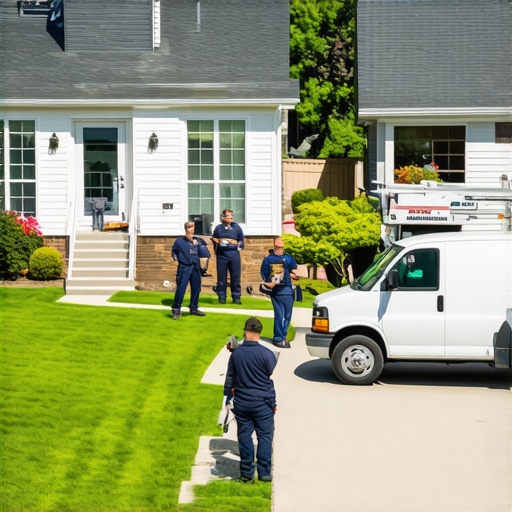
Don’t just upload stock photos of air conditioners. Upload high-resolution photos of your branded trucks parked in front of recognizable local landmarks, neighborhood entrance signs, or community centers. When you upload these, ensure the metadata contains the GPS coordinates of that specific neighborhood. This signals to Google that your business is active and physically present in that area.
2. Neighborhood-Specific Service Pages
Stop relying on a single “Service Areas” page that lists 50 cities. Instead, create dedicated landing pages for specific high-value neighborhoods. For example, “Emergency AC Repair in [Neighborhood Name].” Include local details like common housing styles in that area or specific local climate challenges. This hyper-local content helps you rank for “near me” searches in those specific zones.
3. Strategic Local Map Embeds
On your neighborhood service pages, don’t just embed a map of your office. Embed a Google Map that shows the route from your office to that specific neighborhood. This reinforces the geographical connection between your business location and the customer’s location. Using a professional google maps ranking service can help automate and optimize these embeds for maximum impact.
4. Niche Local Citations
Generic citations like Yelp and Yellow Pages are the bare minimum. To win in 2026, you need niche citations. Get listed on local chamber of commerce sites, neighborhood blogs, and local “Best of” lists. These provide high-quality backlinks with localized anchor text that “tethers” your business to the surrounding community.
5. Hyper-local Mentions and Community News
Sponsor a local Little League team or a neighborhood 5K run. Ensure your business is mentioned on the event’s website. When Google’s crawlers see your business name associated with a specific local event or organization, it strengthens your local prominence score.
6. Optimized Service Area Business (SAB) Settings
If you operate as a Service Area Business (hiding your address), be careful with your radius settings. Setting a 100-mile radius doesn’t make you more visible; it makes you look like a spammer. Focus your SAB settings on the specific zip codes where you actually have a high density of customers. This concentration of data helps Google trust your service area claims. For more on this, read 6 Proximity Signal Hacks to Improve Maps Visibility [2026].
The Review Velocity Trap: Why 10 Five-Star Reviews Can Get You Shadowbanned
Every HVAC owner knows they need reviews, but few understand Review Velocity. In an attempt to boost their gmb ranking service results, many businesses run “review contests” where they ask all their customers to leave a review on the same day. This is a massive red flag for Google’s 2025 spam filters.
If you typically receive two reviews a month and suddenly receive 15 in 24 hours, Google’s algorithm may flag these as inorganic. The result? Your reviews are hidden, or worse, your entire profile is shadowbanned, meaning you won’t show up in search results even if you are the closest option. Google looks for a natural, consistent flow of reviews that matches your business size and industry norms.
The Strategy: Build a “Review Engine.” Instead of a one-time blast, implement a system where your technicians request a review via SMS the moment the job is completed. This ensures a steady, daily stream of feedback. This consistent activity tells Google that your business is healthy, active, and consistently solving problems for locals. For more on avoiding these pitfalls, see The Review Timing Secret: Why Getting 10 Five-Star Ratings in One Day Triggers a Spam Filter.
Leveraging Advanced Local SEO Tools for HVAC Dominance
In the competitive HVAC landscape, “guessing” where you rank is a recipe for failure. If you check your own rankings from your office computer, you are seeing a biased version of reality. Google knows who you are and where you are; it will almost always show you your own business at the top.
To see what your customers see, you need a professional google maps rank tracker. These tools allow you to view a grid of your rankings across an entire city, showing exactly where your visibility drops off. This “heat map” of rankings allows you to target your marketing efforts. If you see a “dead zone” in a wealthy suburb five miles away, you know exactly where to focus your neighborhood-specific service pages and geo-tagged photos.
Furthermore, using a google business profile audit tool like those provided by SEO Viper Tools can identify technical gaps in your profile that are holding you back. From missing attributes (like “Emergency Services”) to inconsistent NAP data across the web, these tools provide the roadmap to technical perfection.
Conclusion & The 2026 HVAC Visibility Checklist
The “Proximity Fix” isn’t about moving your office; it’s about expanding your digital footprint so that Google views you as the local authority, regardless of the physical distance. In 2026, the HVAC teams that dominate the Map Pack will be those that prioritize hyper-local signals, maintain a steady review velocity, and use data-driven tools to monitor their performance.
Your 2026 HVAC Visibility Checklist:
- Audit Categories: Ensure “Air Conditioning Repair Service” is your primary category during summer months.
- Geo-Tag Everything: Ensure every photo uploaded to your GBP has local metadata.
- Build Neighborhood Pages: Create 5-10 pages targeting high-value local subdivisions.
- Monitor Velocity: Implement an automated review request system to avoid spam triggers.
- Track Your Grid: Use a rank tracker to identify and fix “dead zones” in your service area.
If you’re ready to stop losing emergency calls to the “Invisible Wall,” it’s time to invest in a google maps ranking booster strategy that works. By following these steps, you can ensure that when the next heatwave hits, your trucks are the ones on the road, and your dispatch board is full.
About the Author: Faisal Rehman is an AI SEO and Local SEO Expert, and the Founder of Local Grow 360. With a focus on technical SEO and LLM visibility, Faisal helps HVAC and home service businesses dominate search results through innovative, data-backed strategies.