
I remember the sinking feeling of standing on my curb, watching a potential client drive slowly past my building, stare at the blank brick facade, and then speed away. My office was tucked away on the third floor of a converted warehouse, and from the street, it looked like absolutely nothing. I had zero signage, no vinyl on the windows, and no sandwich board. I was effectively a ghost in the real world, and surprisingly, that made me a ghost on Google Maps too. It turns out, when the algorithm can’t see you through street-level data and user photos, it starts to doubt your physical existence. We are going to change that today by focusing on improving map views through digital breadcrumbs rather than expensive neon.
Stop Being a Ghost on Your Own Street
The struggle is real for service-based businesses or those hidden in shared suites. You might think local SEO is only for shops with massive storefronts, but that’s a myth I had to unlearn the hard way. Early on, I made the massive mistake of thinking a digital-only presence would compensate for my lack of a physical storefront; I completely ignored the real-world signals Google craves. According to a study by BrightLocal, 98% of consumers read online reviews for local businesses, and a huge part of that trust comes from seeing photos of the actual location. If you don’t have a sign, you have to work twice as hard to prove your physical hereness. We will dive into the simple fix for a business address that maps can’t find by using landmarks and directories to anchor your location in the algorithm’s mind.
Is this strategy actually worth the effort if I’m home-based?
I get the skepticism. You’re worried about privacy or feeling like a fake business because you don’t have a 10-foot tall billboard. But here is the truth: map discovery isn’t about the sign itself; it’s about verified proximity. Today, I am going to show you exactly how to get more map views with specific exterior shop photos—even if those photos are just of the building directory or the entrance to your complex. We are going to turn your invisibility into a competitive advantage by mastering the subtle art of map SEO. Have you ever had a frustrated customer call you from their car, literally parked right outside, because they couldn’t find your door? Drop a comment below; I want to know I am not the only one who has dealt with that awkwardness.
Bridge the Gap Between the Pavement and the Algorithm
Think of the Google Maps algorithm like a nervous scout. It wants to recommend you to people, but it’s terrified of being wrong. If the digital data doesn’t perfectly match what a human sees on the ground, the algorithm retreats and hides your pin. To fix this, you have to provide ‘visual proof of life.’ This isn’t just about a nice logo; it’s about transforming your map visibility by syncing your physical reality with your digital profile. I once worked with a locksmith who operated out of a tiny office in a massive skyscraper. His pin was floating in the middle of a nearby park because the GPS signal was bouncing off the glass. We didn’t just move the pin; we uploaded a 30-second video of the walk from the main lobby to his specific door. Within fourteen days, his discovery views doubled because Google finally ‘believed’ where he was located.
Photograph Your Way Out of Invisibility
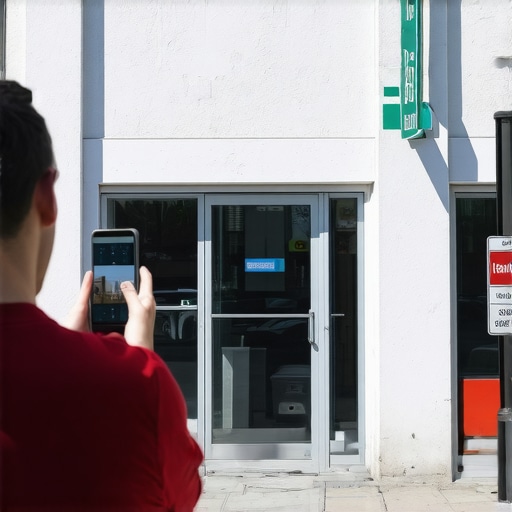
Most business owners upload a photo of their staff or a generic interior shot and call it a day. That is a wasted opportunity. To really move the needle, you need to show the algorithm exactly how a customer finds you from the street. This means capturing the neighboring buildings, the street signs, and even the parking lot. When you learn how to get more map views with specific exterior shop photos, you are essentially giving the AI a 3D map of your location. It recognizes the landmarks in your photos and compares them to Street View data. This alignment is pure gold for your rankings.
Use Video to Prove Your Doors are Open
Static images are great, but video is the ultimate trust signal. I started implementing a rule: one 15-second ‘behind the scenes’ clip every week. It doesn’t need to be Hollywood quality; in fact, raw and authentic usually performs better. This is a core part of how to use short videos to increase your map discovery rate. These snippets tell the algorithm that your business is active and operational right now. It’s the difference between a ‘closed’ sign and a bustling lobby.
Define Your Territory Without Triggering Red Flags
If you don’t have a storefront, you are likely using a Service Area Business (SAB) setting. The mistake I see most often is ‘map-bloat’—selecting every town within a 50-mile radius. This actually dilutes your authority. You need to learn how to map your service area without looking like a spammer. By tightening your radius to the areas where you actually have customers and reviews, you create a dense ‘authority zone.’ The algorithm rewards specificity over broad, empty claims.
Check the Tiny Details That Sabotage Your Rank
Sometimes the problem isn’t your photos or your area; it’s a technical glitch you can’t even see. I spent three weeks wondering why a client’s calls dropped to zero, only to find their ‘Direction’ button had disappeared because of a slight typo in the suite number. These 7 tiny details that keep your business off the local 3-pack are often buried in your profile settings. You have to be a detective for your own data. If your address is even slightly off-kilter, you can use the simple fix for a business address that maps can’t find to anchor yourself back to reality. Consistency is the language of trust in the world of local SEO.
I’m going to let you in on a secret: the standard advice of ‘more is always better’ is actually a trap that can lead to data fragmentation. Most SEOs will tell you to blast your business name across every directory you can find, but the local citation myth is that volume equals authority. In reality, one high-authority, correctly formatted listing is worth fifty sloppy ones. If you have mismatched suite numbers or old phone numbers floating around, you’re essentially telling Google’s AI that you are an unreliable source of information. Let’s dig deeper into the nuances that actually move the needle for high-level maps visibility.
Don’t Let Website Tweaks Kill Your Local Pin
I’ve seen business owners spend thousands on a shiny new homepage only to find their map calls drop to zero the next week. This happens because they decouple their site’s ‘Local Schema’ from the map profile. It’s a classic ‘oops’ moment. You need to understand why your map ranking dropped after you optimized your website before you make a single change to your footer. If the address on your contact page doesn’t mirror the Google Map pin to the character—including how you abbreviate ‘Street’ or ‘Avenue’—the algorithm’s confidence score dips. Consistency isn’t just a suggestion; it’s the foundation of mastering map discovery at an expert level. Have you ever fallen into this trap? Let me know in the comments.
Can Behavioral Signals Really Outperform Traditional Citations?
Advanced practitioners are shifting their focus away from static data and toward ‘user intent’ signals. According to the Whitespark Local Search Ranking Factors survey, factors like ‘directions requests’ and ‘click-to-call’ rates are becoming massive drivers for the local three-pack. This explains why customers pick the pin with fewer reviews and better photos—the algorithm sees the engagement and promotes the ‘popular’ choice over the ‘perfectly optimized’ one. 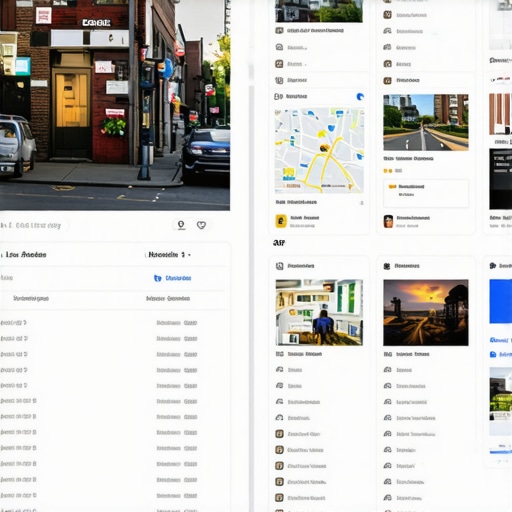
The High Cost of Fake Proximity
One of the most dangerous mistakes is trying to ‘trick’ the map by creating virtual offices. While it might work for a month, the ‘proximity correction’ update has become incredibly sophisticated. Instead of trying to be everywhere, focus on enhancing your map views naturally through real customer interactions in your primary zone. Also, be wary of what your software is telling you. Understanding the reality of map rank tracking tools and why they lie is essential because many of them use ‘center-of-city’ pings that don’t reflect what a user sees on a mobile device two blocks away. Real growth is measured by actual leads, not just a green dot on a report.
Make Weekly Maintenance Your Secret Weapon
I’ve learned that the biggest threat to your ranking isn’t a competitor with more money; it’s your own drift toward inactivity. If you stop feeding the profile, Google assumes you’ve closed up shop. I follow a strict routine where I perform the one profile update you should do every single week. This isn’t about massive overhauls; it’s about micro-signals. I spend exactly ten minutes every Tuesday morning responding to one review, uploading one fresh photo of a recent project, and checking if any ‘community edits’ have tried to change my hours. This level of consistency is the backbone of the ultimate blueprint to improve map visibility and rankings.
How do I keep my map pin at the top for the long haul?
Maintenance is less about SEO ‘hacks’ and more about operational hygiene. You need to ensure your physical data matches your digital footprint perfectly. I often see businesses fail because they ignore the boring profile detail that actually influences the local algorithm, such as the specific way your attributes are checked. If you say you have ‘wheelchair accessible parking’ but your photos show a gravel lot with no markings, you’re creating a data conflict. Long-term results come from being the most reliable source of information for your specific neighborhood.
Stop Trusting Generic Reports That Hide the Truth
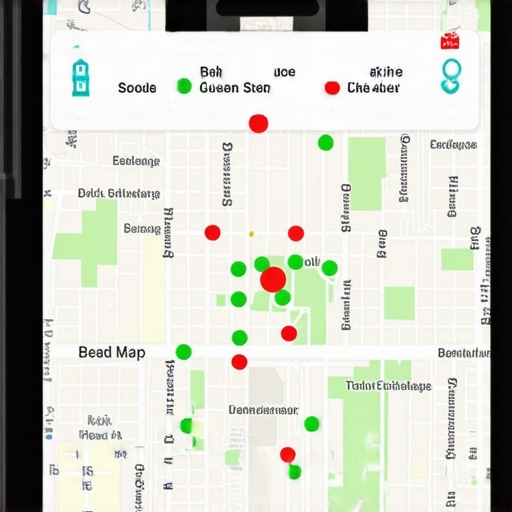
If you are still looking at a single ‘average ranking’ number, you are flying blind. Most tools give you a city-wide average that is completely useless because a map search changes every few blocks. You have to understand the reality of map rank tracking tools and why they lie. I personally use grid-based trackers like Local Falcon because they show a heat map of visibility. This allows me to see exactly where my ‘authority’ ends. If I’m ranking #1 at my front door but #10 two streets over, I know I need more localized content from that specific area to expand my reach and continue navigating map discovery with actual precision.
Get Ready for the AI-Driven Search Era
Looking ahead, the game is shifting from ‘keywords’ to ‘entities.’ Google’s Gemini AI is now scanning your photos to see what products are on your shelves or what tools are in your van. This is why you need to unlock the secrets to maps visibility by thinking about visual context. Joy Hawkins, a renowned local SEO expert at Sterling Sky, recently noted that Google’s ‘Search Generative Experience’ relies heavily on the richness of your business’s visual and textual attributes to answer complex queries. If you don’t have these details, you won’t even be in the conversation. This is especially true when learning how to optimize your map profile for voice search requests, where the AI needs a definitive ‘yes’ to recommend you. My best advice? Go into your profile right now and upload one ‘real-world’ photo from today—not a stock image, not a logo—just a raw shot of your work in progress. It’s the fastest way to signal life to the algorithm.
The Hardest Lesson I Learned While Chasing Real Map Discovery
For a long time, I thought I could outsmart the algorithm with a few clever keywords, but visibility improvement doesn’t happen in a vacuum. It happens at the intersection of digital accuracy and physical proof. Here are the lightbulb moments that changed everything for me:
- Authenticity beats polish every time: A raw, slightly shaky video of you walking into your office is often more powerful than a high-end corporate video because it proves your location is real.
- Consistency acts like compound interest: Replying to one review every single week is infinitely more effective for maps seo than replying to fifty in a single afternoon once a year.
- The algorithm is a mirror: If you want Google to see you as a local authority, you have to actually engage with your local community by enhancing your map views naturally through genuine physical signals.
My Personal Arsenal for Dominating Local Results
I don’t trust every shiny new SEO tool that hits the market, but these specific resources are the ones I use to improve map seo and increase local engagement for my own projects. I rely on Local Falcon because its grid-based heatmaps reveal the truth that a single ‘average rank’ number hides. For cleaning up messy data, I trust BrightLocal because they understand that the local citation myth of high-volume listings is a trap. Finally, I keep Sterling Sky on my short list of experts to follow; their testing-based approach to the local search world is the gold standard for anyone serious about maps visibility.
Stop Waiting for the Perfect Sign and Just Start Posting
You don’t need a massive marketing budget or a 10-foot neon sign to stop being a ghost on the curb. You just need to show up and document your daily operations. Whether you are currently navigating map discovery for a solo venture or a multi-location brand, the first step is always to give the algorithm a reason to believe you. Your map discovery rate is a direct reflection of your business’s heartbeat. Don’t be afraid to let people see the work in progress. Have you ever seen your map ranking vanish suddenly after you made a simple change to your homepage? Let me know your experience in the comments below!