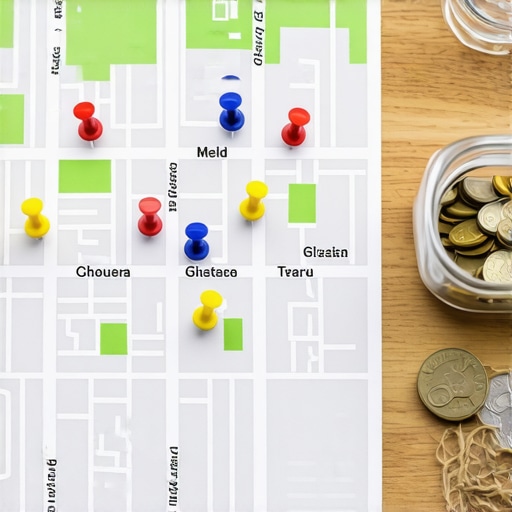
I’ll never forget the Tuesday afternoon I realized I was functionally invisible. I stood in my shop, looking out the window at a person who was staring at their phone, clearly searching for a service I provide—and they walked right past my door into the competitor’s store two blocks away. I was crushed. I pulled out my own phone, searched for what I do, and I wasn’t even in the top twenty results. It felt like I was shouting into a void while everyone else had a megaphone. I had exactly zero dollars to hire a fancy agency, so I had to learn how to crawl up the rankings using nothing but grit and a few late nights of trial and error. Today, I’m going to show you exactly how to build a local map strategy on a shoestring budget so you can stop being the best-kept secret in town and start being the first name your neighbors see.
Stop Letting Your Competitors Steal Your Local Neighbors
The biggest mistake I made when I started was assuming that simply ‘existing’ was enough for Google to find me. I was wrong. In the digital world, your map pin is your storefront’s neon sign, and if it’s flickering or dark, people just keep walking. I wasted months making the same geo-targeting mistake that most small businesses make: trying to be everywhere instead of being the king of my own block. You don’t need a massive marketing budget to fix this, but you do need to understand why your competitors’ map pin is always above yours right now. I spent so much time worrying about complex algorithms when I should have been focusing on the simple, free signals that actually tell the search engine where I am and what I do. Have you ever felt that frustration of being the better business but still losing the click to a guy with half your talent just because he’s more visible?
Is This Honestly Worth the Effort Without Buying Ads?
I get the skepticism. You see those ‘Sponsored’ pins at the top of the list and think the game is rigged against the little guy. But here is a surprising fact: according to research by SafeGraph, nearly 46% of all Google searches have a local intent, and the vast majority of users skip right past the ads to the organic ‘Local 3-Pack.’ This means your organic map discovery is actually more valuable than a paid spot because it builds immediate trust with your community. Early on, I even suffered from the ghost profile problem because I thought keyword stuffing my business name was a ‘hack’—it wasn’t; it just got me flagged and buried. We are going to avoid those pitfalls and focus on the small business map hacks that actually move the needle without costing a dime. Let’s get your business back on the map, literally, and turn those digital searches into real-world handshakes.
Turn Your Profile Into a Magnet for Local Customers
Your Google Business Profile is essentially a digital lighthouse; if the light is dim or the lens is dirty, the ships (your customers) are going to crash right into your competitor’s harbor. When I first started, I treated my profile like a static business card. I filled it out once and expected the phone to ring. It didn’t. I had to learn that the map algorithm is hungry for fresh signals. The first thing I did was audit my categories. Most people pick the most obvious one and stop, but why your business category choice is hurting your discovery feed reach often comes down to missed secondary opportunities. I remember a specific Tuesday when I finally added ’emergency repair’ to my service list—a detail I thought was implied but wasn’t explicitly stated. Within forty-eight hours, I received two calls from people who found me through that specific term. This taught me that the fast way to add your services to your google profile isn’t just about data entry; it is about speaking the language your neighbors use when they are in a hurry.
Stop Guessing and Pick the Right Primary Category
If you are a plumber who also does HVAC, your primary category needs to reflect your biggest money-maker, not just your company name. I once worked with a local law firm that was buried on page four. We discovered how we fixed a law firm map profile that stopped generating calls simply by switching their primary category from ‘Legal Services’ to ‘Personal Injury Attorney.’ The change was almost instantaneous. You have to be specific because the algorithm isn’t a mind reader.
Reviews Are Your Real Authority Signals
We all know reviews matter, but most people approach them like they are collecting merit badges. You don’t just need ‘good’ reviews; you need ‘keyword-rich’ reviews. I started asking my regulars to mention the specific service they received. Instead of just saying ‘Great job,’ I’d ask, ‘Hey, would you mind mentioning the water heater repair specifically?’ This is the one question you must ask your customers to get keyword-rich reviews that actually move your pin. When Google sees local residents talking about specific services in a specific zip code, it validates your authority faster than any paid ad ever could.
Ditch the Stock Photos and Show the Real Mess
People buy from people, not from corporate logos. I spent way too much time in the beginning uploading polished, professional headshots that looked like they belonged in a corporate brochure. They got almost zero clicks. Then, I uploaded a messy, real-time photo of me working in the shop. My engagement skyrocketed. I realized that the specific photo type that google loves more than your professional headshot is anything that proves you are a real person doing real work in your city.  This authenticity builds a bridge of trust before the customer even picks up the phone.
Treat Your Hours Like a Sacred Promise
Nothing kills your map ranking faster than a customer showing up when your profile says you’re open, only to find a ‘closed’ sign on the door. Google tracks user behavior, and if they see people clicking for directions and then immediately leaving your location, they know something is wrong. I learned the hard way that why your real business hours matter more than you think for rank is tied directly to user satisfaction. If you are going to be closed for a local holiday or a personal day, update it. It takes thirty seconds and protects your hard-earned visibility from being downgraded by frustrated searchers.
The citation volume myth that costs you time
I used to think that the more websites I was listed on, the higher I would climb. I spent weeks manually entering my data into every obscure directory I could find. It turns out, I was wasting my breath. In the world of map discovery, the local citation myth is one of the most persistent traps. According to the Local Search Ranking Factors study by Whitespark, citations have actually decreased in importance over the last few years. Google now prioritizes the quality and consistency of your data on a few major hubs rather than a shotgun approach across hundreds of low-traffic sites. If your address is slightly different on three major sites, that confusion hurts your rank more than fifty perfect listings on sites nobody visits.
Don’t touch your business name without reading this
There is a massive temptation to optimize your business name by adding a few keywords. If you are ‘Smith & Co,’ you might think ‘Smith & Co Plumbing and Drain Cleaning’ sounds better for SEO. This is exactly why your business name change tanked your map rank for so many owners I know. It is a high-risk move that often triggers an automatic suspension because it violates Google’s terms of service. I have seen businesses disappear for weeks while trying to prove their legal identity to a support bot. Have you ever fallen into this trap? Let me know in the comments.
Why does my ranking vanish the moment I drive three blocks away?
This is the most common frustration I hear from people who are starting to improve map seo and increase local engagement. You search for yourself at the shop and you are number one, but by the time you get to the grocery store a mile away, you are gone. This happens because of the proximity filter. Google wants to show the most convenient result to the user at that exact moment. However, you can fight back with the proximity fix by building local relevance through neighborhood-specific content on your website and getting reviews from different parts of town. 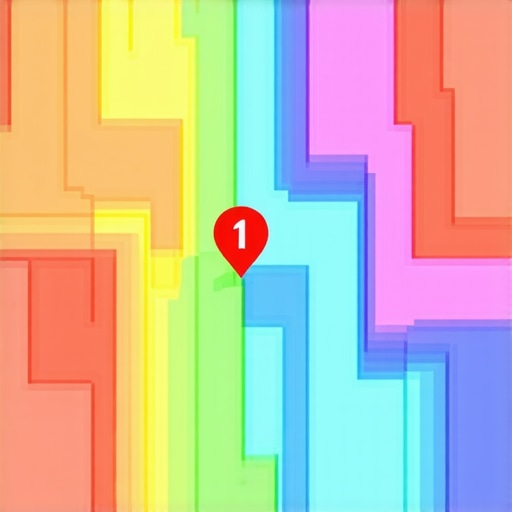 Understanding that the reality of map rank tracking tools is that they only show a snapshot of one specific spot is vital for your sanity. You are not losing visibility; you just need to understand how the radius works and expand it with actionable strategies for 2025 that focus on city-wide authority.Once you’ve cleared out the errors, the real challenge begins: not letting your profile go stale. I used to think SEO was a one-and-done project, but local visibility is more like a garden. If you don’t water it, the weeds (competitors) take over. I committed to a routine that I call the ‘Seven-Minute Sunday.’ Every week, I post one photo of a finished project and update one service description. This is the one profile update you should do every single week to signal to Google that your business is alive and kicking. It’s not about doing a lot once; it’s about doing a little constantly. According to the BrightLocal 2024 Local Consumer Review Survey, nearly 75% of consumers always or regularly read reviews when browsing for local businesses, but they prioritize the ones from the last 90 days. This is where the customer service habit that secretly boosts your map rank comes into play—it’s the daily interactions that fuel your digital growth.
Consistency Beats Intensity Every Time
I’m often asked what software I use to keep track of all this. Personally, I don’t trust the basic ‘insights’ tab in the dashboard because it’s too vague. It tells you that people found you, but not *where* they were standing when they searched. I use a tool called Local Falcon to see a grid-based view of my rankings across the city. It shows me exactly where my ‘bubble’ of influence ends. If I see a dead zone three miles north, I know I need to focus my next few posts or neighborhood mentions on that specific area. This is part of the ultimate blueprint to improve map visibility and rankings that I’ve refined over the years. You can’t fix what you can’t see, and a grid map gives you the vision you need to scale. 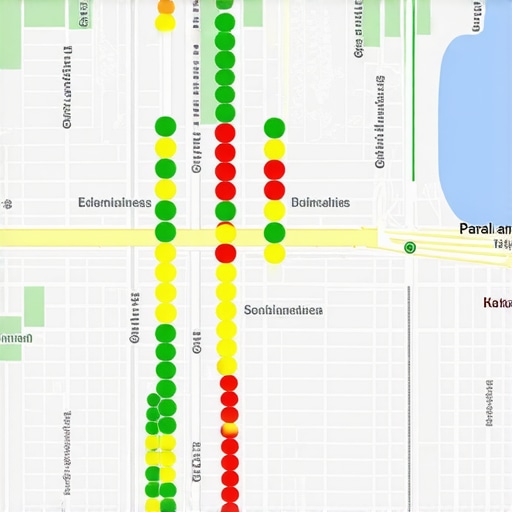
The Only Tool That Actually Shows Where You Rank
Looking ahead to 2025 and beyond, I see Google shifting toward ‘Zero-Click’ search results where AI-powered overviews answer the query before the user even scrolls. To survive this shift, your profile needs to be so data-rich that the AI has no choice but to cite you as the primary source. You need to transform your map visibility with actionable strategies for 2025 by focusing on entity-based SEO rather than just old-school keywords. The map of the future isn’t just a list of names; it’s a list of verified solutions.
How do I keep my map pin on top without spending all day on my phone?
You don’t need to be a social media manager to win here. You just need to enhance your map views naturally with real-world seo insights. Set a timer for ten minutes on Wednesday mornings. Check your ‘Questions & Answers’ section, respond to one review, and check if any competitors have suggested a ‘fix’ to your phone number or hours. That’s it. Most people quit after the first month because they don’t see an instant explosion. If you stay consistent for six months, you’ll be ahead of 90% of the shops in your town. If you’re ready to get serious, try digging into the neighborhood grid data I mentioned—it’s the fastest way to see an immediate jump in your local reach.
Lessons From the Map Pack Trenches
After years of trial and error, I finally realized that local visibility isn’t a trophy you win; it’s a reputation you maintain. I used to agonize over every detail, but I found that the hidden address error that ghosts your local leads is often the culprit behind a sudden drop in calls. My biggest lightbulb moment was understanding that Google rewards authenticity over perfection. Don’t worry about being the slickest business; worry about being the most helpful one in your neighborhood. I also learned that navigating map discovery requires you to think like a customer who is in a rush—make your information impossible to miss.
The Gear That Keeps My Phone Ringing
To keep my edge, I rely on a few specific resources that go beyond the basic dashboard. First, I constantly look for ways to use local news to boost your maps authority by linking out to neighborhood events. I also keep a close eye on the latest trends because the algorithm never sleeps, which is why I recommend staying ahead of the curve with secrets to maps visibility for 2025. Finally, don’t underestimate the power of your own website; your site’s architecture and local relevance are the foundation that your map pin sits on.
Claim Your Corner of the City
You have the skills, the passion, and now you have the blueprint. The only thing standing between you and that top spot in the local pack is the decision to start. Don’t wait for a slow month to begin optimizing. Start today, update one photo, respond to one review, and watch how quickly your community responds. Your neighbors are already searching for you—it’s time you made it easy for them to find your door. Have you ever noticed your ranking drop when you leave your actual office location? Let me know in the comments below!