
I remember sitting in my home office three years ago, staring at a digital map of our city and feeling like a complete failure. My business was thriving—or so I thought—until I realized I was essentially a ghost once I crossed the main highway. If you weren’t standing within a three-block radius of my front door, I simply didn’t exist in the local search results. It was a gut-punch. I actually started scouting commercial real estate in the North End, thinking that a second rent check was the only way to improve my map views in that neighborhood. I almost signed the papers, too. I used to spend my Friday nights obsessively refreshing my phone while driving to different coffee shops just to see if my business appeared in the search results. It was exhausting and, frankly, a little bit pathetic. But that obsession led me to realize that the problem wasn’t my physical location; it was how I was talking to the algorithm. We’re going to peel back the curtain on how to stretch your influence across every zip code in your town without ever hiring a moving crew or paying an extra dime in property tax.
Stop Hunting for New Storefronts
The traditional logic tells you that proximity is king. While it’s true that Google loves a nearby business, proximity is a flexible concept when you know how to leverage your maps visibility correctly. I’ve seen tiny shops outrank massive franchises simply because they understood that map discovery is about relevance and prominence, not just a GPS coordinate. Have you ever felt like you’re losing customers to a competitor just because they happen to be five minutes closer to the town square? It’s a frustrating cycle, but it’s one we can break by signaling authority in the right ways.
Is dominating an entire city really possible from one office?
It’s the first thing everyone asks me. ‘Surely, I can’t compete ten miles away?’ The answer is a resounding yes, but it requires a shift in strategy. You have to stop acting like a local shop and start acting like a local authority. Early in my journey, I fell for the ‘more is better’ trap and started creating duplicate listings for every neighborhood, thinking I was being clever. It was a disaster. Google caught on, my rankings tanked, and I spent months digging myself out of that hole. Trust me, the ‘clean’ way is much more effective. According to data from BrightLocal, nearly 87% of consumers used Google to evaluate local businesses in 2022, which means your digital footprint is your actual storefront, regardless of where the bricks are laid. We are going to ensure you aren’t one of those businesses left behind.
The Proximity Myth and How to Break It
If you think your maps SEO is limited by your four walls, you’re missing half the picture. The algorithm looks at your ‘Service Area’ and your digital footprint across the web to decide if you’re worth showing to a user in the next suburb over. I learned the hard way that ignoring how your website footer impacts your rank was like trying to run a race with my shoes tied together. Once I fixed those small, technical signals, my map pin started ‘drifting’ into territories I never thought possible. Have you checked your visibility in a different zip code lately? If not, you might be surprised—and not in a good way—at what your potential customers are actually seeing. Let’s dive into the first steps to reclaiming your city.To break the proximity chain, you have to treat your website like a digital umbilical cord for your map listing. Most people think their site and their map profile are two different islands. They aren’t. They’re more like a radio and an antenna. If the signal on your site is weak, your antenna (the map pin) won’t pick up anything outside your immediate backyard.
Bridge the Gap Between Your Site and Your Pin
The first move is simple but ignored by 90% of your competitors: your footer. Think of your website’s footer as a permanent signature that tells the algorithm exactly where you belong. If you only list your main address, you’re telling Google you only care about that one spot.
Turn Your Footer into a GPS Beacon
I remember working with a small HVAC company that was struggling to get leads from the wealthy suburbs just ten miles north. They had the technical skills, but their maps visibility was non-existent outside their own street. We implemented a strategy focused on how to use your site footers to help your map performance by listing specific neighborhoods and service areas within their site structure. Within three weeks, they weren’t just appearing in those suburbs—they were leading the pack. It wasn’t magic; it was just giving the crawler a clear path to follow. By explicitly stating your service areas, you boost your map views effectively by proving your relevance to those secondary locations.
The Three-Photo Rule for Instant Trust
Google is tired of seeing your logo or a generic stock photo of a smiling person in a headset. That’s visual noise. To improve your map views, you need to provide proof of life. There are 3 photos you must post to trigger the discovery feed: a clear shot of your building’s exterior, your team in action, and the actual result of your work. #IMAGE_PLACE_HOLDER_B# When you upload an exterior shop photo, you aren’t just showing people where to park; you are verifying your physical existence to an AI that is constantly looking for ‘fake’ businesses. This builds the kind of map discovery momentum that no amount of paid ads can replicate. Think of photos as the eyes of your profile. When you realize why local photos outperform pro text, you stop worrying about being ‘perfect’ and start being ‘present.’
Ask for Reviews That Actually Rank
Stop asking customers for ‘a review.’ That’s too vague. You need to use the one question you must ask your customers to get keyword-rich reviews. Instead of ‘Can you leave us a review?’, ask, ‘Could you mention the specific service we did and the neighborhood you’re in?’ When a customer writes, ‘Best kitchen remodel in East Riverside,’ they are doing more for your maps SEO than any backlink ever could. It’s local validation that the algorithm can’t ignore.Most people think they need to be everywhere to be found, but that’s the fastest way to get ghosted by the algorithm. Let’s talk about the biggest lie in the industry: the idea that more citations always equals more authority. I see business owners spending thousands on ‘citation packages’ that blast their info to 200 low-quality directories.
The Citation Myth That Is Killing Your Momentum
In my experience, the local citation myth is the #1 budget-waster for small businesses. Google isn’t impressed by a backlink from a ‘local’ directory that hasn’t seen a human visitor since 2012. In fact, a study by Whitespark indicates that citation volume has consistently dropped in importance as a ranking factor over the last five years, being replaced by real-world behavioral signals. You’re better off with five solid, niche-relevant mentions than 500 junk ones that just create data noise.
Can you actually out-signal a competitor who is closer to the customer?
This is where the ‘pro’ level strategy kicks in. Proximity is a filter, not a final sentence. If your digital footprint is louder and more relevant, you can actually ‘break’ the proximity circle and show up for users miles away. However, a common mistake is falling for the geo-tagging lie. I spent months manually adding GPS coordinates to every photo I uploaded, only to find out Google often strips that data or ignores it in favor of their own image recognition AI. It’s a complete waste of your time. What actually moves the needle is ‘entity’ association—proving your business is the undisputed expert in your specific niche through content that connects your site and your pin. #IMAGE_PLACE_HOLDER_C#
Your Category Choice is Costing You Half Your Leads
Most owners pick their primary category and never look back. That’s a massive missed opportunity. I’ve seen why your business category choice is hurting your discovery feed reach because people choose ‘General Contractor’ when they really specialize in ‘Kitchen Remodeler.’ If you are too broad, you compete with everyone; if you are too specific, you miss out on the volume. Sometimes why Google maps ignores your business category choice is simply because your website doesn’t back up the claim. If your site talks about plumbing but your profile says HVAC, Google gets confused and hides you. Also, be careful when checking your progress. Why your map rank fluctuates every time you check it often comes down to your own search history and physical location at that moment—stop obsessing over the daily wiggle and look at the monthly trend of your discovery numbers. Have you ever fallen into this trap? Let me know in the comments.
I’ve seen too many people put in the hard work to transform your map visibility only to let it wither away six months later because they stopped paying attention. They treat it like a one-time renovation, but in reality, the local algorithm is a living beast that needs constant feeding. My personal secret weapon isn’t a massive, expensive agency; it’s a simple Chrome extension called GMB Everywhere. I use it every single morning to peek under the hood of my competitors to see their exact secondary categories and audit their basic health in seconds. If you want to boost your map views effectively, you have to know exactly what the top three in your city are doing differently. I also lean heavily on PlePer for those detailed local audits that unlock the secrets to maps visibility without having to spend a fortune on enterprise software. Joy Hawkins, a renowned expert from Sterling Sky, has frequently pointed out that while business descriptions themselves aren’t direct ranking factors, they are massive drivers for user engagement and conversion—and conversion is the ultimate signal that tells Google you deserve that top spot. 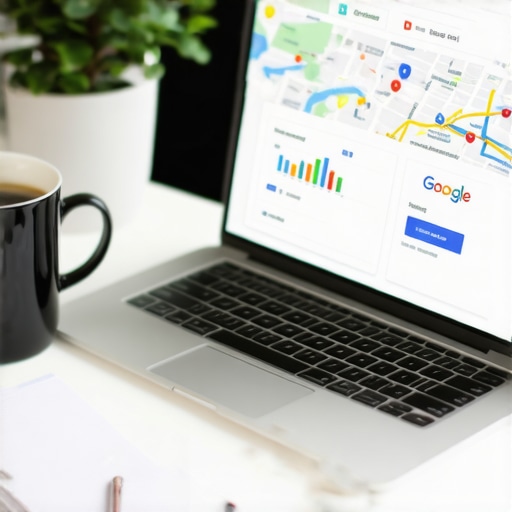
The Extensions I Actually Use Every Morning
Maintenance doesn’t have to be a full-time job. I’ve found that the businesses that scale are the ones that build small, repeatable habits. For example, I recommend checking your profile’s ‘Insights’ tab specifically for ‘Discovery’ searches vs. ‘Direct’ searches once a week. This tells you if people are finding you for what you do, rather than just who you are. To enhance your map views naturally, you need to ensure that ‘Discovery’ number is steadily climbing. If it stalls, it’s usually a sign that your content has gone stale or a competitor has made a move.
How do I maintain my map dominance without losing my mind?
It really comes down to the one profile update you should do every single week. I set a calendar alert for Tuesday mornings to upload one fresh project photo and respond to any new messages. Speaking of communication, if you aren’t using Google Business Messages to boost your discovery rank, you are leaving money on the table for your competitors to grab. Looking toward the future, I predict we will see ‘Visual AI Search’ completely replace traditional text queries for local services. Google will eventually show your business because their AI ‘saw’ the right tools or a specific vehicle in your background photos, not just because you typed the right keywords in a box. This is why you must prioritize real-world imagery over stock graphics. Don’t trust the automated ranking reports blindly; the reality of map rank tracking tools is that they often miss the nuance of actual mobile user intent. My best advice for staying ahead? Spend five minutes tomorrow and optimize your map profile for voice search requests by adding three natural-sounding FAQs to your profile. It’s the easiest way to ensure you’re ready for the next shift in how people find local help.
Why My Map Pin Stayed Invisible for Years and How I Fixed It
Looking back, I wasted months chasing ghost metrics that didn’t matter. I thought if I just had more of everything, the leads would follow. Here is the reality of what actually moves the needle: First, consistency beats intensity every single time. You can’t just fix your profile once and expect it to stay on top. Second, the algorithm is smarter than your shortcuts; every time I tried to game the system with keyword-stuffing, my map discovery numbers fell off a cliff. Finally, realize that your website and your map pin are a married couple—if they aren’t on the same page, the neighborhood will notice. To truly unlock the secrets to maps visibility, you must view every single customer interaction as a signal to Google that you are a living, breathing entity worthy of being found.
#IMAGE_PLACEHOLDER_E#
My Essential Toolkit for Winning the Map Game
I don’t believe in buying every shiny new software that hits the market. To keep my business at the top, I rely on a few specific resources. I check Whitespark’s local search blog weekly because their team is the only one I trust for data-driven experiments. For quick technical checkups, I always have GMB Everywhere active to see how the top three competitors are actually categorizing themselves. If you are ready to transform your map visibility without overcomplicating things, start by auditing your own listing with the free PlePer Chrome extension; it reveals hidden issues that even expensive paid trackers miss. These tools haven’t just saved me time; they’ve prevented me from making costly mistakes based on outdated advice.
Don’t Let Your Competitors Own Your Territory
The distance between where you are now and the top of the local search results isn’t as wide as you think. It doesn’t require a massive marketing budget or a degree in computer science. It just requires you to be the most helpful, most visible version of your business in the digital space. I’ve found that the 3 tactics that actually move your pin to the top spot are the ones you can implement starting this afternoon. Don’t let your competition claim the territory that belongs to you. Go out there and claim your maps visibility by being present and authentic. Have you ever felt like your business was being hidden by a proximity wall you couldn’t break? Let me know in the comments below, and let’s troubleshoot it together!