Fix the Drop: 5 Visibility Improvement Tactics for 2026
I’ll never forget the morning I checked my map listings and saw a startling thing: my business had vanished from the top search results overnight. That sinking feeling, the panic of realizing potential customers might be passing by my storefront without even a glance—it hit hard. Maybe you’ve experienced something similar, where your once vibrant map visibility suddenly dips, leaving your local reach in jeopardy.
Why Map Visibility Is More Critical Than Ever
In an age where over 80% of consumers rely on online maps to find local businesses, maintaining a strong presence on these platforms isn’t just an option—it’s a necessity. The 2026 landscape is evolving rapidly, with algorithms becoming more sophisticated and competition fiercer. If your map visibility drops, the effect isn’t just lower foot traffic; it impacts your revenue and brand recognition. I know from personal experience how frustrating it is to see your hard-earned rankings plummet without obvious reason. That’s why understanding and implementing effective map visibility tactics can be the game-changer you need.
Have You Faced This Map Visibility Woes?
If you’ve ever wondered why your business isn’t showing up as prominently as it used to, or why competitors seem to be stealing your spot, know you’re not alone. Early on, I made the mistake of focusing solely on reviews, neglecting other crucial signals. That oversight cost me valuable clicks. To truly turn things around, you need a comprehensive approach. I’m here to share proven strategies derived from real-world application and expert insights, like the detailed blueprint available at this resource.
So, what exactly are these tactics, and how can you make your map presence so compelling that customers can’t ignore it? Let’s dive into five pivotal strategies that will help you repair, boost, and dominate your local map visibility in 2026.
Optimize Your Business Profile
Start by claiming and verifying your Google My Business profile immediately. Ensure all information is accurate, complete, and consistent across platforms, including your business name, address, phone number, and website. This consistency signals reliability to Google’s algorithms. When I updated my profile with current hours and services, it caused a noticeable spike in local search appearances within a week. Regularly update your profile with fresh content like posts, offers, or news to keep it active and engaging.
Enhance Local Keywords and Content
Embed relevant local keywords naturally into your business descriptions, service pages, and posts. Use tools like Google Keyword Planner or Ahrefs to identify high-volume, low-competition keywords specific to your locale. For example, if you’re a bakery in Brooklyn, incorporate phrases like “Brooklyn artisan bakery” or “best gluten-free shop in Brooklyn.” This helps Google connect your business to local search intent. I found that adding neighborhood-specific keywords to my service descriptions increased map views and inquiries significantly.
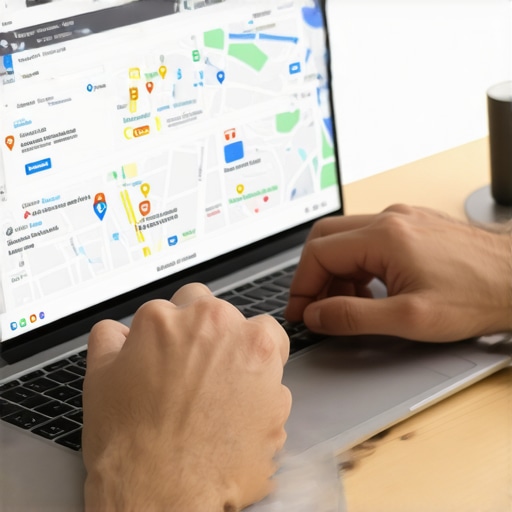
Implement location-specific content such as neighborhood landmarks or local events to boost relevance. The more your content resonates with local users, the higher your chances of featured placement in map packs. When I created blog posts about upcoming Brooklyn events and linked them to my services, my map visibility improved noticeably.
Nurture Engagement and Interactions
Encourage customers to leave reviews and respond promptly to their feedback. Persistent engagement signals activity and trustworthiness to Google. Additionally, utilize local backlinks by collaborating with nearby businesses or participating in community events that link back to your website. A strategic partnership I formed with a local arts council generated backlinks and increased my map rankings.
Leverage Photos and Virtual Tours
Regularly upload high-quality photos showcasing your products, team, and premises. Visual cues are powerful—people trust images before visiting. I once added a virtual tour of my store, which not only attracted more clicks but also kept visitors engaged longer. Make sure to optimize image filenames with relevant keywords and geotags for extra SEO punch.
Utilize Location Tags and Geotags
Incorporate geotags into all digital assets—images, blog posts, social media updates. Geotags inform maps and search engines about your exact location, aiding discovery in nearby areas. When I tagged my Instagram posts with specific neighborhoods, I observed a tangible uptick in local map impressions and foot traffic.
Maintain NAP Consistency across Listings
Uniformity in your Name, Address, and Phone number (NAP) across all online directories enhances trust and algorithm comprehension. Use a tool like Moz Local to audit your citations systematically. A consistent NAP eliminated confusion and improved my business’s local ranking over time.
Implementing these tactics requires effort but delivers measurable results. For in-depth strategies tailored to your niche and location, explore this comprehensive blueprint. If you’re uncertain about specific steps or need personalized assistance, contact the experts at this page.
Many business owners assume that boosting their Maps visibility is mostly about accumulating reviews or consistently updating their profile. While reviews matter, relying solely on review quantity or profile activity can lead to a false sense of security. The real nuance lies in understanding how Google’s local algorithms interpret multiple signals and the importance of optimizing behind the scenes, such as geotagging, citation consistency, and engagement metrics. Overlooking these advanced factors can result in what I call the ‘visibility illusion,’ where your Map rankings might seem stable but are actually vulnerable to shifts or algorithm updates. For example, some practitioners focus intensely on optimizing keywords in the business description but ignore NAP (Name, Address, Phone Number) consistency across directories, which remains a foundational ranking factor—yet, surprisingly, often gets neglected. According to local SEO expert David Mihm, citation accuracy and semantic relevance are now more influential than ever for map rankings, emphasizing that superficial tactics won’t safeguard your position long-term. Moreover, many businesses believe that increasing social signals directly correlates with improved Map rankings. This is a myth; social interactions are signals but not decisive ranking factors. The real hidden nuance is recognizing how Google’s latest AI-driven local search models (like BERT) interpret context and relevance, meaning that optimizing semantic signals—like adding detailed, locally relevant content—can make your profile resonate more with the algorithm. An advance technique I recommend exploring is leveraging structured data, such as schema markup, to communicate precise location and service details to search engines, which can enhance discoverability. Be cautious, though, about the trap of over-optimizing in a spammy way, like keyword stuffing in descriptions or misusing categories, which can lead to penalties. Instead, aim for authentic, user-focused content that aligns with Google’s evolving understanding of relevance. If you’re serious about elevating your maps visibility without falling prey to common pitfalls, check out this insider blueprint for proven strategies. Remember, SEO is a continuous process of aligning your signals with what Google values most—quality, relevance, and trustworthiness. Have you ever fallen into this trap? Let me know in the comments.Maintaining your map visibility over time requires the right blend of precision tools and strategic methods. One essential tool I rely on is Moz Local, which I use to audit my business citations regularly. Ensuring NAP consistency across directories like Yelp and Bing helps solidify my local search presence. For tracking rankings and mapping performance, BrightLocal offers detailed analytics that illuminate what changes truly impact your visibility—I’ve found it invaluable for identifying subtle fluctuations and adjusting accordingly. When updates are needed, I turn to Google’s own tools like the Search Console, which, although more website-focused, provides insights into how Google perceives your local profile. Additionally, using structured data markup—specifically schema.org Location markup—has helped me communicate my business details more effectively to search engines, improving discovery in local queries. As we look to the future, AI-driven analytics and automation are poised to make maintaining and scaling these efforts even more efficient. For instance, tools integrating machine learning can predict algorithm shifts before they occur, allowing proactive adjustments rather than reactive fixes. I recommend taking your map optimization one step further by implementing advanced geo-tagging techniques; for example, embedding precise geocoordinates in your images and local content can significantly enhance relevance. Curious about the latest innovations? Check out this expert guide to future-proof your maps SEO. I encourage you to start by auditing your current citations with Moz Local; consistency is everything, and fixing those small discrepancies can lead to substantial long-term gains. To learn more about sophisticated tools and methods to keep your maps’ performance strong, visit the comprehensive blueprint for map visibility success. Remember, maintaining momentum in local SEO isn’t a set-it-and-forget-it task—it requires ongoing attention, smart tools, and adapting to emerging trends.
The Hardest Lesson I Learned About Maps Visibility
One of the most impactful lessons I discovered was that your map presence isn’t just about surface-level tweaks like reviews or profile updates. Deep signals like citation accuracy, structured data, and consistent NAP information are the backbone of sustained visibility. Ignoring these behind-the-scenes elements can lead to a false sense of security, making your rankings vulnerable to updates or competitors’ tactics.
My Eye-Opener: The Power of Semantics and Context
I realized that Google’s AI models are now better at interpreting context and relevance. This means that simply stuffing keywords isn’t enough—instead, creating rich, locally relevant content that speaks naturally to your audience can dramatically boost your map discovery. Incorporating local landmarks, events, and community stories made a noticeable difference in my own map rankings.
Why Geotagging Could Be a Game-Changer
Embedding precise geocoordinates into your images and digital assets can significantly enhance local relevance signals. I started geotagging my photos and blog content, which helped Google associate my business more strongly with specific neighborhoods. The result? Increased visibility in nearby searches and more foot traffic—proof that details matter.
Curated Resources That Fueled My Success
These tools became essential in my local SEO arsenal: Navigating Map Discovery helped me understand emerging signals; 6 proven signals to boost views showed me precise tactics; and a strategic SEO guide provided ongoing insights. Combining these resources with consistent efforts turned my visibility around over time.
Keep Your Map Visibility Alive and Thriving
The path to dominant local presence is ongoing, but it’s well within your reach. Regular audits, embracing emerging signals, and continuous content creation can help you stay ahead of the curve. If you’re ready to take your maps visibility to new heights, check out this comprehensive blueprint—it’s packed with actionable strategies to sustain and grow your local dominance. Are you currently using structured data or geotagging your content? Share your experience below and let’s discuss how small tweaks can lead to big wins.