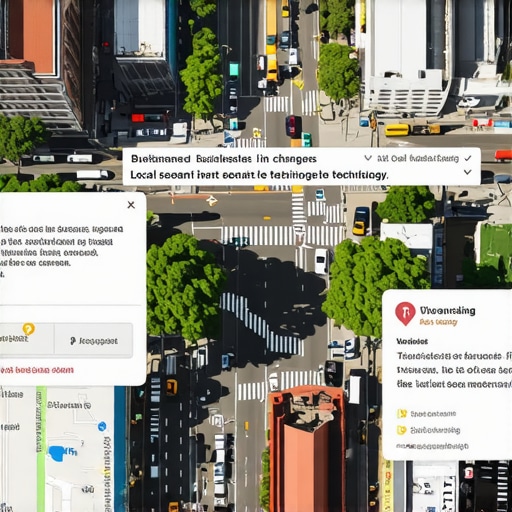
The 2026 Google Maps SEO Checklist: Why Local Intent Changed
The landscape of local search has undergone a fundamental shift. If you are still operating your local marketing strategy based on the playbooks of 2023 or even early 2025, you are likely watching your visibility vanish. Between March 2025 and May 2026, Google executed what many industry experts call the “Historic Transformation” of local search. This wasn’t just another minor algorithm update; it was a total re-engineering of how the search engine understands human intent in a physical space.
In this new era, Google has moved decisively away from “keyword relevance matching” – the old-school method of simply checking if your business name or description matches a search term. Instead, the algorithm now prioritizes context, authenticity, and trusted identity. As a Local SEO Strategist with over 15 years of experience, I have seen many shifts, but none as profound as this. To remain visible, businesses must understand The 2026 Google Business Profile Checklist: What We Are Changing to Stay Visible.
The fundamental transformation of Google’s algorithmic infrastructure means that the “Map Pack” is no longer just a list of nearby businesses; it is a curated recommendation engine powered by real-world behavior and AI-verified data. If you aren’t on the right side of this shift, your business is essentially invisible to the 2026 consumer.
II. Proximity vs. Authority: The 2026 Algorithm Balance
For a decade, proximity was the undisputed king of Local SEO. If a user searched for a “plumber” while standing on 5th Avenue, Google would prioritize the closest plumber to 5th Avenue. However, the 2026 algorithm has refined this balance. Today, Google weighs proximity against brand authority with far more nuance.
Ranking #1 in the Map Pack is no longer just about being the closest option; it is about being the most trusted option within a reasonable radius. Google’s internal google maps ranking system now analyzes whether a business three miles away has significantly higher authority signals than a competitor only three blocks away. If the distant business has better interaction data, more verified local mentions, and a “Trusted Identity” score, Google will happily bypass the closer option to provide a better user experience.
Data indicates that nearly half of all Google searches now have local intent. This means that if your authority signals are weak, you are losing out on 50% of your potential market share, even if you have the best physical location in town. Understanding How the Local Map Algorithm Actually Weighs Proximity vs Authority is the first step in reclaiming your territory. In 2026, “local” is a measure of influence, not just distance.
III. The Technical Checklist: Beyond the Basics
Technical SEO for local businesses used to be simple: fix your NAP (Name, Address, Phone) and ensure your site loads reasonably fast. In 2026, the technical requirements have become significantly more sophisticated. To rank in the high-competition Map Pack, your digital foundation must be built for both humans and AI agents.
The Rise of LLMS.txt
One of the most critical additions to the 2026 technical checklist is the LLMS.txt file. Much like robots.txt guides search crawlers, LLMS.txt is designed to prepare a local site for AI-driven discovery. This file provides Large Language Models with a structured, easy-to-digest summary of your business’s core services, local expertise, and unique selling propositions. Without it, AI-driven search assistants may misinterpret your business’s primary functions, leading to a drop in “Zero-Click” visibility.
Local Schema Markup 2.0
Standard “LocalBusiness” schema is no longer enough. There are now 4 Missing Schema Details That Are Secretly Tanking Your Local Map Rank. These include specific attributes for areaServed, knowsAbout, hasDriveThroughService (where applicable), and detailed openingHoursSpecification that accounts for AI-predicted peak times. Using advanced local seo software to automate and validate this schema is no longer a luxury; it is a requirement.
Mobile-First UX and Edge Latency
Local searchers are almost always on the move. Google now measures “Edge Latency” – how fast your site responds to a user on a 5G or 6G network in a specific geographic pocket. If your site lags for a user in a specific neighborhood due to poor server distribution or heavy scripts, your Map Pack ranking in that specific neighborhood will suffer. Speed is no longer a global metric; it is a local one.
IV. Google Business Profile (GBP) Mastery in 2026
The Google Business Profile remains the heart of your local presence, but the way we optimize it has changed. We have moved from a “set it and forget it” mentality to a model of constant, data-driven refinement. Modern google business profile seo focuses on “Trusted Identity” over keyword density.
Category Selection and Service Area Traps
One of the most common mistakes in 2026 is improper category nesting. Google’s AI now understands the relationship between primary and secondary categories with extreme precision. If you select a category that doesn’t align with your actual service data or website content, you create a “relevance gap.” You might find that Why Your Business Categories Might Be Hiding Your Pin From Local Searchers is the reason you’ve disappeared from the top 3. Furthermore, service area businesses must be careful not to over-extend their boundaries, as Google now cross-references these against actual service vehicle GPS data and customer review locations.
Inventory Tweaks and Real-Time Data
In 2026, “Inventory Tweaks” are a major ranking factor. Whether you sell physical products or time-based services (like dental appointments), integrating real-time availability into your GBP is essential. Google rewards profiles that provide immediate utility to the user. If your profile shows “In Stock” or “Appointment Available Today,” you are significantly more likely to outrank a competitor who only offers a static phone number.
The algorithm now recognizes that a “Trusted Identity” – verified through consistent updates, high-quality photos, and accurate metadata – beats keyword stuffing every time. Authenticity is the ultimate optimization tactic.
V. Behavioral Signals & The Discovery Feed
In 2026, “Interaction Signals” have officially replaced traditional backlinks as the primary driver of Map Pack rankings. Google’s algorithm has become an expert at detecting “Behavioral Clicks” – the actions users take that prove a business is the best answer to their query.
These signals include:
- Direction Requests: How many people actually navigate to your location?
- Dwell Time: How long do users spend looking at your GBP photos or reading your updates?
- Click-to-Call Ratios: Are users actually contacting you after finding you?
- Secondary Searches: Do users search for your brand name specifically after seeing you in the Map Pack?
Understanding How Behavioral Clicks Actually Improve Map Views in 2026 is vital for any business looking to improve google maps rankings. These signals feed into the “Map Discovery Feed” – a personalized list of recommendations Google shows users even before they type a search query. Triggering this feed requires a consistent stream of positive user interactions, which can be fostered through high-quality GBP posts and engaging visual content.
VI. Review Management 2.0: Context Over Stars
The days of simply “getting more 5-star reviews” are over. In 2026, the volume of stars is secondary to the semantic content within the reviews. Google’s AI reads every review to extract “entities” and “sentiments.”
If a customer leaves a review saying, “The service was great,” it helps your overall rating but does little for your SEO. However, if a review says, “The emergency pipe repair in Downtown Chicago was fast and affordable,” Google associates your business with the entities “emergency pipe repair” and “Downtown Chicago.” This is the core of modern Review Management: The Shift That Breaks Into the Top 3.
Furthermore, Google has become suspicious of “perfect” profiles. Data suggests that hiding or deleting bad reviews can actually hurt your rank. A business with a 4.8-star rating and a few handled, professional responses to negative feedback is viewed as more “authentic” than a 5.0-star profile with no flaws. Using sophisticated google maps lead generation tools to monitor and encourage detailed, keyword-rich reviews is the new standard for local authority.
VII. Hyper-Local Authority & Community Mentions
Generic citations on massive national directories (like YellowPages or Yelp) have lost much of their weight. In 2026, Google prioritizes Hyper-Local Authority. This is built through mentions on neighborhood-specific blogs, local news sites, and community organization pages.
If the “Lincoln Park Neighborhood Association” mentions your business, that signal is worth more than 100 generic directory listings. Google looks for “Neighborhood News” to verify that a business is a pillar of its local community. This is why How Hyper-Local Mentions Grow Your Maps Visibility in 2026 is a core chapter of our strategy. To move the pin, you must prove you exist in the real world, not just the digital one. Leveraging specific local seo tools to identify these hyper-local opportunities is essential for scaling your reach.
The 2026 Google Maps SEO Checklist Summary
To ensure your business remains at the top of the Map Pack, follow this high-level checklist:
- Verify Technical Foundation: Implement LLMS.txt and advanced Local Schema.
- Audit GBP Categories: Ensure your categories match your real-world services and website content.
- Optimize for Real-Time Utility: Update inventory and availability data daily.
- Cultivate Semantic Reviews: Encourage customers to mention specific services and locations in their feedback.
- Monitor Behavioral Clicks: Use interaction data to refine your GBP posts and photos.
- Build Local PR: Focus on mentions from neighborhood-level sources.
Conclusion: The Future of Local Visibility
Local SEO in 2026 is no longer a game of tricking an algorithm; it is a game of authority, user behavior, and authenticity. Google has built a system that rewards businesses that are genuinely helpful to their local communities and provides the data to prove it. The shift from surface-level content to real-world value is complete.
If you find your rankings slipping or your call volume dropping, it is time to act. You must audit your profile using a professional google business profile audit tool or, better yet, hire a google business profile expert to navigate these complex algorithmic waters. The 2026 landscape is competitive, but for those who follow the data and prioritize the user, the opportunities for growth have never been greater.
Ready to dominate your local market? Unlock the Secrets to Maps Visibility: Expert Tips for 2025 and start your journey toward the top of the 2026 Map Pack today.