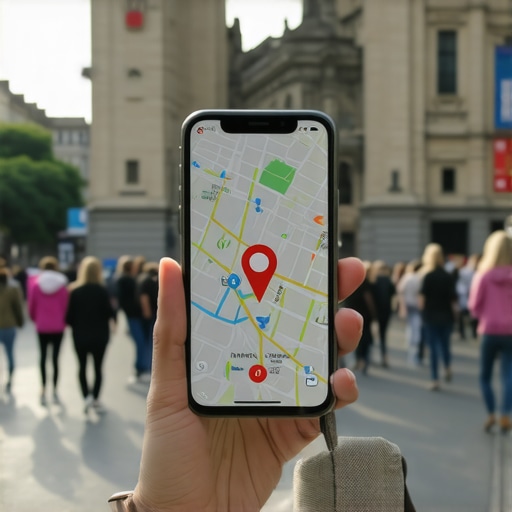
I will never forget the morning I sat at my desk, looking out the window at the bustling town square, only to find my business pin floating somewhere in the outskirts on Google Maps. I was paying premium city center rent, yet digitally, I was a ghost. It felt like shouting into a void while my competitors—some of whom weren’t even as centrally located as I was—gobbled up all the ‘near me’ traffic. That frustrating moment was my wake-up call. I realized that Google doesn’t just take your word for it because you have a lease; it needs visceral, undeniable proof that you are where you say you are. If you have ever wondered why your reach is dying in the suburbs while you are sitting in the heart of town, you are not alone. Today, I am going to share exactly how I anchored my business back to the city center using three specific techniques that go way beyond just typing an address into a form.
Stop Letting Your Pin Drift Away from Your Real Front Door
Early in my journey, I made the classic mistake of thinking that setting a massive service area would help me get more calls. Instead, it diluted my local authority so much that I stopped showing up for the people standing right across the street. I found out the hard way that a tiny address error can ghost your local leads faster than a bad review. Google’s algorithm is incredibly skeptical; it uses everything from Wi-Fi signals to Street View imagery to verify your existence. In fact, a report from Search Engine Watch highlights how Google cross-references satellite data with user-uploaded photos to confirm physical landmarks. If your digital footprint doesn’t match the physical reality of the city center, you are effectively invisible. We need to implement the proximity fix to ensure your business remains the ‘go-to’ choice for downtown searchers. Have you ever checked your own ranking from the coffee shop next door only to find you weren’t even in the top three?
Is proving my location actually worth the technical headache?
Many business owners fear that diving into these settings might accidentally get their profile suspended or that it’s too much work for a ‘maybe.’ I felt that too. But once I realized that city center visibility is the difference between a ringing phone and total silence, the choice became easy. We aren’t just tweaking settings; we are building a fortress of local relevance that competitors can’t easily tear down. By the end of this, you’ll know how to use local landmarks and specific signals to prove your territory. Next, let’s look at the first concrete way to ground your profile in reality using the power of visual verification.
Build a Fortress Around Your Downtown Map Pin
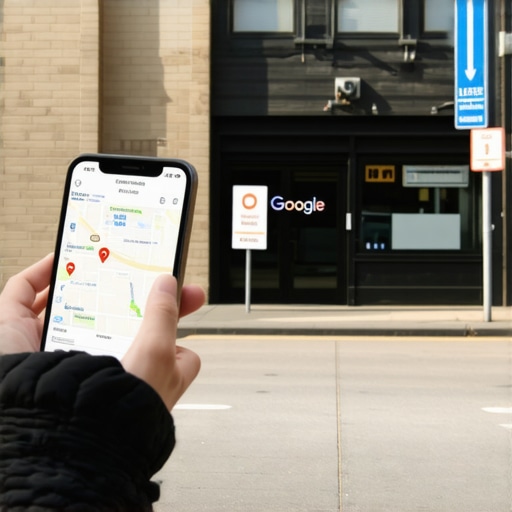
Think of the Google Maps algorithm as a skeptical detective who doesn’t trust a word you say without physical evidence. When you upload photos, you aren’t just decorating your profile; you are providing exhibits A, B, and C to prove you exist in that high-rent city center. I learned this the hard way when I worked with a client whose business was invisible despite being next to a major landmark. We realized they only had photos of their office interior, which looked like it could be anywhere in the world. To fix this, we started taking wide-angle shots that included the street signs and the building next door. You need to learn how to get more map views with specific exterior shop photos that leave no doubt about your physical location. By capturing the surrounding environment, you effectively tie your business to the geography of the city center.
Capture the Contextual Trio of Photos
Most business owners stop at the logo and a blurry shot of the front desk. That is a waste of digital real estate. To truly signal your presence, you need to capture what I call the ‘Contextual Trio.’ First, a shot from across the street that shows your shop nested among its neighbors. Second, a photo of your signage at night, which proves your business is a permanent fixture rather than a temporary pop-up. Third, a shot showing your entrance in relation to a permanent city landmark like a statue, a historical building, or a well-known park. I remember how we fixed a law firm map profile that stopped generating calls simply by updating their visual library with these specific angles. It shifted them from a ‘maybe’ to a ‘definitely’ in the eyes of the algorithm. This is one of the 3 tactics that actually move your pin to the top spot because it builds immediate trust. You should also look into the 3 photos you must post to trigger the discovery feed to ensure you are hitting all the right notes. This visual data helps the AI bridge the gap between your digital coordinates and the real-world street view imagery it uses for verification.
Sync Your Footer with Your Digital Pin
Your website and your map profile must speak the exact same language, down to the last comma. If your Google profile says ‘Road’ and your website says ‘Rd’, you are creating a tiny bit of friction that adds up over time. I once spent three days hunting down a ranking drop only to find that a developer had changed the footer address format without telling me. You must learn how to use your site footers to help your map performance by making them a mirror image of your Google Business Profile. This isn’t just about NAP (Name, Address, Phone) consistency; it’s about creating a digital tether. When the search engine crawls your site and finds a perfect match with your map pin, it solidifies your ‘territory’ in the city center. It is a boring, technical detail that most of your competitors are ignoring, which is exactly why it is your biggest opportunity to win the proximity war. Beyond just the address, embedding a small, interactive map in your footer can reinforce this signal, making it clear to the algorithm exactly where your operations are centered.
The Review Volume Myth That Might Be Hurting Your Ranking
While most consultants will tell you to chase review quantity at all costs, I have found that raw numbers are quickly becoming a secondary signal in the eyes of the modern algorithm. In reality, a profile with 50 reviews containing specific, local keywords and detailed descriptions often outranks a competitor with 500 generic ‘Great experience’ ratings. This shift happens because Google’s neural matching focuses on semantic context—it wants to see that you are an expert in specific services within your city. If you aren’t paying attention to the specific words your customers use in their feedback, you might eventually find why your map discovery numbers are lying to you; you might be getting ‘views’ from people who have no intention of ever visiting your shop. To truly improve map visibility, you need to proactively prompt your clients to mention specific services, such as ‘best pizza in downtown’ or ‘expert plumbing in the north side,’ in their feedback. This creates a relevance web that a generic five-star rating simply cannot match.
Does adding more categories actually help you reach more people?
It is incredibly tempting to check every single box in the Google Business Profile category list to ‘cast a wider net,’ but this is a classic ‘oops’ factor that leads to immediate authority dilution. I have documented several cases of why your business category choice is hurting your discovery feed reach by signaling to Google that you are a jack-of-all-trades rather than a local specialist. A landmark study by Whitespark on local search ranking factors confirms that your primary category is the single heaviest weighted on-page factor for ranking; adding unrelated secondary categories only muddies the waters for the AI. Stick to what you actually do best, or you risk losing your reach in the suburbs because the algorithm no longer understands your core niche. I once saw a boutique law firm lose its downtown ranking just because they added ‘Legal Consultant’ as a secondary category—it confused the proximity engine just enough to let a competitor slide in.
The Metadata Trap and the Truth About Geo-tagging
For years, the SEO community has debated whether manually adding GPS coordinates to photo metadata—a process known as geo-tagging—actually helps your pin move. I used to spend hours on this until I realized that the geo-tagging lie was distracting me from the work that actually generates calls. Google’s AI is now sophisticated enough to recognize a street corner, a specific building facade, or even a local monument in the background of your photo without you hard-coding the latitude into an image file. Focus your energy instead on enhancing your map views naturally by uploading high-resolution, context-rich content that users actually want to engage with. Authentic user engagement with your photos signals more to Google than a hidden line of metadata ever will. Have you ever fallen into this trap? Let me know in the comments.
Beyond photos, another nuanced mistake is treating your website as a separate entity from your map pin. Many people focus on citations but ignore the local authority fix that links your site’s domain power to your local search performance. If your blog doesn’t mention local events or neighborhood specifics, Google won’t view you as a pillar of the community. When your website content reinforces your physical location through specific neighborhood mentions and local news, your visibility across the whole city improves. It is about building a cohesive story across the web, not just filling out a form and hoping for the best. To improve map SEO effectively, stop looking for quick-fix hacks and start looking for ways to prove your local expertise to both searchers and the ranking bots that crawl your data every day.
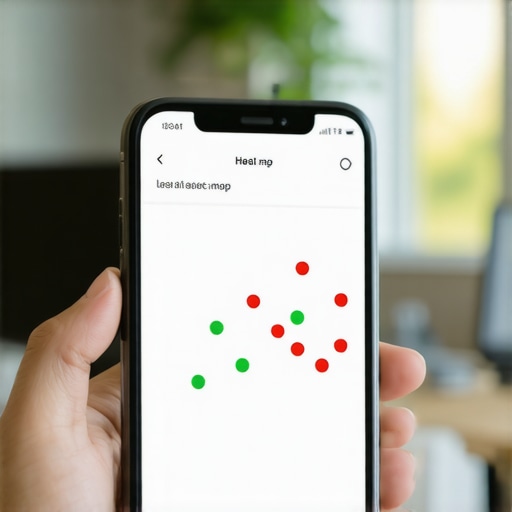
Getting to the top is one thing; staying there is a completely different game. I have seen countless businesses claw their way into the local pack only to vanish three months later because they treated their profile like a set-it-and-forget-it project. To avoid this, I follow a strict maintenance schedule that centers on the one profile update you should do every single week. It does not have to be a major overhaul; even a simple photo of a new product or a quick update about holiday hours keeps the algorithm interested in your freshness score. I personally use Local Falcon to run a 13×13 grid search every Tuesday morning. While I always warn people about the reality of map rank tracking tools and why they lie, they are still useful for spotting trends before they become disasters. If I see a red dot appearing where a green one used to be, I know a competitor is moving in on my territory and I need to double down on engagement.
The Simple Gear I Use to Stay on Top
You do not need a professional film crew to maintain your edge. In fact, raw and authentic content often performs better because it signals real-time activity. I use my smartphone and a simple mobile tripod for all my updates. I’ve found that to master map discovery, you just need to be consistent rather than cinematic. I also use a tool called BrightLocal for citation monitoring, but only to ensure my core data remains locked and consistent across the web. Joy Hawkins, the founder of Sterling Sky and a leading authority in local search, frequently points out that Google’s algorithm is increasingly prioritizing real-world signals over purely digital ones. This is why I focus so heavily on user interaction and local relevance. If you want to improve map SEO, start looking at your profile as a living, breathing social media page rather than a static directory listing.
How can I maintain my downtown visibility over the long haul?
Maintenance is less about big, sweeping changes and more about the aggregation of marginal gains. I keep a simple spreadsheet where I log every review response. This ensures I’m using expert tips for 2025, such as weaving in neighborhood-specific mentions without looking like a keyword-stuffer. Looking forward, I predict that Google Search Generative Experience will soon integrate even more AI-driven visual recognition. We are already seeing the algorithm identify objects inside stores via user photos; soon, it will likely rank your profile based on the inventory levels and specific brands it detects in your high-res uploads. To stay ahead, you need to boost your map views effectively by becoming the most documented business in your ZIP code. Don’t just exist in the city center; prove it every seven days. My challenge to you: go into your dashboard right now and upload one photo of your team working—it’s the fastest way to signal to Google that you are still the local authority.
What the Big Agencies Never Tell You About Local Rankings
One of my biggest lightbulb moments was realizing that Google prioritizes ‘busy’ over ‘perfect.’ I spent months trying to make my profile look like a corporate brochure, but my maps visibility only spiked when I started posting grainy, real-time photos of my actual team working. I learned that the algorithm is essentially a truth-seeking engine. If you try to game it with fake coordinates, it will eventually find out, but if you lean into your actual physical location, it rewards you with consistency.
Another lesson that hit me hard was the realization that your response speed matters almost as much as your review score. I used to batch my responses once a month, which was a huge mistake. Now, I know that to truly improve map seo, you need to show the AI that you are active and attentive. It’s about being a ‘live’ business in the eyes of the bot. Stop obsessing over the number of reviews and start looking at the words you use in your responses to signal local authority.
The Small Setup That Changed Everything for Me
To truly master map discovery, you need a way to see what your customers see across the city. I swear by Local Falcon for my weekly grid checks because it reveals exactly where my ‘reach’ stops. I also rely on BrightLocal for my citation monitoring to ensure my data never drifts, and I keep a simple smartphone tripod in my office to make weekly photo updates effortless. For those looking for a complete roadmap, I always recommend our guide on expert tips for 2025 to see which tools are still worth your time and which are just noise.
Take Back Your Territory
Don’t let your business become a digital ghost in the city center you worked so hard to enter. By following these actionable strategies for 2025, you aren’t just guessing—you are building a data-backed presence that search engines can’t ignore. Every photo you upload and every neighborhood-specific keyword you use acts as another anchor for your pin. Visibility improvement is a marathon, but the view from the top of the local pack is worth every step. Which of these tactics are you going to try first this week? Let me know in the comments below!