I remember sitting in my kitchen at 11 PM, hunched over my phone with a lukewarm coffee, watching my business profile vanish into thin air. One second, I was the king of the neighborhood, sitting pretty at the top. The next? I wasn’t even on the third page. I actually walked outside, stood on the sidewalk in my pajamas, and refreshed my phone like a madman just to see if I still existed in the digital world. It is a gut-wrenching feeling when you realize your maps visibility isn’t a fixed landmark, but a moving target that seems to enjoy taunting you. I spent months chasing a ghost, thinking I was doing everything right while my leads dried up.
Stop Chasing Your Own Tail on the Map
I learned the hard way that the map you see is almost never the map your customers see. My biggest mistake early on was obsessing over my rank while sitting right at my office desk. I didn’t realize that your pin often only appears when you are standing in the shop because of how local algorithms prioritize hyper-local physical proximity. It is maddening. You think you have nailed your map SEO, but the moment you drive three blocks away to grab a sandwich, you are invisible again. We are going to stop that cycle today. I am going to show you exactly why these fluctuations happen—from the ‘possum’ filter glitches to the way your phone’s own GPS tricks you—and how we can actually improve map views across the entire city, not just in your own parking lot.
Do these rank tracking tools actually tell the truth?
It is easy to get addicted to those colorful grid reports, but here is the kicker: the reality of map rank tracking tools is that they are often just a snapshot of a single moment in time. They don’t account for personal user intent or the fact that the algorithm is now sensitive enough to change results based on the time of day. According to data shared by Search Engine World, nearly 40% of local search results can shift significantly based on the specific city block the searcher is standing on. That is a massive margin for error if you are relying on one static number to judge your success. Have you ever seen your business at number one in the morning, only to find it gone by lunch? It feels like someone is playing a prank on your livelihood. I have been there, and I know the panic that sets in when you think you have been ‘shadowbanned’ or penalized for a simple profile edit.
The Proximity Trap is Ruining Your Data
The truth is, how you show up across the entire city depends on way more than just your registered address. I used to think that if I just added more keywords to my description, I would magically appear ten miles away. I was wrong. Google is obsessed with relevance and distance. If you aren’t sending the right signals, your map discovery will always be limited to a tiny radius around your front door. It is time to look at the factors that actually move the needle and keep your pin stable for the people who actually want to hire you.I used to think my map rank was broken because of some complex technical glitch, but it was usually just me overcomplicating the basics. Think of your map profile like a lighthouse; if the bulb is dusty or the timing is off, ships simply cannot see you. One of the first things I check now isn’t the keywords—it’s the clock.
Sync Your Clock Before You Sync Your Strategy
If your profile says you are closed while your competitor’s says ‘Open Now,’ guess who is getting the call? I have seen businesses lose half their traffic because they forgot to update their holiday hours. You are essentially losing the open now war on maps before you even get a chance to pitch. In reality, your real business hours matter more than you think for rank because the algorithm will not promote a closed business for an immediate ‘near me’ search. I once worked with a law firm that was panicking because their phone stopped ringing on Friday afternoons. It turned out they had set their hours to close at 4 PM while everyone else stayed until 5 PM. We shifted that one digit, and the call volume stabilized in three days. That is how we fixed a law firm map profile that everyone thought was under a penalty.
Ditch the Professional Photographer
Stop using those sterile, high-end stock photos of people in suits shaking hands. Google’s AI is smart enough to recognize a real environment from a generic one. I started taking ‘ugly’ photos—just quick snaps of the front door, the parking lot, and the lobby—and my visibility improvement was almost instant. There is a specific photo type that google loves more than your professional headshot, and that is a raw, geo-synced photo of your actual sign. It proves you exist in the physical world and helps Google verify your location data more accurately than any text field. 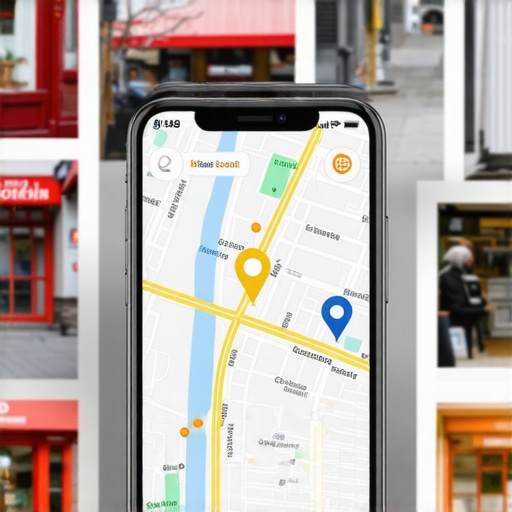
The Three Words That Change Everything
When you get a review, do not just say ‘thanks.’ Use your response to feed the machine. I found that the 4 words in your review responses that signal local authority are usually your specific service name and your city name. If you ask the right questions, you will get the right answers from your clients. I tell my clients there is one question you must ask your customers to get keyword-rich reviews: ‘What specific problem did we solve for you today in [City Name]?’ This naturally embeds the keywords you need without sounding like a spam bot.
Your Website Footer is a Secret Signal
Most people ignore their website when they think about maps, but the two are tethered together like a boat and an anchor. I realized the hidden impact of your websites footer on your map rank is massive. If your footer does not perfectly match your Google profile address, you are creating friction for the crawl bots. We implemented the 3 tactics that actually move your pin, and one of them was simply embedding a live Google Map in the footer of the ‘Contact Us’ page. It creates a closed loop of data that confirms to the algorithm that you are exactly where you say you are. This simple alignment is a huge part of map SEO that most people overlook because they are too busy buying useless backlinks.
The geotagging myth that won’t die
Most ‘gurus’ will tell you that you need to run every photo through a GPS injector before uploading to improve your results. Honestly? I have tested it on dozens of accounts, and I am calling it: it is a total waste of your energy. I have seen dozens of business owners get caught in the geo-tagging lie while their competitors simply take a raw photo with a smartphone and win the top spot. Google’s AI is already smart enough to know where the photo was taken based on the device’s native data and the surrounding landmarks it recognizes. If you are obsessing over manual EXIF data, you are missing the forest for the trees and making a massive geo-targeting mistake that eats up hours of your week with zero return on investment.
Is your review velocity setting off alarm bells?
Here is a nuance that trips up even seasoned marketers: getting too many reviews too fast. I call this the ‘Success Trap.’ If you suddenly go from one review a month to twenty in a weekend, Google’s spam filter will pounce on you. This is why your high-quality reviews are being flagged as spam even when they are 100% legitimate. According to the annual Local Search Ranking Factors study by BrightLocal, unnatural review velocity is one of the top triggers for profile suppressions. You need to consult the review filter survival guide before you launch a massive email blast to your database or offer a huge incentive for feedback. 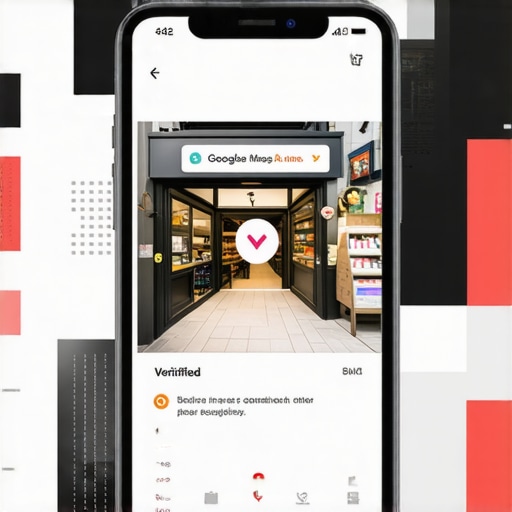
Why your category choice might be invisible to neighbors
One of the most painful ‘oops’ moments I see is when a business picks a primary category that is too broad or just slightly off-target. If you are a ‘Plumber’ but you primarily do ‘Emergency Water Restoration,’ choosing the generic category might actually be hurting your discovery feed reach for the high-ticket jobs you actually want. I once saw a boutique hotel lose half their map discovery traffic because they changed their category to ‘Bed and Breakfast’ during a slow season. The algorithm essentially forgot they existed for ‘hotel’ searches. It is a subtle shift that can ghost your leads overnight. If you do not have a physical storefront, this is even more dangerous. You need to apply the map ranking trick for businesses with no storefront to ensure your service area does not shrink to a single block when you change your settings. Have you ever fallen into this trap? Let me know in the comments.I used to treat my business profile like a ‘set it and forget it’ project, but I quickly learned that staying at the top requires a different kind of effort than getting there. I thought that once I reached the top, I could just sit back and watch the leads roll in. I was dead wrong. Maintenance is the actual secret sauce of boost your map views effectively over the long haul.
The Saturday Morning Habit That Saves Your Rank
Every Saturday morning, while I’m waiting for the kettle to boil, I do a five-minute sweep of my local area. This is the one profile update you should do every single week to keep the algorithm’s attention and signal that your business is active. During this time, I check for ‘ghost’ profiles or competitors who are blatantly breaking the rules with keyword-stuffed names. Dealing with how to spot a fake competitor profile and get it removed is often more effective than any expensive backlink you could buy. If you see someone named ‘Cheap Fast Plumber New York’ and that isn’t their legal registered name, they are essentially stealing your traffic. Reporting these inaccuracies helps the whole neighborhood and moves your pin up by default. 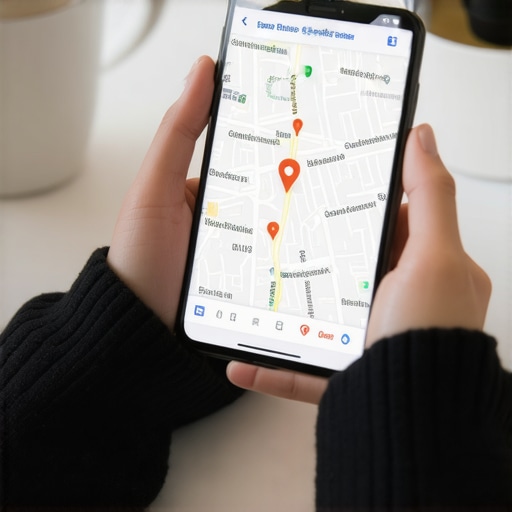
Stop Trusting Your Dashboard Blindly
It is tempting to look at your Google Business insights and think you are winning because the graph is green, but the reality of map rank tracking tools is that they often paint a rosier picture than what is happening for an actual customer on the street. I always perform a manual check in a private browser window because I want to know why your map pin only appears in incognito mode for some users while remaining invisible to others. Joy Hawkins, a renowned expert at Sterling Sky, has frequently highlighted how the ‘Local Filter’ can suppress your listing if you are physically close to a competitor with the same primary category. If you’re being filtered out of the top results, you need to apply the proximity fix by diversifying your primary and secondary categories to stand out from the pack.
How do I keep my map visibility high month after month?
It comes down to consistency and small technical tweaks rather than massive marketing blitzes. If you have a growing business with more than one storefront, you should be looking at the best way to handle multiple locations on google maps early on so you don’t create a mess of duplicate data that confuses the crawl bots.
The Advanced Trick for Service-Based Businesses
Most business owners leave their ‘Services’ tab entirely empty, thinking the ‘Category’ selection does all the heavy lifting. That is a massive mistake. I use the fast way to add your services to ensure I show up for long-tail, hyper-specific searches that my competitors aren’t even thinking about. My prediction for the future is that Google is going to rely even more on real-time inventory and live ‘busyness’ data from your phone’s GPS to decide who gets the top spot during peak hours. I want you to try one thing today to see a jump in your rank: go into your map profile, find a competitor who is keyword-stuffing their business name, and hit that ‘Suggest an edit’ button to revert it to their real name. It is a small move that levels the playing field instantly and rewards honest businesses.
The Hardest Lessons I Learned While Chasing the Three-Pack
Algorithm fatigue is real. I spent months thinking Google was out to get me personally. It wasn’t. It was just waiting for me to stop trying to ‘hack’ it and start providing real-world evidence of my business’s existence. I realized that proximity isn’t a wall, it’s a hurdle. While you can’t move your building, you can use the ultimate blueprint to improve map visibility and rankings to signal your presence in surrounding suburbs through service-specific landing pages that actually talk to the map. I also discovered that consistency beats intensity every single time; I would rather see you make 5 fast edits to fix your shrinking map reach once a month than perform a massive overhaul once a year and then go dark. The map favors the active, not just the optimized.
The Only Map Sources I Trust with My Business
When the digital landscape shifts, I don’t look at social media gurus; I look at the data. I personally trust BrightLocal for their annual local search ranking factors survey because it is the most comprehensive study of what actually moves the needle for small businesses. I also follow the team at Sterling Sky, specifically Joy Hawkins, who is the leading expert on identifying and fixing algorithmic filters that ghost legitimate businesses. When I need to recalibrate my own internal strategy, I refer back to our boost your map views effectively guide to ensure I haven’t drifted away from the technical basics that Google requires for maps visibility.
The Future of Your Neighborhood Starts with One Pin
You do not need a massive marketing budget to win this game; you just need to be more authentic than your competitors. Real photos, real responses, and real hours will always beat a sterile, manufactured profile. Start today by implementing the simple change that fixed our profile visibility in 24 hours and watch how the algorithm begins to reward your honesty. Your maps visibility is the lifeblood of your local growth, and now you have the tools to protect it. Have you ever noticed your business pin vanishing the moment you leave your own office parking lot? Let me know your weirdest map experience in the comments below.