I was sitting in my truck at a red light just two blocks from my office, feeling pretty good about my day until I decided to check my own business on my phone. I typed in my service, expecting to see my pin proudly sitting at the top. Instead? Nothing. I was a ghost. I didn’t even show up in the top twenty results, even though I could literally see my building from where I was parked. It turned out that a stray listing on an obscure directory from four years ago had my old suite number, and that tiny discrepancy was enough for Google to lose trust in my location. It was a wake-up call that more citations aren’t always better if they are messy. Today, I want to show you how to find those digital ghosts and delete them before they sink your rankings.
Stop letting ghost addresses kill your local reach
If you have ever moved offices or changed your phone number, you likely have a trail of digital breadcrumbs leading customers—and search engines—into a dead end. I made the mistake of thinking Google was smart enough to ‘just know’ which address was current. It isn’t. When your data is fractured across the web, your authority takes a massive hit. You need to spot citation inconsistency early because even a missing ‘Suite B’ can trigger an algorithm red flag. According to a study by Moz on local search ranking factors, citation consistency remains a foundational piece of the puzzle for appearing in the local pack. If the internet can’t agree on where you are, why would a map app risk its reputation by sending a driver to you? This is often the hidden address error that keeps perfectly good businesses in the shadows.
Does manual cleanup actually worth the headache?
You might be wondering if it is really worth spending your Saturday afternoon hunting down old listings on sites you have never heard of. I used to think it was a waste of time too, until I realized that address errors keep you off mobile search results entirely for high-intent ‘near me’ queries. It is a tedious process, but the payoff is a map pin that actually stays where it belongs. Have you ever searched for your own business and found a phone number or address that belonged to you five years ago? It’s a common frustration, but it is one we are going to fix right now. [image_placeholder]
Take control of your digital footprint right now
The first thing you need to do is build a ‘Master NAP’ document. This is your Name, Address, and Phone number exactly as it appears on your legal documents and your office door. I treat this document like a holy text because any variation—even using ‘St.’ instead of ‘Street’—can muddy the waters for search algorithms. Once you have your baseline, you need to find where the digital lies are hiding. I remember working with a local plumber who could not figure out the map search mistake most local plumbers make: he had listed his business under his own name, his LLC name, and a ‘doing business as’ name across twenty different directories. Google saw three different entities and gave none of them the authority to rank. We spent three weeks manually claiming those profiles just to hit the ‘delete’ button. It was a grind, but his calls doubled a month later because his map visibility transformed once the algorithm stopped being confused.
Hunt down every version of your business name
Start with a simple Google search for your old phone numbers and previous addresses. You will be surprised at what surfaces from the depths of the web. These ‘zombie’ listings are often the primary reason duplicate listings kill your rank. If you find an old profile on a site like Yelp or YellowPages, do not just leave it to rot. Log in, claim it, and update it to match your Master NAP perfectly. If the site does not let you edit the information easily, find their support email and request a merge or deletion. It sounds like a lot of work because it is, but it is the only way to improve map SEO and increase local engagement effectively. You are essentially telling the search engine that you are real, active, and located in one specific spot.

Beyond the address: Use photos to prove you exist
Once your text data is clean, you have to provide visual proof to anchor your location. Google’s AI is incredibly good at reading signs in photos. If you haven’t already, you need to upload high-resolution shots of your building’s exterior and your permanent signage. This isn’t just about looking professional; it is about posting the 3 photos you must post to trigger the discovery feed. When the algorithm sees your physical sign in a photo and it matches the text in your profile, your trust score skyrockets. I have seen 5 fast edits to fix your shrinking map reach work wonders, but none are as powerful as adding a photo of yourself standing in front of your office. It provides the human context that algorithms crave to verify a business location.
Stop over-optimizing your metadata
A lot of ‘gurus’ will tell you to keyword-stuff your image filenames or use sketchy geo-tagging tools. Honestly? That is the geo-tagging lie. Google uses the actual GPS data from your phone when you take the photo and the visual cues within the image itself. Instead of faking coordinates with software, just take the photo while standing at your business location. It is simpler, safer, and actually works to master map discovery. Focus on clarity and context rather than trying to outsmart a billion-dollar algorithm with a renamed JPEG file. Real signals always beat artificial ones in the long run.
Most people believe that collecting hundreds of reviews is the ultimate shortcut to the top. I am here to tell you that this is one of the biggest misconceptions in local SEO. In my experience, a sudden surge of generic ‘Great service!’ reviews can actually trigger a spam filter rather than a rank boost. According to the annual Local Search Ranking Factors study by Whitespark, the quality and presence of ‘native’ keywords within reviews are far more influential than the raw number of stars. If you are not careful, you might stumble into the review timing secret that keeps your profile from being shadow-banned. Have you ever fallen into this trap where you pushed for reviews only to see your visibility drop? Let me know in the comments because I have seen it happen to even the most established businesses.
How do you stop your pin from vanishing when you leave the office?
This is the most common frustration for business owners: you rank in the top spot while sitting at your desk, but as soon as you drive three miles away, you disappear into the shadows. This happens because Google prioritizes proximity above almost everything else in its current algorithm. However, you can combat this ‘proximity bleed’ by building what I call local relevance anchors. Instead of just focusing on your physical office location, you need to use the proximity fix to show the algorithm you serve the whole area through diverse signals. One of the biggest ‘oops’ factors I see is category dilution. Business owners often think that selecting ten different categories will help them show up for more searches. It will not. In fact, your business category choice is hurting your discovery feed reach if you have not picked a clear, singular primary category that matches your Master NAP perfectly. 
Stop trusting your own search results
Another advanced mistake is relying on your own smartphone to check your rankings. Google knows your search history, your location, and your personal preferences. What you see is a personalized bubble, not the objective reality of what a new customer sees. This is where the reality of map rank tracking tools comes into play—most of them give you a static view that does not account for the dynamic, hyper-local nature of the local pack. To truly master map discovery, you have to look at the data through an objective lens. I always tell my clients to focus on ‘keyword-rich’ reviews rather than just ‘high-volume’ reviews. Use the one review strategy that actually works to prompt customers to mention specific services in their feedback. When a customer writes, ‘The best emergency pipe repair in the city,’ that is worth ten times more than a simple five-star rating with no text. It tells the map algorithm exactly what you do and where you do it, allowing you to transform your map visibility naturally without resorting to cheap, risky tricks that eventually get caught and penalized by future updates.Maintaining a top spot isn’t a one-and-done deal. I’ve seen business owners hit the number one spot and then stop everything, only to find themselves buried on page three six months later. You have to treat your profile like a living organism. If you don’t pull the weeds—which in this case are the spammy competitor listings and outdated business info—they will eventually choke out your growth. I personally rely on a simple monthly audit that helps me boost your map views effectively without burning hours of my time. It is the local seo move that takes five minutes and lasts a year because it focuses on the few high-impact tasks that actually move the needle for the algorithm.
How do I maintain my maps visibility over time?
Consistency is the real secret sauce here, and it’s where most of your competitors will fail. I’ve found that the boring profile detail that actually influences the local algorithm is your active engagement with the Google Updates section. I make it a habit to post once a week. It doesn’t have to be a professional marketing campaign; a quick snap of a finished job or a new piece of equipment tells the algorithm you are still active. If you ignore this, you might find why your business is losing the open now war on maps becomes a reality as your ‘active’ status starts to fade in the eyes of the AI. You should also take a moment to look at your service list. I recommend using the fast way to add your services to your google profile to ensure you are covering every niche keyword your customers might actually type into that search bar.
The tech I actually use to stay ahead
I am incredibly picky about the software I pay for. I use a tool called Local Falcon for one specific reason: grid tracking. As I mentioned before, a single ranking number is often a lie. I need to see how my visibility looks block-by-block across the whole city. To truly unlock the secrets to maps visibility, you have to see exactly where your proximity influence ends. This data tells me if I need to build more local relevance in a specific neighborhood or if I should focus on getting more reviews from a certain part of town. 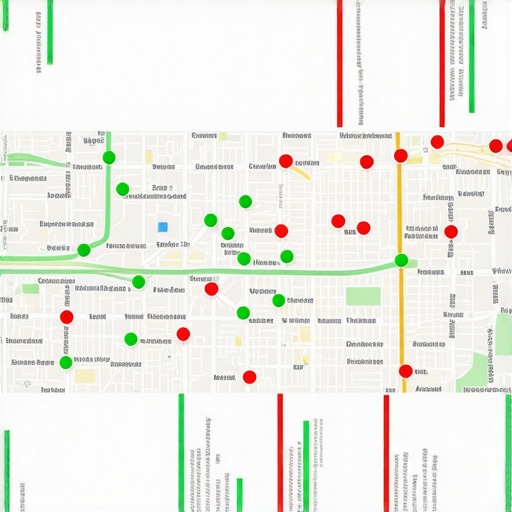 I also make sure my website’s backend is pulling its weight. Many people forget that the ultimate blueprint to improve map visibility and rankings includes your actual website speed and local content. According to Google’s official Local Search documentation, they explicitly state that ‘relevance’—how well a local profile matches a search—is heavily weighted by the information they find about you across the entire web, not just your profile. Looking ahead, I predict that AI-driven visual search will become the primary way maps are filtered. Google is already getting better at identifying specific objects within your shop photos. If you aren’t posting clear, original images, you will be left behind by competitors who are visually documenting every aspect of their business. My best advice? Take five minutes today to post one ‘Update’ on your profile with a photo of your latest project. It is the easiest way to signal to the algorithm that you are active, relevant, and ready for more customers.
Hard truths from the map pack trenches
After years of tweaking profiles, I have realized that proximity is not just a distance on a ruler; it is a calculation of trust. The biggest lightbulb moment for me was realizing that Google does not just want to see where you are, but how much the local community interacts with you. If your pin is stagnant, your rank will be too. I have learned that how to improve map SEO and increase local engagement often comes down to the small, human interactions like replying to every single question in the Q&A section within an hour. Another lesson? Stop obsessing over the number of reviews and start looking at the velocity. A steady stream of two reviews a week is infinitely more powerful for long-term maps visibility than twenty reviews in a single afternoon followed by months of silence.
Gear for the local search grind
I do not use a massive suite of tools, but there are a few I swear by to keep my sanity. First, Local Falcon is my go-to for seeing the reality of my reach; it stops me from being fooled by my own biased search results. Second, I constantly refer back to the the ultimate blueprint to improve map visibility and rankings because it covers the technical site-to-map connection that most people ignore. Lastly, I keep a physical folder of my ‘Master NAP’ documents because digital files can get messy, but a printed sheet on your desk keeps your data entry perfect every time. These tools help me boost your map views effectively without needing a degree in data science.
Claiming your digital territory for the long haul
The landscape of local search is always shifting, but the fundamentals of being a visible, trusted business remain the same. Do not let the complexity of algorithms intimidate you. Every photo you upload and every service you clarify helps you unlock the secrets to maps visibility and secures your spot in the local pack. Taking these small steps today ensures that your business stays relevant and findable for years to come. When you focus on genuine visibility improvement, the growth follows naturally. Which part of your Google Profile feels like the biggest mystery right now? Drop a comment below and let’s figure it out together.