
I was sitting at my desk three years ago, staring at a screen that refused to show my business in the top three results. I had done everything right—or so I thought. I had great photos, happy customers, and even a fancy new website. Yet, I was watching my local leads dry up while a competitor with half my reviews sat comfortably at the top. It was infuriating. I felt like I was shouting into a void, and it wasn’t until I dug into the boring stuff that I realized I was actually sabotaging myself. I had a street address listed as Suite 200 on one site and #200 on another, and my old office phone number was still lurking on a forgotten directory. That tiny bit of confusion was enough for Google to lose confidence in me.
The Day My Business Vanished from Google Maps
We often think that improving map visibility is all about getting more reviews or adding better photos, but there is a silent killer lurking in the background: citation inconsistency. If Google sees three different versions of your name, address, or phone number (NAP) across the web, it gets nervous. And when Google gets nervous, it hides your pin. I learned the hard way that the local citation myth of more is better is a lie if those citations aren’t perfectly mirrored. Today, I am going to show you exactly how to audit your presence so you can improve map SEO without the headache I went through.
Is a simple typo really worth all this stress?
You might think Google is smart enough to know that St. and Street are the same thing. While the algorithm is advanced, it prioritizes certainty. According to research by Moz on local ranking factors, consistency remains a foundational pillar for local pack entry. When your data is messy, you are essentially telling the algorithm that your business information is unreliable. I once lost a whole month of summer traffic because I hadn’t realized my business address error was ghosting me on mobile searches. Have you ever checked your listing on a site you haven’t visited in years, only to find your old contact info still staring back at you?
Identify the Data Mess Before It Spreads
Before you spend another dime on ads, you need to look at what the internet says about you when you aren’t looking. The first step is to perform a manual search of your phone number. You would be surprised how many zombie listings appear from past iterations of your business. This is how you start to master map discovery. If you find your duplicate listings are multiplying, it is time to take a stand and clean house. I’m going to walk you through the exact process I used to stabilize my rankings and stop the bleed of local leads.Now that you know the zombie listings are out there, you have to eliminate them. Think of your digital presence like a network of radio towers. If every tower is broadcasting on a slightly different frequency, the listener—Google—just hears static. To improve map views, you need total synchronization. I remember working with a local plumber who had perfect reviews but was stuck on page two for his most important keywords. We found that a move three years prior had left a trail of old addresses on obscure sites like Citysearch and Foursquare. We didn’t add new links; we just aligned the old ones. Within weeks, the simple change that fixed our profile visibility in 24 hours became his reality as he jumped into the top three spots.
Hunting Down Every Version of Yourself Online
Start with a simple spreadsheet. This isn’t glamorous, but it is necessary for anyone looking to improve map SEO effectively. List your current legal business name, your exact address down to the Suite number, and your primary phone number. Now, search for each variation of your business name and look for the hidden address error that ghosts your local leads. If you find a listing that doesn’t match your master list, it is a liability. You need to transform your map visibility by claiming those old profiles or reaching out to site admins to request a correction. This is how you truly master map discovery.
Why Your Phone Number is a Trail of Breadcrumbs
Google uses your phone number as a primary identifier. When I saw my own rankings tank, it was because I used a tracking number on my website but kept my real landline on my map profile. To the algorithm, I was two different businesses competing for the same spot. Using a consistent local area code is the kind of boring profile detail that actually influences the local algorithm more than fancy keywords ever will. 
Clean Your Profile Before You Add More Content
Once your citations are mirrored, go to your Google Business Profile and look at your service area settings. If you have selected too many cities or a massive radius, you are thinning your authority. I have seen businesses try to claim a 50-mile zone only to discover why your pin disappears when you zoom in too far. Focus on your immediate neighborhood first to boost your map views effectively. You have to prove you are relevant in your own backyard before Google lets you play in the whole city. If you find that the local citation myth has led you to create hundreds of low-quality links, stop and refocus on the quality of your primary data. It is the only way to ensure your map visibility remains stable during the next algorithm update.Most experts will tell you that the further you are from the searcher, the less chance you have of appearing. While proximity is a massive factor, the ‘Proximity Myth’ suggests it is the only factor. In my experience, I have seen businesses overcome the proximity gap by building deep relevance through their website content rather than just their physical location. If your site is a ghost town, your map pin will stay one too. This is why the local authority fix is often found in your blog posts and service pages, not just the map profile itself.
Stop Stuffing Your Business Name with Keywords
There is a dangerous trend of businesses adding city names or keywords to their legal business name on the map. Sure, it might work for a week, but it is a one-way ticket to a suspension. I have seen law firms lose years of history overnight because of this one ‘tweak.’ According to the Whitespark Local Search Ranking Factors study, while keywords in the title are a strong signal, they are also the most reported spam tactic by competitors. You are much better off focusing on how to win more map clicks through a compelling, honest description that actually converts.
Can your website footer actually break your map ranking?
I once worked with a local contractor whose rankings dropped 40 spots in three days. We traced it back to a ‘helpful’ web designer who changed the footer layout without understanding local SEO. They had removed the embedded map and replaced the text-based address with an image of their logo. To Google, the connection between the site and the map pin was severed. This is why learning how to use your site footers correctly is a non-negotiable for map SEO. If the data on your site doesn’t perfectly shake hands with the data on your profile, the algorithm retreats. 
Why the Service Area Myth is Killing Your Reach
Many business owners think that by selecting every possible city in their region, they are casting a wider net. The reality? You are actually watering down your ‘localness.’ When you claim to serve a 100-mile radius without any physical proof—like local landing pages or neighborhood mentions—Google treats you as a generalist rather than a local expert. This results in invisible service area listings that never show up when it matters most. It is the ‘Oops’ factor that most agencies won’t tell you about because they want to sell you on ‘more reach.’
Are you choosing categories that compete against yourself?
Selecting too many categories is another common trap for those trying to master map discovery. If you are a ‘Plumber’ but also list ‘Handyman’ and ‘Kitchen Remodeler’ as secondary options, you are forcing Google to decide which one you are actually best at. Often, it decides you aren’t the best at any of them, causing your rank to fluctuate or disappear. I always recommend a ‘primary focus’ strategy to unlock the secrets to maps visibility effectively. Have you ever fallen into this trap by trying to be everything to everyone? Let me know in the comments.I used to think that once I hit the top three, the work was done. I was wrong. I woke up one morning to find my lead volume had halved because a competitor started running local events that I ignored. To enhance your map views naturally, you need a maintenance schedule that goes beyond just ‘checking in.’ I make it a point to ensure my business categories get a seasonal refresh twice a year. If you are an HVAC contractor, you need to be moving ‘Heating’ to the secondary slot and ‘Air Conditioning’ to the primary before the first heatwave hits. This isn’t just about labels; it’s about matching the real-time intent of your neighbors.
The Only Two Tools I Actually Pay For
People always ask what’s in my technical ‘stack.’ I’m a minimalist because too many tools just create more noise. I use a local grid tracker to see how my rank changes block-by-block, but I always remember that rank tracking tools often lie depending on the specific mobile tower or IP address used. My second ‘tool’ is actually just a simple process: I use my phone to use inventory updates to win more map clicks by snapping photos of new stock or completed jobs. Joy Hawkins, a renowned expert at Sterling Sky, frequently emphasizes that Google’s algorithm is increasingly looking for ‘real-world signals’ that a business is active. If your profile looks the same today as it did in 2022, you are a ghost in the eyes of the algorithm. 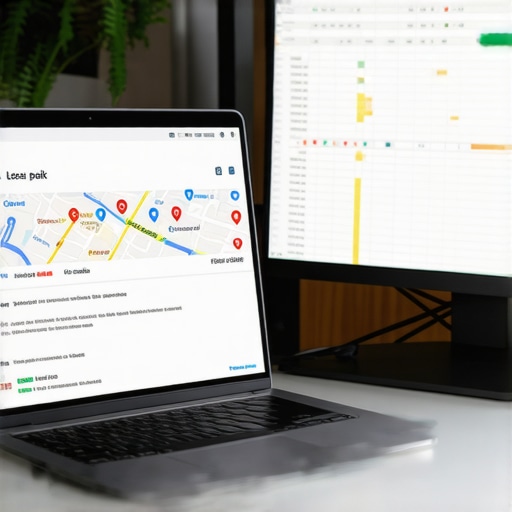
How do I keep my rankings from dropping next month?
The secret to staying on top isn’t a one-time hack; it’s a series of small, relentless habits. I spend exactly 15 minutes every Friday morning looking at my competitors’ photos. If I see they are posting more ‘behind-the-scenes’ content, I know I need to step up my game. This is how you navigate map discovery without burning out. You should also be looking for the one question you must ask your customers to get keyword-rich reviews. Instead of asking for ‘a review,’ ask them ‘what specific problem did we solve for you today?’ When they type ‘fixed my leaking water heater’ instead of ‘great job,’ your map visibility for specific service terms skyrockets.
Where the Map Algorithm is Heading Next
We are entering an era of visual AI. Google is no longer just reading your business description; it is ‘looking’ at your photos to verify your services. If you want to unlock the secrets to maps visibility for the next decade, start treating your profile like a live social media feed rather than a static yellow-page listing. In the future, I predict that ‘real-time availability’—showing exactly what you have in stock or when your next appointment slot is—will be the primary factor that decides the winner of the local pack. If you’re ready to get serious, I challenge you to try this today: pick one high-value service you offer and post a 30-second video of yourself explaining it directly to the camera on your profile. It’s the fastest way to transform your map visibility while everyone else is still stuck on static photos.
What I Learned the Hard Way About Local SEO Longevity
Looking back at my three-year journey, the biggest takeaway wasn’t a secret hack; it was realizing that Google prioritizes reliability over flashy marketing. I wasted months trying to ‘game’ the system with keywords when I should have been focusing on the reality of map rank tracking tools and how they often miss the human element of search. I also learned that 7 tiny details, like a missing phone number in a footer or a mismatched suite number, can undo a year’s worth of content marketing. Finally, I realized that your map pin isn’t just a location; it’s a living entity that needs fresh updates, or it simply fades into the background of the suburbs.
The Tech Stack That Saved My Sanity
I don’t believe in over-complicating things, but these three resources changed how I manage my visibility improvement. First, I lean heavily on tools like Whitespark for citation cleaning—it is the only way to find those buried address errors without going insane. Second, I recommend everyone check out the ultimate blueprint to improve map visibility whenever they feel stuck. Third, I always keep a tab open for Google’s own Search Console to see if my site data is helping or hurting my local rank. These tools provide the data-driven foundation you need to stop guessing and start growing.
Claim Your Spot in the Local Pack Before Someone Else Does
The digital landscape moves fast, but the fundamentals of maps seo remain grounded in trust. You have the power to change how your neighbors find you by simply being the most accurate and active business in your zip code. Don’t wait for a slow month to start fixing your profile; do it while you’re busy so you can stay that way. When you start to master map discovery, you aren’t just getting more clicks; you’re building a moat around your business. Have you ever struggled with a specific address error that just wouldn’t go away no matter how many times you edited it? Let me know in the comments below.