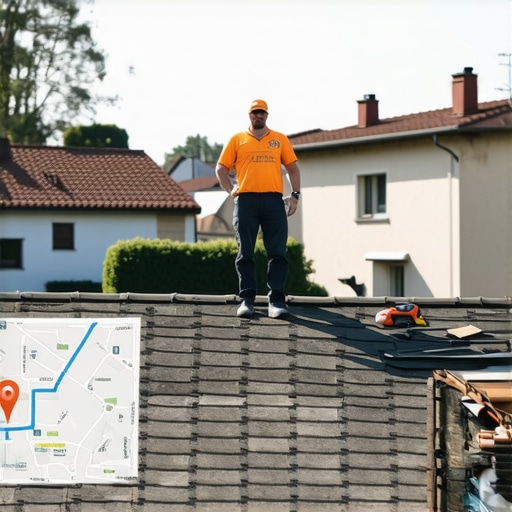
How Local Roofers Can Beat the Competition by Owning Their Service Area
The roofing industry has always been a battleground of proximity and reputation. However, as we move into 2026, the rules of engagement have shifted. It is no longer enough to be the “best roofer in town” if Google’s algorithms don’t recognize your presence in the specific neighborhood where a homeowner’s shingles just blew off. For modern roofing contractors, the digital landscape is defined by the Google Map Pack, and the competition is fiercer than ever.
Many roofing company owners find themselves frustrated. They have hundreds of five-star reviews, a decades-long history, and a fleet of branded trucks, yet they are being outranked by a “two-man-and-a-ladder” operation that just opened last year. Why? Because the newer competitor has mastered the art of hyper-local visibility while the established giant is still stuck in the SEO strategies of 2019.
In this guide, we will break down the exact blueprint for dominating your service area, moving beyond basic keywords and into the realm of advanced local authority.
Section 1: The “Service Area Trap” and the 2026 Local Landscape
The most common hurdle for roofing contractors is what I call the “Service Area Trap.” Most roofers operate as Service Area Businesses (SABs). You likely have a warehouse or a home office, but you do the actual work at the customer’s location. The problem? Google’s local algorithm is heavily biased toward physical proximity to the searcher.
If your office is in the industrial outskirts of a city, but the high-value residential leads are 15 miles away in the suburbs, you are fighting an uphill battle. This is the core of The Service Area Trap: How to Show Up on Maps Without a Physical Shop. In 2026, Google has tightened its “proximity radius.” This means that even if you are the most relevant roofer, if you aren’t physically close to the searcher, you might not appear in the top three results.
To beat this, roofers must pivot from “City-Wide SEO” to “Neighborhood-Level Dominance.” The 2026 landscape is no longer about broad terms like “roofing contractor.” It is about answering specific, localized problems. AI-driven search engines like Gemini and Google’s Search Generative Experience (SGE) now prioritize businesses that demonstrate “Problem Intent” resolution. If a homeowner searches for “hail damage repair in [Specific Neighborhood],” Google looks for the roofer who has documented experience in that exact micro-location.
The “Service Area Trap” is real, but it is avoidable. By shifting your focus from a 30-mile radius to a series of 3-mile “power zones,” you can signal to Google that your business is the most prominent and relevant choice for those specific clusters of homes.
Section 2: Mastering Google Business Profile SEO (The Foundation)
Your Google Business Profile (GBP) is the heartbeat of your local lead generation. It is not just a digital yellow pages listing; it is a dynamic data feed that tells Google whether you deserve to be in front of a customer. According to Whitespark’s latest research, google business profile seo optimization accounts for a staggering 33% of local pack ranking factors. If this foundation is cracked, your entire marketing house will fall.
The first step is absolute NAP (Name, Address, Phone) consistency. However, in 2026, consistency is just the entry fee. To win, you need google business profile optimization that leverages every available feature. This includes:
- Primary and Secondary Categories: This is a critical failure point for many. Choosing “Roofing Contractor” is obvious, but are you also listed under “Siding Contractor,” “Waterproofing Service,” or “Gutter Cleaning”? Be careful, though; Your Business Categories Might Be Hiding Your Pin From Local Searchers if they are irrelevant or conflicting.
- The 33% Rule in Action: Since GBP factors are a third of the ranking pie, your profile must be 100% complete. Data shows that complete profiles make customers 2.7x more likely to view a business as reputable and 50% more likely to consider a purchase.
- Service Menus: Don’t just list “Roofing.” Break it down into “TPO Roofing,” “Metal Roof Installation,” “Emergency Tarping,” and “Asphalt Shingle Repair.” This feeds the “Relevance” pillar of the Google algorithm.
Google uses a “Trio” of factors to rank you: Proximity (how close you are), Relevance (how well you match the query), and Prominence (how much the internet talks about you). While you can’t easily change your proximity, you have total control over relevance and prominence through aggressive google business profile seo tactics. Every update, every photo, and every service description is a signal that helps you climb the Map Pack.
Section 3: Hyper-Local Targeting: Beyond the City Center
To truly own your service area, you must move beyond the city center. Most roofers try to rank for the biggest city nearby, but that’s where the competition is most saturated. The real “gold mine” lies in the surrounding suburbs and specific neighborhoods.
Hyper-local targeting is the process of creating “geographic relevance” for areas where you don’t have a physical office. This is achieved through a combination of on-site content and off-site signals. One of the most effective ways to do this is by using Neighborhood News to Fix Our Maps Visibility. For example, if you complete a large re-roofing project in “Oak Creek Estates,” your GBP should reflect that. Uploading photos of that specific job with geo-tags and mentioning the neighborhood by name in a GBP post creates a digital breadcrumb for Google.
When you want to rank google business profile listings for specific areas, you need to think about “Local Justifications.” These are the small snippets of text Google shows in the Map Pack, such as “Their website mentions hail damage repair.” By creating neighborhood-specific landing pages on your website that detail the common roofing styles and weather patterns of that area, you provide the context Google needs to rank you in those micro-markets.
The 2026 shift toward “Problem Intent” means homeowners aren’t just looking for a roofer; they are looking for a roofer who knows their specific HOA requirements or the specific wind-load issues in their coastal neighborhood. Hyper-local content proves you are the local expert, not just a distant contractor.
Section 4: Reviews & Reputation (The Prominence Factor)
We all know reviews are important, but in 2026, the volume of 5-star reviews is only half the story. Google’s AI now analyzes the sentiment and keywords within those reviews to determine your rank. If a customer leaves a review saying, “Great service,” it helps your reputation. But if they say, “Faisal’s team did an amazing job with our emergency roof leak repair in Southside Chicago,” it helps your ranking.
This is the “Prominence Factor.” To increase google business profile visibility, you must encourage customers to be specific. A review that mentions the service and the location acts as a powerful local signal. Furthermore, your response to the review matters just as much. Instead of a generic “Thanks!”, respond with: “Thank you! We loved helping with your slate roof restoration in Lincoln Park.” This naturally incorporates keywords and locations without looking like spam.
We are seeing a massive shift in how reviews are weighted. It is no longer just about the “Star Rating.” We call this the Beyond Star Ratings: The Review Management Shift That Breaks Into the Top 3. Google is looking for “Behavioral Signals” – are people clicking your “Call” button? Are they asking for directions? Are they spending time reading your reviews? High-quality, keyword-rich reviews drive these interactions, signaling to Google that you are a prominent and trusted authority in the roofing space.
Section 5: Technical SEO & Schema for Contractors
While the Google Business Profile is the front-facing part of your local SEO, your website’s technical health is the engine that powers it. For roofers, technical SEO often gets neglected, but it is the “invisible” factor that can keep you stuck on page two. One of the most overlooked aspects is Local Business Schema Markup.
Schema is a piece of code that helps search engines understand the specific details of your business, such as your service area, your hours, and the specific types of roofing you offer. There are 4 Missing Schema Details That Are Secretly Tanking Your Local Map Rank, including “ServiceArea” polygons and “HasOfferCatalog” definitions. Without these, Google has to guess what you do and where you do it. With them, you are handing Google a clear map of your expertise.
Additionally, mobile speed is non-negotiable. In the roofing world, many searches happen during emergencies – right after a storm when a roof is actively leaking. If your site takes 10 seconds to load on a mobile device with a spotty 5G connection, that homeowner is going to click the next roofer in the Map Pack. Using local seo tools to audit your Core Web Vitals is essential. Your site needs to be fast, secure (HTTPS), and, most importantly, designed for “Problem-Intent” conversion. This means having a “Click-to-Call” button and an “Emergency Service” form front and center.
Section 6: Troubleshooting: When Your Pin Vanishes
Every roofer’s nightmare is waking up to find their Google Business Profile has vanished or been suspended. In the high-competition roofing niche, “suggested edits” from competitors and aggressive algorithm updates can cause sudden drops in visibility. If My Business Profile Was Suspended: The 3-Step Recovery Move That Actually Works is a tab you find yourself searching for, you aren’t alone.
Often, a ranking drop isn’t a suspension, but a “proximity filter” issue. You might find that Your Pin Disappears When Searchers Cross the Street. This happens when Google perceives another roofer as more “relevant” to that specific block. To fix this, you need to bolster your local signals through more geo-tagged content and local backlinks from neighborhood associations, local hardware stores, or community blogs.
If you are hit with a suspension, the key is not to panic and start changing everything. This often triggers more red flags. Instead, audit your profile for any recent changes that might have violated Google’s strict “Service Area Business” guidelines. Ensure you aren’t using a P.O. Box or a virtual office, as Google has become incredibly efficient at identifying and delisting these in 2026.
Conclusion: Dominating the Map Pack in 2026
Dominating the local roofing market is no longer about who has the biggest billboard or the most expensive TV ad. It is about who owns the digital map. By understanding the trio of Proximity, Relevance, and Prominence, you can position your roofing company as the undisputed leader in your service area.
Remember, the “Service Area Trap” is only a trap if you don’t have the tools to escape it. By focusing on hyper-local content, mastering google business profile seo, and ensuring your technical foundation is rock solid, you can ensure that when a homeowner looks at their leaking ceiling and reaches for their phone, your business is the first one they see.
Success in 2026 requires a proactive approach. Don’t wait for your rankings to drop before you take action. If you are ready to take your visibility to the next level, I encourage you to visit the website for advanced google maps ranking service options. For a deep dive into your specific market, contact Faisal Rehman for a custom audit and let’s start owning your service area today.