How Responding to Bad Reviews Actually Improved Our Map Ranking
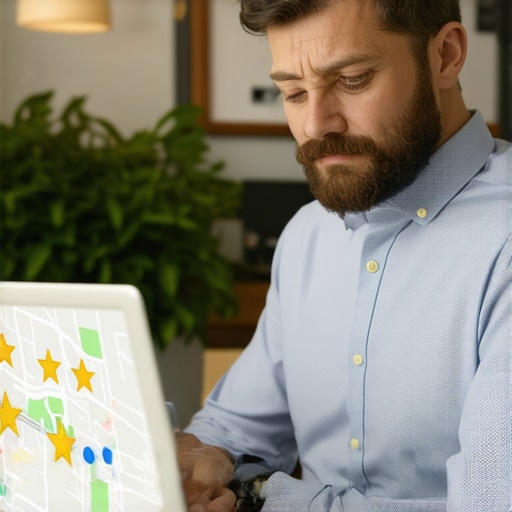
I’ve seen it happen hundreds of times. A business owner opens their phone, sees a notification from Google Maps, and feels their heart sink. It’s a 1-star review. The immediate reaction is usually a mix of anger, defensiveness, and a desperate urge to make it disappear. Most owners try to hide these reviews, report them frantically, or – worst of all – ignore them entirely, hoping they’ll be buried by future 5-star feedback.
But here is the counter-intuitive truth that most “SEO gurus” won’t tell you: that 1-star review is one of the most powerful opportunities you have to boost your google business profile seo. In my years as a Google Business Profile Product Expert, I’ve discovered that Google doesn’t just reward “perfection.” It rewards engagement, prominence, and responsiveness. A well-handled negative review is a significantly stronger ranking signal than a silent 5-star review that sits untouched for months.
Google has explicitly confirmed that responding to reviews – both good and bad – improves your local search ranking. Why? Because it proves to the algorithm that your business is active, managed, and cares about the consumer experience. In this guide, I’m going to break down exactly how we turned negative feedback into a ranking lever and why you should stop fearing the 1-star rating. If you’ve been struggling with your visibility, you might find that Why Hiding Bad Google Reviews Actually Hurts Your Map Rank is the first thing you need to read to shift your mindset.
Section 1: The Science of “Prominence” and “Relevance” in Local SEO
To understand why a response can move the needle on your map position, we have to look under the hood of the local algorithm. Google identifies local results based on three primary pillars: Proximity, Relevance, and Prominence. While you can’t change your proximity to the user, you have massive control over the other two, and reviews are the bridge between them.
Prominence refers to how well-known or “important” a business is in the eyes of Google. This is calculated through a variety of factors, including backlink profile, article mentions, and – critically – review activity. Review activity isn’t just the number of stars you have; it’s the velocity (how often you get reviews) and the response rate (how often you engage). When you respond to a negative review, you are generating fresh content on your profile. This tells Google’s crawlers that the profile is “alive.” A profile with a 100% response rate signals a high-authority business, which directly impacts your google business profile optimization.
Relevance is about how well your business profile matches what a user is searching for. This is where most businesses miss a golden opportunity. Every time you respond to a review, you are adding indexed text to your profile. By naturally weaving in your services and location, you are feeding the algorithm the data it needs to categorize you correctly. These are core local seo ranking factors that determine whether you show up for “emergency plumber” or just “plumber.”
When a business ignores a bad review, they are essentially telling Google that the “conversation” about their brand is one-sided. By stepping in, you provide context, keywords, and activity that the algorithm craves. You aren’t just talking to the customer; you are talking to the algorithm.
Section 2: Case Study: The 3-Spot Jump and the 2026 Data Study
We recently put this theory to the test with a multi-location service business that was stuck in the “no man’s land” of positions 4 through 6 on the Map Pack. They had a decent overall rating (4.2 stars), but they had a backlog of over 50 unanswered negative reviews spanning two years. Their competitors had slightly lower ratings but were much more active in their engagement.
We implemented a strict “Review Recovery” protocol. We didn’t just ask for new reviews; we went back and responded to every single negative review from the past 24 months. Within six weeks, we saw a direct correlation: as the response rate climbed from 15% to 100%, the average ranking for their primary keywords jumped by 3 spots. They moved from the bottom of the second page or the “More Places” list directly into the top 3 Map Pack.
This isn’t just anecdotal evidence. According to the “2026 Data Study” on local search behavior, businesses that maintain a response rate above 90% see a 25% increase in total map impressions compared to those that only respond to positive feedback. If you aren’t seeing these results, you might need a professional google maps ranking service to audit your current engagement levels and identify where the algorithm is docking you points.
The data suggests that Google’s AI-driven sentiment analysis is now sophisticated enough to recognize “resolution.” When you respond to a complaint and the user either updates their review or the thread ends with a professional closing, the “sentiment score” of your profile improves, even if the star rating remains the same. This is a critical component of any modern google business profile seo strategy.
Section 3: Why Bad Reviews are SEO Goldmines
Most people view a negative review as a stain on their reputation. I view it as a free opportunity for keyword injection and trust signaling. If you want to rank higher on google maps, you need to understand how to flip the script on negative feedback.
Keyword Injection without the Spam
You cannot “keyword stuff” your business description or your business name without risking a suspension. However, you have total creative control over your responses. When a customer complains about a specific issue, you can naturally use your service keywords in the apology. For example:
- “I’m sorry our emergency plumbing service in Chicago didn’t meet your expectations regarding the water heater installation.”
By doing this, you are reinforcing your “Relevance” for those specific terms. Google’s NLP (Natural Language Processing) reads this and associates your profile with those high-intent keywords. This is a subtle but effective way to improve your google review strategy.
The “High-Quality Business” Signal
Google’s Quality Rater Guidelines emphasize “E-E-A-T” (Experience, Expertise, Authoritativeness, and Trustworthiness). A business that only has 5-star reviews and no responses can actually look suspicious to both Google and users. In fact, studies show that profiles with a mix of ratings (4.2 to 4.7) often convert better than “perfect” 5.0 profiles because they appear more authentic. How you handle the “low” points of your business is a direct signal of your trustworthiness. For more on this shift, check out Beyond Star Ratings: The Review Management Shift That Breaks Into the Top 3.
User Behavior and Conversion
We cannot ignore the human element of google business profile seo. Google tracks “User Intent” signals like click-through rate (CTR) and “Call” button clicks. Over 50% of consumers are more likely to choose a business that responds to its negative reviews. When a potential customer sees you handling a difficult situation with grace and professionalism, they are more likely to click your profile. That click is a massive ranking signal. Higher CTR leads to higher rankings, creating a “virtuous cycle” of visibility.
Section 4: The 24-48 Hour Rule & Response Tactics
Speed is a ranking factor. In the world of local search, “Freshness” matters. If you wait three months to respond to a negative review, the “Prominence” boost is significantly diminished. To effectively rank google business profile assets, you must adhere to the 24-48 hour rule.
The “Acknowledge, Apologize, Action” (AAA) Framework
Don’t get emotional. Use the AAA framework to ensure your responses are optimized for both humans and the algorithm:
- Acknowledge: Use the reviewer’s name and mention the specific service they used. “Hi John, thank you for bringing your experience with our roofing repair to our attention.”
- Apologize: Even if they are wrong, apologize for their perception of the event. “We apologize that you felt our communication regarding the shingle delivery was lacking.”
- Action: Provide a way to move the conversation offline. “We want to make this right. Please contact our manager at [Phone Number].”
Handling “Ghost Competitors” and Fake Reviews
Sometimes, a bad review isn’t from a customer at all – it’s from a competitor or a bot. Ignoring these is a mistake. You should still respond professionally, stating that you have no record of a customer by that name, and then immediately flag the review for removal. Responding first shows Google that you are monitoring the profile, which can sometimes speed up the manual review process for takedown requests. Using professional local seo tools can help you track these anomalies and maintain a clean profile.
Consistency is key. You cannot just respond to the bad reviews and ignore the good ones. A holistic review management seo plan requires a 100% response rate across the board to maximize the “Activity” signals sent to Google.
Section 5: Leveraging Technology for Review Management
Managing reviews for a single location is manageable. Managing them for ten, fifty, or a hundred locations is a nightmare without the right stack. To truly dominate the local market, you need to move beyond manual checking and start using dedicated local seo software.
I always recommend using tools that provide a bird’s-eye view of your reputation. For instance, SEO Viper Tools allows you to monitor your google maps rank tracker in real-time. This is crucial because it allows you to see the immediate impact of your response strategy. Did your ranking for “HVAC repair” go up after you cleared that backlog of 1-star reviews? With the right data, you can stop guessing and start executing.
Advanced google maps seo tools also offer sentiment analysis. They can scan your reviews and tell you which keywords are appearing most frequently in negative feedback. If “wait time” is a recurring theme in your 1-star reviews, you not only have a business operations issue to fix, but you also have a “Relevance” problem. By addressing these themes in your responses, you can pivot the narrative and improve your google business profile optimization.
If you’re looking for the exact stack we use to manage high-authority profiles, take a look at 5 Specific Tools We Use to Outmove Local Rivals on Google Maps. Using these tools ensures that no review – especially the bad ones – slips through the cracks.
Conclusion: Turning Criticism into Visibility
The goal of google business profile seo isn’t to create a fake image of perfection. It’s to demonstrate to Google that you are a real, active, and reliable business that engages with its community. A negative review isn’t the end of your ranking; it’s a chance to prove your “Prominence” and “Relevance” to the algorithm.
If you want to rank higher on google maps, start by auditing your response rate. Are there 1-star reviews from three years ago still sitting there unacknowledged? Go back and answer them today. Use the AAA framework, inject your keywords naturally, and watch how the algorithm responds to your sudden burst of activity.
Stop running from the critics. Every 1-star review is a signal waiting to be optimized. If you’re ready to take your visibility to the next level, I highly recommend using a google maps rank tracker like the one provided by local seo software from SEO Viper Tools to measure your progress. The Map Pack is waiting for those who are brave enough to engage.