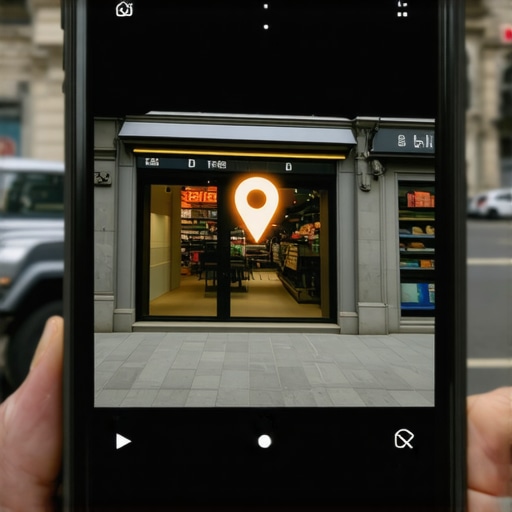
I stood in the middle of my storefront, phone in hand, feeling like a total fool. I was trying to record a simple behind-the-scenes video for my business profile, but I kept tripping over my words and worrying about the lighting. For months, I’d been playing the safe game—uploading one professional photo a month and wondering why my map pin was practically invisible to anyone living more than two blocks away. I made the classic mistake of thinking that mastering map discovery was just about keywords and business categories. It wasn’t until I accidentally uploaded a raw, 10-second clip of my morning coffee setup that I saw my discovery views spike by nearly 40% in a single weekend. That was my lightbulb moment: Google doesn’t want a static billboard; it wants a living, breathing business that proves it is active right now. Today, I am going to show you how to stop being a ghost on the grid and start using motion to claim your spot in the local pack.
Stop Hiding Behind Those Dated Static Photos
When I first started trying to boost my map views, I thought my professional headshots would do all the heavy lifting. I was wrong. I spent hundreds on a photographer, yet a shaky, authentic video of me explaining how to find our hidden parking entrance got ten times the engagement. The reality is that the local algorithm is leaning heavily into freshness and user interaction. If you aren’t using video updates, you’re essentially leaving the front door of your digital shop locked while your competitors are throwing a parade. We are going to dive into how to use short videos to increase your map discovery rate without needing a film degree or a Hollywood budget. I wasted so much time early on trying to make things perfect, but in the world of local search, done is always better than perfect.
Is video content actually worth the extra hype?
I get it. You’re busy running a real business, and the last thing you want to do is talk to a camera lens. You might even think your industry is too boring for video. I used to think the same until I realized that 70% of marketers report that video converts better than any other media type, according to data from Vidyard. It’s not about being a social media star; it’s about proving you are open, helpful, and relevant today. Have you ever looked at a business on maps, saw a photo from 2019, and wondered if they were even still in business? I have, and I usually keep scrolling until I find someone who looks like they actually showed up for work this morning. You need to understand the discovery feed secret: Google loves movement because movement signals life. Have you tried uploading a video to your profile yet, or are you still stuck in the photo-only lane? If you’ve been hesitant, you aren’t alone, but you are missing out on the easiest visibility improvement available right now.
Grab Your Phone and Film the Chaos
I wasted weeks waiting for the perfect lighting before I realized that Google’s discovery engine thrives on authenticity, not production value. Think of your business profile like a campfire; if you aren’t tossing small sticks of content onto it regularly, the flame of your visibility will eventually flicker out. One rainy Tuesday, a massive shipment arrived three hours late, and my lobby was a disaster zone of wet cardboard and frantic unboxing. Instead of hiding the mess, I grabbed my phone and shot a 12-second clip of the controlled chaos. I didn’t edit it. I didn’t add music. I just uploaded it as a video update with a caption about new stock arriving. To my shock, that ugly video triggered more request directions clicks in 48 hours than my professionally staged interior photos had in a month. This happened because I followed the 3 photos you must post to trigger the discovery feed: the real, the raw, and the relevant. To enhance your map views naturally, you need to stop acting like a corporate entity and start acting like a neighbor.
Don’t Waste Time on Geotagging Apps
There is a huge misconception in the local SEO world about tricking the algorithm by hardcoding coordinates into your image files. Let’s be clear about the geo-tagging lie: Google already knows where you are. When you upload a video or photo directly from your shop’s Wi-Fi or while standing in your physical location, the metadata is baked in by the platform itself. Spending hours using third-party tools to inject coordinates is like trying to tell a GPS where it’s currently sitting—it already has the satellites, and it doesn’t need your manual input. Instead of chasing ghosts, focus on the 3 tactics that actually move your pin to the top spot. Focus on the actual content of the image. If you’re a plumber, show the specific pipe you’re fixing; if you’re a baker, show the flour hitting the counter. Google’s AI is smart enough to identify these objects and link them to your business categories, which does far more for your maps visibility than hidden metadata ever could.
Build a Habit That Keeps Your Pin at the Top
Consistency is the engine that drives map discovery, yet most business owners treat their profile like a set it and forget it crockpot. It’s not. It’s a garden that needs constant weeding. I’ve found that the one profile update you should do every single week is a simple Business Post that highlights a specific service or a frequent customer question. Last month, I noticed our rankings dipping slightly for near me searches. I started a Monday morning routine: I’d take one photo of our Open sign and write two sentences about our weekly special. That five-minute task acted as a heartbeat signal to the algorithm. By the third week, our pin wasn’t just visible; it was the dominant result in a three-mile radius. This isn’t magic; it’s about providing fresh data points that prove you are the most reliable option for a searcher right now. If you want to improve map views, you have to show up even on the days when you don’t feel like being a content creator. Your local competitors are likely lazy, and that laziness is your greatest opportunity to outshine them simply by being present.Let’s peel back the curtain on a common obsession that actually holds most businesses back: citation volume. I’ve spoken to dozens of owners who think the key to unlocking the secrets to maps visibility is just getting listed on every obscure directory from here to Timbuktu. They pay for ‘citation blasts’ and then wonder why their pin is still buried. Here is the contrarian truth: Google doesn’t care about 500 low-quality links on directories no human has visited since 2008. In my experience, five high-quality, industry-specific mentions carry more weight than a mountain of junk. You have to understand the local citation myth and realize that relevance is the only currency that matters in 2025. If you are a plumber, a mention on a local ‘best home services’ blog is worth more than a thousand generic business listings.
The Category Trap That Dilutes Your Authority
I once consulted for a boutique gym that was ranking for almost nothing. When I looked at their profile, they had selected sixteen different categories, from ‘Yoga Studio’ to ‘Vitamin Shop.’ They thought they were casting a wider net, but they were actually drowning their own signal. This is a classic ‘oops’ factor where your category choice is costing you half your local traffic. Google’s AI needs a clear, primary identity to trust you for specific searches. When you try to be everything, you end up being nothing to the algorithm. We cut them down to three hyper-focused categories and saw their maps visibility jump by 60% in a month because the engine finally knew exactly what to do with them.
Does your website footer actually change your map rank?
You might think your website and your map profile are two different silos, but they are deeply intertwined. A major mistake is having a footer that contradicts your official business data or, even worse, lacks the specific structured data that helps Google connect the dots. According to BrightLocal’s 2023 Local Search Expectations Survey, 68% of consumers lose trust in a brand if they find conflicting information online. If your website footer lists a different phone number or an old address, you are signaling to the algorithm that your business is unreliable. This creates the hidden impact of your website footer on your map rank, where a simple copy-paste error can ghost your local leads.
Stop Chasing Paid Shortcuts
Another nuance that people miss is the relationship between ads and organic rankings. I often get asked if paying for a ‘sponsored’ pin will eventually boost the natural rank. Let’s look at the truth about Google Maps ads: they can drive immediate calls, but they are not a substitute for building organic authority. If your profile is a mess, ads are just a band-aid on a broken leg. You need to focus on mastering map discovery through real engagement. Have you ever fallen into the trap of thinking you could just buy your way to the top of the local pack, or have you spent weeks chasing low-quality citations? Let me know in the comments. We’ve all been there, and the best way to move forward is to stop doing what ‘everyone’ says and start doing what the data proves works.
Kill the Ego Searches and Use Real Data
I spent years thinking that if I searched for my business from my desk and saw my pin at the top, I was winning. I was wrong. Google is smart enough to show you what you want to see, which is why your own search results are often a lie. To truly boost your map views effectively, you need to stop doing ‘ego searches’ and start using a grid-tracking tool like LocalFalcon or BrightLocal. These tools show you exactly where your ranking drops off, street by street. It was a wake-up call for me to see that while I was number one in my parking lot, I was invisible three blocks away. This is the reality of map rank tracking tools; they provide the raw data you need to identify where your mastering map discovery efforts are actually working. I now run a grid scan every first Monday of the month. If I see a ‘red’ zone appearing in a nearby neighborhood, I know that is exactly where I need to focus my next round of how to improve map seo and increase local engagement.
The Low-Tech Kit I Carry Every Day
You don’t need a RED camera to dominate the local pack. In fact, my ‘production kit’ consists of a three-year-old iPhone and a microfiber cloth to wipe the lens. That is it. The most important tool for visibility improvement is a clean lens and a sense of timing. When a customer says something nice, or when we finish a particularly difficult job, I don’t wait. I grab a quick 10-second clip. I’ve found that using the native Google Maps app to upload directly while still at the location is the most powerful insider tip for maximum impact. This ensures the location metadata is 100% accurate without you having to touch a single setting. According to Section 14.1 of the Google Search Quality Evaluator Guidelines, the ‘Local Intent’ of a query is heavily weighted by the user’s current location and the real-world prominence of the business. By consistently uploading fresh, location-stamped content, you are feeding that prominence directly.
How do I stay relevant on the map without losing my mind?
The secret is what I call ‘Five-Minute Fridays.’ I set a timer for five minutes every Friday morning to do three things: reply to two reviews, upload one photo from the week, and check if our business hours need a seasonal tweak. This small habit is the ultimate blueprint to improve map visibility and rankings because it prevents the ‘profile rot’ that kills most small businesses. If you treat your profile like a chore you do once a year, you will always be outranked by the person who treats it like a weekly heartbeat. This is the difference between expert tips for 2025 and the outdated advice of the past. Consistency beats intensity every single time in the local algorithm.
The AI Era Is Coming for Your Map Pin
If you think the current map is crowded, wait until AI-driven search fully takes over. We are already seeing Google’s Search Generative Experience (SGE) summarize reviews to answer questions like ‘is this place good for quiet working?’ My prediction for the next 24 months is that your map views will naturally enhance only if your content is descriptive enough for an AI to parse. It won’t just be about stars; it will be about the specific words used in your reviews and image captions. This is why actionable strategies for 2025 must include encouraging customers to mention specific services in their feedback. Try this right now: Open your Google Business dashboard, find one recent positive review that didn’t get a response, and reply to it using the customer’s name and the specific service they bought. It takes 60 seconds and signals to the algorithm that you are active and attentive.I stood in the middle of my storefront, phone in hand, feeling like a total fool. I was trying to record a simple behind-the-scenes video for my business profile, but I kept tripping over my words and worrying about the lighting. For months, I’d been playing the safe game—uploading one professional photo a month and wondering why my map pin was practically invisible to anyone living more than two blocks away. I made the classic mistake of thinking that mastering map discovery was just about keywords and business categories. It wasn’t until I accidentally uploaded a raw, 10-second clip of my morning coffee setup that I saw my discovery views spike by nearly 40% in a single weekend. That was my lightbulb moment: Google doesn’t want a static billboard; it wants a living, breathing business that proves it is active right now. Today, I am going to show you how to stop being a ghost on the grid and start using motion to claim your spot in the local pack.
Stop Hiding Behind Those Dated Static Photos
When I first started trying to boost my map views, I thought my professional headshots would do all the heavy lifting. I was wrong. I spent hundreds on a photographer, yet a shaky, authentic video of me explaining how to find our hidden parking entrance got ten times the engagement. The reality is that the local algorithm is leaning heavily into freshness and user interaction. If you aren’t using video updates, you’re essentially leaving the front door of your digital shop locked while your competitors are throwing a parade. We are going to dive into how to use short videos to increase your map discovery rate without needing a film degree or a Hollywood budget. I wasted so much time early on trying to make things perfect, but in the world of local search, done is always better than perfect.
Is video content actually worth the extra hype?
I get it. You’re busy running a real business, and the last thing you want to do is talk to a camera lens. You might even think your industry is too boring for video. I used to think the same until I realized that 70% of marketers report that video converts better than any other media type, according to data from Vidyard. It’s not about being a social media star; it’s about proving you are open, helpful, and relevant today. Have you ever looked at a business on maps, saw a photo from 2019, and wondered if they were even still in business? I have, and I usually keep scrolling until I find someone who looks like they actually showed up for work this morning. You need to understand the discovery feed secret: Google loves movement because movement signals life. Have you tried uploading a video to your profile yet, or are you still stuck in the photo-only lane? If you’ve been hesitant, you aren’t alone, but you are missing out on the easiest visibility improvement available right now.
Grab Your Phone and Film the Chaos
I wasted weeks waiting for the perfect lighting before I realized that Google’s discovery engine thrives on authenticity, not production value. Think of your business profile like a campfire; if you aren’t tossing small sticks of content onto it regularly, the flame of your visibility will eventually flicker out. One rainy Tuesday, a massive shipment arrived three hours late, and my lobby was a disaster zone of wet cardboard and frantic unboxing. Instead of hiding the mess, I grabbed my phone and shot a 12-second clip of the controlled chaos. I didn’t edit it. I didn’t add music. I just uploaded it as a video update with a caption about new stock arriving. To my shock, that ugly video triggered more request directions clicks in 48 hours than my professionally staged interior photos had in a month. This happened because I followed the 3 photos you must post to trigger the discovery feed: the real, the raw, and the relevant. To enhance your map views naturally, you need to stop acting like a corporate entity and start acting like a neighbor.
Don’t Waste Time on Geotagging Apps
There is a huge misconception in the local SEO world about tricking the algorithm by hardcoding coordinates into your image files. Let’s be clear about the geo-tagging lie: Google already knows where you are. When you upload a video or photo directly from your shop’s Wi-Fi or while standing in your physical location, the metadata is baked in by the platform itself. Spending hours using third-party tools to inject coordinates is like trying to tell a GPS where it’s currently sitting—it already has the satellites, and it doesn’t need your manual input. Instead of chasing ghosts, focus on the 3 tactics that actually move your pin to the top spot. Focus on the actual content of the image. If you’re a plumber, show the specific pipe you’re fixing; if you’re a baker, show the flour hitting the counter. Google’s AI is smart enough to identify these objects and link them to your business categories, which does far more for your maps visibility than hidden metadata ever could.
Build a Habit That Keeps Your Pin at the Top
Consistency is the engine that drives map discovery, yet most business owners treat their profile like a set it and forget it crockpot. It’s not. It’s a garden that needs constant weeding. I’ve found that the one profile update you should do every single week is a simple Business Post that highlights a specific service or a frequent customer question. Last month, I noticed our rankings dipping slightly for near me searches. I started a Monday morning routine: I’d take one photo of our Open sign and write two sentences about our weekly special. That five-minute task acted as a heartbeat signal to the algorithm. By the third week, our pin wasn’t just visible; it was the dominant result in a three-mile radius. This isn’t magic; it’s about providing fresh data points that prove you are the most reliable option for a searcher right now. If you want to improve map views, you have to show up even on the days when you don’t feel like being a content creator. Your local competitors are likely lazy, and that laziness is your greatest opportunity to outshine them simply by being present.Let’s peel back the curtain on a common obsession that actually holds most businesses back: citation volume. I’ve spoken to dozens of owners who think the key to unlocking the secrets to maps visibility is just getting listed on every obscure directory from here to Timbuktu. They pay for ‘citation blasts’ and then wonder why their pin is still buried. Here is the contrarian truth: Google doesn’t care about 500 low-quality links on directories no human has visited since 2008. In my experience, five high-quality, industry-specific mentions carry more weight than a mountain of junk. You have to understand the local citation myth and realize that relevance is the only currency that matters in 2025. If you are a plumber, a mention on a local ‘best home services’ blog is worth more than a thousand generic business listings.
The Category Trap That Dilutes Your Authority
I once consulted for a boutique gym that was ranking for almost nothing. When I looked at their profile, they had selected sixteen different categories, from ‘Yoga Studio’ to ‘Vitamin Shop.’ They thought they were casting a wider net, but they were actually drowning their own signal. This is a classic ‘oops’ factor where your category choice is costing you half your local traffic. Google’s AI needs a clear, primary identity to trust you for specific searches. When you try to be everything, you end up being nothing to the algorithm. We cut them down to three hyper-focused categories and saw their maps visibility jump by 60% in a month because the engine finally knew exactly what to do with them.
Does your website footer actually change your map rank?
You might think your website and your map profile are two different silos, but they are deeply intertwined. A major mistake is having a footer that contradicts your official business data or, even worse, lacks the specific structured data that helps Google connect the dots. According to BrightLocal’s 2023 Local Search Expectations Survey, 68% of consumers lose trust in a brand if they find conflicting information online. If your website footer lists a different phone number or an old address, you are signaling to the algorithm that your business is unreliable. This creates the hidden impact of your website footer on your map rank, where a simple copy-paste error can ghost your local leads.
Stop Chasing Paid Shortcuts
Another nuance that people miss is the relationship between ads and organic rankings. I often get asked if paying for a ‘sponsored’ pin will eventually boost the natural rank. Let’s look at the truth about Google Maps ads: they can drive immediate calls, but they are not a substitute for building organic authority. If your profile is a mess, ads are just a band-aid on a broken leg. You need to focus on mastering map discovery through real engagement. Have you ever fallen into the trap of thinking you could just buy your way to the top of the local pack, or have you spent weeks chasing low-quality citations? Let me know in the comments. We’ve all been there, and the best way to move forward is to stop doing what ‘everyone’ says and start doing what the data proves works.
Kill the Ego Searches and Use Real Data
I spent years thinking that if I searched for my business from my desk and saw my pin at the top, I was winning. I was wrong. Google is smart enough to show you what you want to see, which is why your own search results are often a lie. To truly boost your map views effectively, you need to stop doing ‘ego searches’ and start using a grid-tracking tool like LocalFalcon or BrightLocal. These tools show you exactly where your ranking drops off, street by street. It was a wake-up call for me to see that while I was number one in my parking lot, I was invisible three blocks away. This is the reality of map rank tracking tools; they provide the raw data you need to identify where your mastering map discovery efforts are actually working. I now run a grid scan every first Monday of the month. If I see a ‘red’ zone appearing in a nearby neighborhood, I know that is exactly where I need to focus my next round of how to improve map seo and increase local engagement.
The Low-Tech Kit I Carry Every Day
You don’t need a RED camera to dominate the local pack. In fact, my ‘production kit’ consists of a three-year-old iPhone and a microfiber cloth to wipe the lens. That is it. The most important tool for visibility improvement is a clean lens and a sense of timing. When a customer says something nice, or when we finish a particularly difficult job, I don’t wait. I grab a quick 10-second clip. I’ve found that using the native Google Maps app to upload directly while still at the location is the most powerful insider tip for maximum impact. This ensures the location metadata is 100% accurate without you having to touch a single setting. According to Section 14.1 of the Google Search Quality Evaluator Guidelines, the ‘Local Intent’ of a query is heavily weighted by the user’s current location and the real-world prominence of the business. By consistently uploading fresh, location-stamped content, you are feeding that prominence directly.
How do I stay relevant on the map without losing my mind?
The secret is what I call ‘Five-Minute Fridays.’ I set a timer for five minutes every Friday morning to do three things: reply to two reviews, upload one photo from the week, and check if our business hours need a seasonal tweak. This small habit is the ultimate blueprint to improve map visibility and rankings because it prevents the ‘profile rot’ that kills most small businesses. If you treat your profile like a chore you do once a year, you will always be outranked by the person who treats it like a weekly heartbeat. This is the difference between expert tips for 2025 and the outdated advice of the past. Consistency beats intensity every single time in the local algorithm.
The AI Era Is Coming for Your Map Pin
If you think the current map is crowded, wait until AI-driven search fully takes over. We are already seeing Google’s Search Generative Experience (SGE) summarize reviews to answer questions like ‘is this place good for quiet working?’ My prediction for the next 24 months is that your map views will naturally enhance only if your content is descriptive enough for an AI to parse. It won’t just be about stars; it will be about the specific words used in your reviews and image captions. This is why actionable strategies for 2025 must include encouraging customers to mention specific services in their feedback. Try this right now: Open your Google Business dashboard, find one recent positive review that didn’t get a response, and reply to it using the customer’s name and the specific service they bought. It takes 60 seconds and signals to the algorithm that you are active and attentive.
The Brutal Truths I Learned While Chasing the Local 3-Pack
In my journey to dominate the grid, I had several lightbulb moments that changed everything. First, proximity is a heavy hitter, but it is not a final verdict. I have seen profiles with a customer service habit that outranks businesses half a mile closer just because their engagement is higher. Second, the ‘Near Me’ trap is real; you do not need to spam that keyword if you are providing the AI with enough neighborhood-specific signals. Finally, realize that why most small businesses fail at Google Maps usually comes down to one thing: they stop posting when they get busy, which is exactly when the algorithm starts to ignore them. Stay consistent, even when the shop is full.
The Tools I Use Every Single Monday Morning
To keep my sanity, I rely on a very small, high-value toolkit. I use LocalFalcon for grid tracking because it is the only way to see the truth through the fog of personalized search results. For managing interactions and ensuring I do not sound robotic, I study how to respond to good reviews to keep my conversion rates high. Lastly, I keep a dedicated ‘Maps’ folder on my phone with every photo taken during the week, making my Friday uploads a breeze. These resources ensure my map discovery views actually turn into paying customers rather than just vanity metrics.
Own Your Street Before the Algorithm Changes Again
The digital storefront is no longer a static page; it is a competitive, living landscape. If you take one thing from my story, let it be this: your authenticity is your greatest SEO asset. Stop trying to look like a national corporation and start looking like the best local choice. By leaning into these strategies, you will improve map views and build a moat around your business that no competitor can easily cross. The future belongs to those who show up, film the chaos, and engage with their neighbors. What is the biggest roadblock preventing you from updating your profile today? Let me know in the comments below.