
I’ll never forget the cold sweat I felt when I realized I’d spent $2,000 reaching people who literally could not reach me. I thought I was being smart by setting a fifteen-mile radius around my location for my maps visibility campaign, convinced that everyone in that circle was a potential customer. It turns out I was paying to show ads to commuters on a high-speed rail line who were zipping past my exit at seventy miles per hour. They saw my pin, maybe even clicked, but they weren’t my customers—they were just digital tourists. That was the day I realized that traditional geo-targeting is often just a fancy way to throw money into a black hole if you don’t understand the physical behavior of your neighborhood.
Stop Paying for Leads That Will Never Walk Through Your Door
The problem with most marketing setups isn’t usually the budget; it’s the invisible wall between a map pin and a real human being. We get so caught up in improving map SEO that we forget the physical reality of how people move through our cities. I used to think more reach always meant more money, but in reality, the near me trap is real. It is why your neighbors might not even see your business while someone twenty miles away does. Today, I am pulling back the curtain on the specific geo-targeting blunder that is quietly draining your marketing budget. We are going to move your strategy from wide and wasteful to tight and profitable. I am going to share how the proximity fix changed everything for my own local outreach and finally made my phone ring. Have you ever felt like you are shouting into a void, even though you are paying for the biggest megaphone available?
Does Local Targeting Even Work Anymore?
It is a fair question to ask when you feel like you are gambling with your hard-earned cash. With privacy updates and changing algorithms, the maps landscape feels more like a moving target than ever. However, the reality is quite different. A surprising fact from Search Engine Journal notes that 78% of local mobile searches result in an offline purchase within 24 hours. The targeting works; your boundary lines just might be broken. Early on, I ignored business address errors that effectively ghosted me from mobile searches right when it mattered most. I was so focused on mastering map discovery at a high level that I missed the micro-local signals that actually trigger a store visit. We are going to get into the nitty-gritty of why your pin might be invisible to the very people standing on your street corner and how to reclaim that space.
Clean Up Your Digital Paper Trail
Think of your business address as the foundation of a house. If the foundation is cracked, it doesn’t matter how pretty the curtains are; the whole structure is at risk. I once worked with a local locksmith who couldn’t understand why his phone stopped ringing after a minor office move. It turned out he had a simple fix for a business address that he’d overlooked for months. His pin was technically on the right street, but it was sending customers to a back alley behind a dumpster. We had to manually adjust his access point to ensure the ‘directions’ button actually led to his front door. You must audit your coordinates. If your pin is even fifty feet off, Google’s algorithm might decide you are ‘unreachable’ for certain high-intent mobile searches. This isn’t just about being tidy; it is about avoiding the hidden address error that ghosts your leads before they even see your phone number.
Don’t Look Like a Spammer When Mapping Your Service Area
If you don’t have a physical storefront, you might be tempted to draw a massive circle around the entire state. Resist that urge. I made this mistake early on, thinking a wider net caught more fish. Instead, it just flagged my profile as suspicious. To fix this, you need to learn how to map your service area by focusing on specific zip codes where you actually have customers. Google prioritizes ‘proof of service.’ If you claim to serve a city sixty miles away but have zero reviews or photos from that area, your visibility will tank everywhere. Use your service area settings to reflect your real travel patterns, not your aspirations. When I tightened my radius from fifty miles down to fifteen, my map discovery views actually doubled because I was finally relevant to the people near me.
The Exterior Photo That Triggers the Discovery Feed
Most people upload a polished logo and a professional headshot and call it a day. That is a wasted opportunity. The algorithm craves context. It wants to see the front of your building, the street sign, and the parking lot. Why? Because these photos help the AI verify that your business actually exists where you say it does. I found that the specific photo type Google loves isn’t the one you paid a photographer for; it’s the raw, unfiltered shot of your storefront taken on a sunny day. 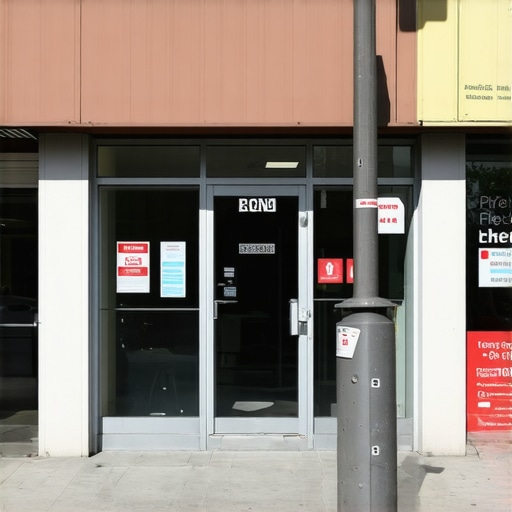 These ‘real-world’ images act as a secondary verification layer. When I started encouraging clients to post one exterior shot a week, we saw a massive uptick in visibility improvement within the local 3-pack.
Choose Your Categories Like a Local Expert
Your primary category is the strongest signal you can send to the map pack. If you pick something too broad, you’ll be competing with national chains; too narrow, and no one will find you. I’ve seen businesses lose half their traffic simply because they chose ‘Consultant’ when they should have picked ‘Tax Attorney.’ This is why your business category choice is so critical. You need to look at what the top three ranking competitors are using and match their primary category while diversifying your secondary ones. Think of it like a radio frequency—if you are tuned to 101.1 but your customers are at 101.5, you’re just static. Periodically check these, as Google often adds new, more specific categories that could give you an edge over competitors who haven’t updated their profiles in years.
The Volume Trap Most Experts Ignore
Most gurus will tell you that the secret to visibility improvement is simply to ‘get more reviews.’ I used to believe that too, until I saw a client’s profile get shadow-banned after a flurry of 50 legitimate reviews in three days. This is the first nuance: velocity matters more than volume. Google’s AI is trained to detect artificial spikes, and if you haven’t mastered the review timing secret, your best customer feedback might end up in the digital trash bin. The algorithm prefers a steady, natural heartbeat of engagement over a sudden explosion of praise. In fact, a study by Whitespark suggests that the detail and keywords within a review carry significantly more weight for map discovery than the raw star count. If you aren’t teaching your team the one question you must ask to trigger those keyword-rich responses, you are leaving money on the table.
Is Your Website’s Footer Secretly Sabotaging Your Local Authority?
Many business owners spend thousands on improving map SEO but forget that their own website is the strongest ‘proof’ Google has. If your NAP (Name, Address, Phone) data in your footer doesn’t match your map profile to the character, you’re creating friction. I’ve seen the hidden impact of a messy footer drop a business from the 3-pack to the second page overnight. This isn’t just about consistency; it’s about structured data. You need to ensure your website is sending local signals that confirm your physical location. If you’ve ever wondered why your local ranking drops after a site redesign, this is usually the culprit. 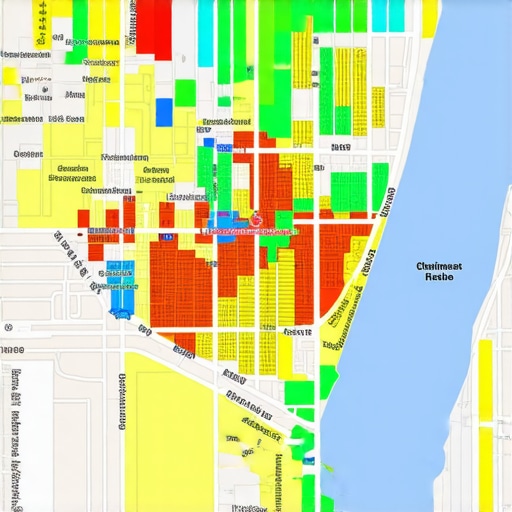
The Proximity Paradox and the Near Me Myth
Everyone wants to rank for ‘near me’ searches, but here is the contrarian truth: you shouldn’t use that keyword in your profile. Google is smart enough to know where the searcher is standing. If you try to force it, you look like a spammer. Instead, you should focus on how to use your blog to mention specific neighborhood landmarks. I call this the ‘Hyper-Local Anchor.’ By mentioning the park across the street or the local high school, you provide the geographic context that actually triggers the proximity algorithm. Don’t fall for the near me trap where you try to optimize for a phrase rather than a location. Have you ever fallen into this trap and seen your rankings stall? Let me know in the comments. We need to move beyond basic tactics and start looking at expert tips for 2025 that account for these AI-driven nuances. If your map views are high but your phone isn’t ringing, you likely have a ‘discovery’ problem, not a ‘visibility’ problem. It is time to audit the boring details, like the minor profile tweaks that most people overlook but the algorithm loves.
I learned the hard way that ranking in the local 3-pack isn’t a trophy you win and keep on a shelf; it is more like a garden that withers the moment you stop watering it. After I finally saw my business hit the top spot, I made the mistake of coasting. I figured the hard work of visibility improvement was done. Within six weeks, I was back on page two. The reason? The algorithm doesn’t just look for the best business; it looks for the most active one. You need a maintenance system that doesn’t feel like a second job, and it starts with the tools you trust to tell you the truth.
Stop Trusting Your Desktop Search Results
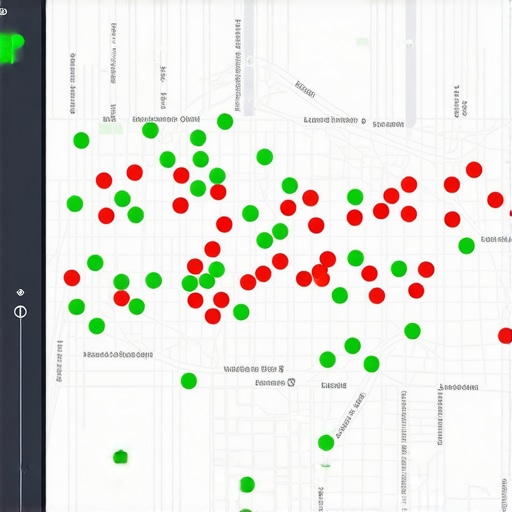
If you are sitting in your office searching for your own business name, you are getting a skewed reality. Google knows who you are, it knows your IP address, and it wants to make you happy by showing you your own listing. This is why the reality of map rank tracking tools is so important to understand. Most of them are lying to you because they don’t account for the hyper-local grid. I personally use Local Falcon to run ‘grid searches.’ It shows me exactly where my pin drops off—maybe I’m number one at the front door, but number seven two blocks away. This granular data is the only way to effectively improve map views because it tells you exactly where you need to strengthen your local signals.
How do I keep my map pin at the top of the pile?
Maintenance is about rhythm, not intensity. I’ve found that the one profile update you should do every single week is simply adding a fresh, geo-tagged photo. This small act signals to the algorithm that your business is open, active, and relevant. Additionally, you should be looking at the boring profile details that your competitors are ignoring, like updating your attributes for seasonal changes. According to the 2024 Local Consumer Review Survey by BrightLocal, 77% of consumers always or regularly read reviews when searching for local businesses, but more importantly, they prioritize recency. If your latest review is from six months ago, you are losing the map discovery game to someone with a lower rating but more recent activity. Consistency is the only way to avoid why most small businesses fail at Google Maps within their first year.
The Future of Maps is Predictive and Personal
As we head toward 2025, the way maps visibility works is shifting from ‘what is near me’ to ‘what is best for me right now.’ We are seeing AI-driven snapshots that summarize your reviews and photos before the user even clicks. This is why you must unlock the secrets to maps visibility by focusing on the ‘Entity’ of your business, not just keywords. Google is beginning to use ‘Visual Search’ more aggressively—meaning the AI actually ‘looks’ at your photos to see if you have the product a customer is searching for. I recommend everyone try this one advanced tip: start using the fast way to add your services directly into your profile with specific price points and descriptions. It gives the AI more ‘hooks’ to grab when someone asks a complex question. If you haven’t audited your service list in the last ninety days, you’re likely invisible for half of what you actually offer.
The Hardest Map Lessons I Learned the Expensive Way
I used to think that volume was the only metric that mattered. I chased hundreds of generic reviews, only to realize that Google values the context of the user more than the number of stars. One deep, descriptive review from a local guide in your neighborhood is worth more than ten ‘Great service!’ comments from accounts three states away. If you find your efforts hitting a wall, it might be because your high-quality reviews are being flagged as spam due to unnatural velocity. I also learned that you don’t need a massive office to win. In fact, the map ranking trick for businesses with no physical storefront involves leaning heavily into service area verification rather than trying to fake a physical location. Relevance will always beat raw distance in the eyes of a modern algorithm.
My Personal Toolkit for Dominating Local Search
I don’t believe in using twenty different apps to manage my digital presence. I keep it lean and focused. First, I use a grid-tracking tool to visualize my rank across the city, though I always remind myself of the reality of map rank tracking tools—they are just one piece of the puzzle, not the absolute truth. Second, I rely on a simple calendar reminder to post one fresh photo every Monday morning. Third, I keep the ultimate blueprint to improve map visibility and rankings bookmarked for when I need to troubleshoot a sudden dip in traffic. These tools aren’t magic; they are just guardrails that keep me consistent when things get busy.
Take Back Your Local Territory Starting Today
The journey to visibility improvement doesn’t happen overnight, but it starts with a single change. Whether you are fixing a back-alley address error or finally adding those exterior shop photos, every action sends a signal to the algorithm that you are open for business. Your community is already searching for what you offer; you just have to make it easy for them to find you. By focusing on maps visibility and finding ways to improve map views naturally, you build a digital asset that pays dividends for years. Don’t let the technical jargon intimidate you. Start where you are, use what you have, and watch your local presence grow. #IMAGE_PLACEHOLDER_E# I am confident that if you apply these actionable strategies for 2025, you will see a measurable difference in your phone volume. Which part of your map profile feels the most broken right now? Let’s fix it together in the comments below.