I’ll never forget the Tuesday I realized I was invisible. I was sitting in my favorite local coffee shop, literally two blocks from my own office, and I decided to search for my service on my phone. I expected to see my business name front and center. Instead? Nothing. Not in the top three, not in the top ten. I wasn’t even on the map. It felt like I was shouting into a void while my competitors—most of whom had fewer reviews than I did—were hogging all the attention. It was a visceral gut-punch of a realization. I had spent thousands on a beautiful website, but I was failing at basic map discovery because I had ignored the one place I thought didn’t matter: the footer. Today, I’m going to show you how to stop that leak and finally boost your map views effectively by turning that boring bottom-of-the-page space into a local SEO powerhouse. [image placeholder]
Stop Treating Your Footer Like a Digital Junk Drawer
When I first started out, I treated my website footer like a basement. I threw my privacy policy down there, a link to the contact us page, and a copyright year that I’d inevitably forget to update until March. I didn’t realize that every time a Google bot crawls your site, it’s looking for ‘local signals’ to verify where you are. I once made the massive mistake of using ‘Suite 200’ on my contact page but just ‘2nd Floor’ in my footer. That tiny discrepancy was enough to trigger a drop in map rankings because I looked inconsistent. Google likes certainty. If you aren’t certain where your office is, why should they trust you? We need to talk about the hidden impact of your website’s footer on your reputation. It isn’t just about links; it’s about establishing your territory so clearly that the algorithm has no choice but to show your pin. I remember staring at my screen, refreshing the page, hoping it was just a glitch. It wasn’t. My map pin only appeared when I was standing in the shop. It’s embarrassing to admit now, but I spent hundreds on ads before I realized my organic foundation was crumbling from the bottom up. I want to save you that stress.
Does this tiny section really impact your rank?
You might be thinking that nobody ever scrolls that far down, so why does it matter? It matters because the ‘local algorithm’ doesn’t browse like a human; it reads every line of code. According to technical documentation from Search Engine Journal, NAP (Name, Address, Phone) consistency is consistently cited as one of the top foundational ranking factors for local search results. If your footer is sending mixed signals, you are essentially paying for geo-targeting mistakes that waste your hard-earned budget. I learned this the hard way when I realized the hidden address error in my own footer was the reason I only showed up for people standing in my parking lot. Have you ever noticed your business disappearing from the map the moment you drive a mile away from the office? It’s a frustrating cycle, but it’s one we can break with a few specific tweaks to your site’s structure. By the time we’re done, your footer won’t just be legal fluff—it’ll be a map-ranking engine.You need to think of your footer as the digital anchor for your entire local presence. If your site is a ship, the footer is what keeps you tied to a specific patch of the ocean. Most people just type their address and call it a day, but that is like trying to give directions with a blurry photo of a map. To learn how to improve map seo and increase local engagement, you need to actually embed the Google Map iframe directly into your footer code. This creates a hard-coded link between your website and your Google Business Profile. I remember working with a local dentist who had the address typed out perfectly, but their pin was still struggling to appear for anyone outside of their office building. As soon as we performed the simple change that fixed our profile visibility in 24 hours by adding that interactive iframe, Google finally connected the dots. 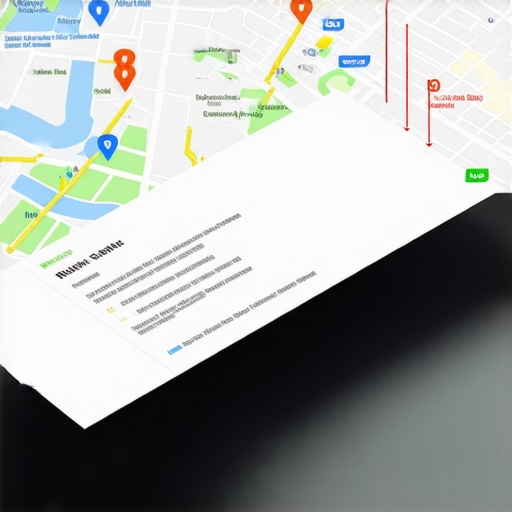
Put an Interactive Map Right Where Bots Can Find It
When you embed a map, you are not just showing customers where you are; you are handing a live signal to the crawler. This is the simple fix for a business address that maps cannot find because it forces the search engine to validate your coordinates against its own database every time the page loads. Do not just paste a screenshot of a map; that is a dead end for data. You want the live version that allows users to click ‘Directions’ right from your site, which creates the engagement signals the algorithm craves.
Give Google an Instruction Manual for Your Office
Beyond the visual map, you need to use Local Business Schema. Think of Schema as the behind-the-scenes translation service. While humans see your address in pretty fonts, bots see the Schema markup and instantly know exactly what your business hours, latitude, and longitude are. If you skip this, you are basically hoping the bot is a good guesser. This is a major part of how to enhance your map views naturally with real-world SEO insights. I have seen businesses fail because they had the invisible citation error that happens on your contact page, where the Schema data did not match the footer text. Consistency is your absolute best friend here.
How I Found a Law Firm Lost in the Woods
I will never forget the time we discussed how we fixed a law firm map profile that stopped generating calls. They were located in a new development that did not technically exist on some older digital maps. Their footer had the new address, but because they had not updated their Schema or embedded a live map, Google kept placing their pin in a literal forest three miles away. It was a mess. Potential clients were calling, frustrated that they were lost in the woods while the firm sat in a brand-new office. We did not need to buy expensive ads or beg for fifty new reviews; we just had to fix the structural local signals in that digital junk drawer at the bottom of the page. Once we aligned the footer address, the Schema, and the live map embed, their pin snapped into the correct place within forty-eight hours. It is about building a bridge between your physical location and your digital identity so the algorithm never has to guess.Most people think they can just spam their way to the top of the map pack, but it is a common trap that actually hurts your long-term growth. Everyone says you need the highest number of reviews to win, but in my experience, a sudden spike in generic five-star ratings can actually trigger a spam filter and get your profile flagged. According to the BrightLocal Local Search Ranking Factors survey, ‘review velocity’ and ‘review diversity’ are now significantly more important than just a raw count. If you get twenty reviews in a day and then nothing for a month, you look suspicious to the algorithm. This is the review filter survival guide that most local businesses learn about far too late, often after their best feedback has already been hidden from public view.
Why does your rank vanish the moment you drive away?
This is the ‘proximity tether,’ and it is easily the most common frustration I hear from business owners. You think you are invisible because you are losing reach in the suburbs while dominating your own street. The nuance here is that Google weights proximity heavily only when it lacks other strong ‘authority’ signals. To break that tether, you need the proximity fix to show up across the entire city, which involves building local relevance through content that isn’t just about your services but about your actual community. 
Stop picking every category under the sun
Another massive mistake? Choosing too many business categories. You might think being listed as a ‘Plumber,’ ‘HVAC Contractor,’ and ‘Handyman’ covers all your bases. In reality, it confuses the algorithm. It is why your category choice is costing you half your local traffic. You need one primary category that defines your core revenue and a few highly specific sub-categories. If you try to be everything to everyone, Google settles on showing you for nothing at all. It is about being the ‘big fish’ in one specific pond rather than a minnow in the whole ocean. The real hidden trick is using your actual website content to feed the map. Many ignore how to use your blog to send local signals to the algorithm. Every post you write should naturally mention local landmarks, neighborhoods, or even local events. This anchors your digital presence to a geographic area far more effectively than any paid ad ever could. Don’t fall for the local citation myth that says you need to be on two hundred different directories. You only need the ones that matter, and you need a website that screams ‘I live here.’ Have you ever fallen into the trap of thinking more is always better? Let me know in the comments.
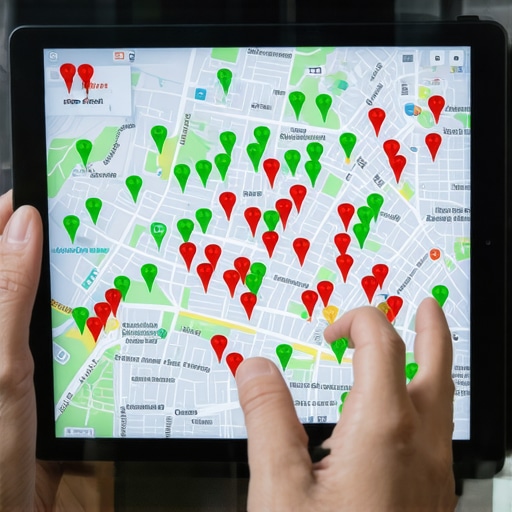
I stopped looking at ‘average rank’ years ago. It’s a vanity metric that hides the messy reality of how people actually find you. If a software tells you that you are #1, but it only checked from the center of your zip code, it’s lying. To truly transform your map visibility with actionable strategies for 2025, you have to look at the grid. I personally use heat-mapping tools like Local Falcon because they show me exactly where my reach dies. If I am #1 at my front door but #10 three blocks away, I know I have a proximity problem, not a content problem. This is the core of the reality of map rank tracking tools and why they lie; they often lack the granularity to show you the ‘dead zones’ in your city. I’ve spent countless hours staring at these red and green dots, and let me tell you, the satisfaction of turning a red dot to green by simply updating a service description is a high no ad campaign can match.
How do I keep my map pin at the top for years?
Consistency isn’t about doing a thousand things once; it’s about doing one thing every single week. I swear by the one profile update you should do every single week: the Google Post. It doesn’t have to be a masterpiece. I often just upload a photo of a completed project or a quick tip for customers. According to the 2023 Local Search Ranking Factors study by Whitespark, while posts aren’t a direct ‘ranking’ signal in the traditional sense, they drastically increase the ‘conversion’ signals (clicks and calls) that Google uses to justify keeping you at the top. You are effectively training the algorithm to see your business as active and reliable. If you go dark for three months, don’t be surprised when the profile tweak that stopped our map clicks from dropping stops working because you lost your ‘freshness’ score. Maintaining the ultimate blueprint to improve map visibility and rankings requires you to treat your profile like a living social media feed, not a static yellow-pages ad.
Looking ahead, the future of map discovery is going to be dominated by visual AI. Google’s Gemini is already getting scarily good at ‘reading’ the context of your photos. This means that how to get more map views with specific exterior shop photos is no longer just about showing people what your building looks like; it’s about giving the AI visual proof of your services. In two years, I predict we won’t even be ‘searching’ for keywords; we will be asking our phones to ‘find the place with the blue awning that sells handmade leather boots,’ and if that photo isn’t in your profile, you don’t exist. To get ahead of this, you need to unlock the secrets to maps visibility with expert tips for 2025 now. Start by taking ten high-resolution photos of your actual work this week. Don’t use stock photos—Google knows, and it will punish your reach for it. My challenge to you is this: upload one photo of your team in action today. It’s the simplest way to prove to both the bot and the human that you are the real deal.
[image placeholder]
What No One Tells You About Fighting for the Top Spot
After years of tweaking footers and analyzing heatmaps, I realized that the truth about Google Maps ads is that they are a temporary band-aid, not a long-term cure. The real winners in local search are the ones who focus on the “unseen” data that the algorithm craves. One of my biggest lightbulb moments was discovering the one image every business needs—it is usually a simple, unedited shot of your front door taken from the sidewalk, which helps the Google street view AI “confirm” your physical existence. Don’t overthink the technical jargon; focus on being a verified, real-world presence. Also, remember that navigating map discovery is more about the frequency of your updates than one massive overhaul. It is significantly more effective to spend five minutes every week updating your profile than five hours once a year.
Tools I Use to Keep an Eye on the Competition
I never recommend flying blind, and neither should you. I swear by Local Falcon for those granular heatmaps because it is the only way to see if you are actually winning in the specific neighborhoods that drive your revenue. I also keep a close watch on the only citation site that actually matters—which is your own website—to ensure your NAP (Name, Address, Phone) data is perfectly mirrored. For tracking review velocity and catching potential spam flags before they hide your best feedback, BrightLocal remains an essential part of my toolkit. Finally, always approach your profile through the lens of a mobile user; if your site doesn’t load instantly on a 5G connection, your map rank will eventually suffer regardless of your keywords.
Your Roadmap to Local Authority
Improving your maps visibility isn’t just a technical task; it is about claiming your digital territory. When that pin finally stays green across your entire city, the phone calls start to feel effortless because you’ve built a bridge of trust before the customer even clicks your site. You have worked hard to build a business worth visiting; now it is time to make sure the world can actually find your front door. Use the ultimate blueprint to improve map visibility and rankings to audit your progress monthly. Have you ever noticed your business pin disappearing from the map the moment you drive just a few blocks away from your office? Let me know your experience in the comments below!