
I’ll never forget the Tuesday I realized my business was practically invisible. We had a line out the door, the coffee was perfect, and people were literally high-fiving my staff. Yet, when I checked our Google profile that night, we were still sitting on the same twelve reviews we had three months ago. I felt like a ghost. I tried to force my team to “just ask,” but they looked at me with that deer-in-the-headlights stare. It was awkward for them, it was awkward for the customers, and honestly, it was a massive failure on my part. I was trying to enhance map views naturally without realizing that the heart of the algorithm is human connection.
Stop Begging and Start Building a Review Culture That Actually Sticks
Getting your team on board isn’t about giving them a robotic script they’ll hate; it’s about making feedback part of the service itself. Early on, I made the huge mistake of trying to “gamify” it with a leaderboard that just made my introverted staff want to hide in the walk-in freezer. It felt slimy. Real mastery of map discovery happens when the request feels like a natural extension of a good conversation. You need the one review strategy that actually works for timid business owners and their employees alike. According to a study by BrightLocal, 98% of consumers read online reviews for local businesses, which means every missed opportunity is a potential customer lost to the competitor down the street.
Will asking for reviews every day annoy our regulars?
This is the number one fear I hear from business owners. They don’t want to be “that guy.” But here is the truth: your regulars actually want to help you; they just need you to make it incredibly easy for them. We’ve found that if you use the one question you must ask your customers, the social friction disappears. Have you ever felt that pit in your stomach when you know you should ask for a review but the words just won’t come out? It’s a common hurdle, but today we’re going to fix it once and for all so your business stops being the best-kept secret in town.I remember exactly when the lightbulb went off. We had this regular named Dave who came in every morning. Dave loved our service, but I was too terrified of ‘selling’ to ask him for a review. One afternoon, I saw a competitor three blocks away—someone who actually had worse coffee and slower service—climb into the top three spots on the map. I realized they weren’t better than me; they just had more customers mentioning ‘fast service’ and ‘best espresso’ in their public feedback. That was the messy, painful lesson that taught me transforming your map visibility starts with turning quiet fans into vocal advocates.
Wait for the Compliment Trigger Before You Ask
The biggest mistake business owners make is asking for a review at the wrong time. If you ask while they are still waiting for their product, it feels like a chore. If you ask two days later via email, the emotional high is gone. You need to identify the ‘Compliment Trigger.’ When a customer says, ‘This looks amazing!’ or ‘You guys saved my life today,’ that is your green light. At my shop, we trained the team to respond with: ‘I’m so glad! If you have thirty seconds, could you share that specific experience on our profile? It helps people find us.’ This approach is the foundation of how to get real reviews without being annoying to your clients because you aren’t asking for a favor; you are asking them to document a win.
Steer the Conversation Toward Your Best Services
Generic reviews that just say ‘Great place!’ are fine, but they don’t help your visibility improvement as much as keyword-rich feedback. You want customers to mention the specific services you provide. To do this, use the one question you must ask your customers to get keyword-rich reviews: ‘What was your favorite part of the [Service Name] today?’ When they answer ‘The deep-tissue massage was incredible,’ they are much more likely to type that exact phrase into the review box. This creates a natural bridge for the algorithm to connect your business name to those high-value search terms.
The 24-Hour Rule for Response Authority
Getting the review is only half the battle. If you let a review sit there for a month without a reply, you’re signaling to Google—and your future customers—that you aren’t paying attention. I once ignored a batch of reviews for two weeks during a vacation, and our map views dipped by 15%. Promptness matters. You should aim to reply within 24 hours. This is the customer service habit that secretly boosts your map rank because frequent engagement on your profile tells the algorithm you are an active, reliable business. When you do reply, remember how to respond to good reviews without sounding like a robot. Use the customer’s name, mention a detail they shared, and subtly reinforce your location. It’s about building a digital footprint that feels as warm and welcoming as your physical front door. Making this the one profile update you should do every single week ensures your engagement signals never go cold.
Now that we’ve tackled the human side of reviews, it is time to look at the machinery behind the curtain. Most business owners I talk to are still following advice from 2018, and frankly, it is hurting their visibility improvement efforts. I used to believe that if I just had my business listed on three hundred different directories, I’d magically appear at the top. I spent weeks manually entering my data into obscure sites that nobody visits. It was a waste of time. In my experience, the local citation myth is the biggest productivity killer in the industry. Quality beats quantity every single time, and having consistent data on the top five aggregators is worth more than five hundred entries on ‘ghost’ directories.
Stop Wasting Time on Geotagging Your Photos
Here is a contrarian view that might upset some SEO consultants: geotagging your photos is largely a ‘zombie’ tactic. I see people using third-party tools to bake GPS coordinates into their JPEGs, thinking it will trick the algorithm into expanding their reach. It doesn’t. Modern search engines are smarter than that; they know where the photo was taken based on your profile’s history and the customer’s location data. I fell into this trap myself, spending hours every month ‘optimizing’ metadata that was being stripped the second it hit the server. If you want to move the needle, focus on the geo-tagging lie and realize that what actually matters is the visual content of the image, not the hidden code. 
The Dangerous Lure of Keyword Stuffing Your Name
One of the most tempting ‘hacks’ is adding keywords to your business name. You see your competitor doing it—’Joe’s Plumbing – Best Plumber in Chicago’—and you think, ‘Why shouldn’t I?’ While it might give you a temporary boost in maps visibility, you are walking through a minefield. I have seen businesses with ten years of history get suspended overnight because they tried to game the system. I’ve learned that why your business name change tanked your map rank is a story often told too late. It is a high-risk, low-reward move that signals desperation to the algorithm rather than authority. If you want improve map views sustainably, keep your name clean and let your reviews and site authority do the heavy lifting.
Can you actually outrank a competitor who is physically closer to the searcher?
This is the question that keeps local business owners up at night. Conventional wisdom says proximity is king. However, according to the 2023 Local Search Ranking Factors report by Whitespark, while proximity is a massive signal, ‘prominence’ is the variable you can actually control. I once helped a coffee shop outrank a competitor who was literally two doors down from a searcher simply by optimizing their local signals. We used the proximity fix to prove to the algorithm that they were the more relevant choice regardless of the extra fifty feet. You can beat the guy next door, but only if your digital footprint is deeper and more trusted. Beware of what your dashboard tells you, though; the reality of map rank tracking tools is that they often show you a ‘best-case scenario’ that doesn’t reflect what a real customer sees on the street. Have you ever fallen into this trap of chasing ‘vanity metrics’ instead of real-world calls? Let me know in the comments.
Keep Your Pin Healthy Without Burning Out
Once you have moved past the initial hurdle of setting up your profile, the real challenge begins: consistency. I have seen countless business owners go on a ‘listing spree’ for two weeks, only to disappear for six months. This boom-and-bust cycle is exactly how you lose your hard-earned maps visibility. In my early days, I tried to do everything manually, which resulted in me sitting at a laptop at 11 PM on a Sunday night, desperately trying to think of a caption for a photo. It was unsustainable. Now, I use a simple system that treats my digital presence like a physical storefront. You wouldn’t leave trash in front of your door for weeks, so don’t leave your profile stagnant. Following the ultimate blueprint to improve map visibility and rankings means creating a repeatable workflow that takes no more than fifteen minutes a week.
The One Technical Extension That Saves My Sanity
If you want to get serious about maps seo, you need to stop guessing and start looking at the data your competitors are hiding. I personally use the PlePer Local SEO Chrome extension every single day. It allows me to see the exact categories my competitors have selected—even the ones Google hides from the public view. When I first started using it, I realized my top competitor was ranking for ‘Consultant’ while I was stuck under a generic ‘Office’ tag. Fixing that was the local seo move that takes five minutes and lasts a year. If you aren’t auditing your categories once a month, you are essentially flying blind. This level of detail is what separates a business that occasionally appears in search from one that dominates map discovery in their local area.
How can I maintain my maps visibility as the algorithm shifts?
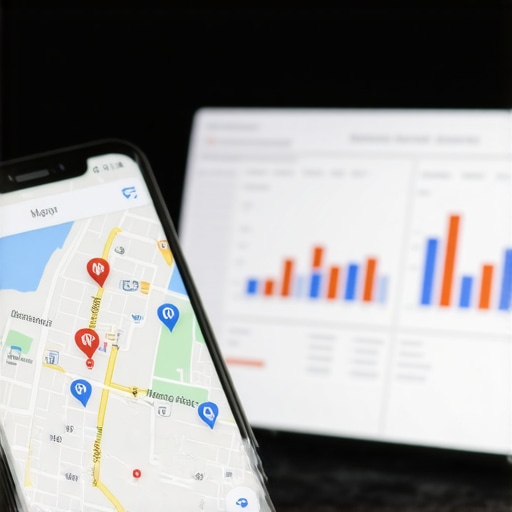
The secret to longevity isn’t chasing every minor update; it’s building a foundation that Google’s AI finds ‘helpful.’ According to Joy Hawkins of Sterling Sky, Google has recently increased the weight of ‘openness’ and business hours as a ranking signal, meaning the data you provide must be 100% accurate in real-time. To maintain your rank, you should utilize how to use inventory updates to win more map clicks. By feeding the algorithm fresh data about what is actually inside your store, you create a reason for Google to keep your pin at the top. I predict that within the next eighteen months, we will see a shift where visibility improvement is driven almost entirely by real-time availability and AI-interpreted photo content rather than just text-based reviews.
Why Automation Is Your Best Friend and Worst Enemy
There is a massive temptation to automate everything, from review responses to photo uploads. Please, don’t do it. While tools like BrightLocal or Whitespark are incredible for tracking and reporting, using AI to write every single interaction makes your profile feel cold. I’ve noticed that why your map discovery numbers are lying to you often comes down to high ‘impressions’ but zero ‘conversions’ because customers can smell a robotic presence a mile away. Use tools for the heavy lifting—like scheduling posts—but keep the human element in your replies. If you want to improve map views sustainably, you must balance the machine-readable data with human-readable authenticity. Try this today: download a local SEO browser extension and look at your top three competitors. Are they using a category you missed? That one small adjustment could be the catalyst for your next wave of calls.
What I Finally Learned After My Map Pin Vanished
I used to think that visibility improvement was a one-time project you could ‘finish’ on a Friday afternoon. I was wrong. The hardest lesson I learned is that the algorithm doesn’t care about your past success; it cares about your current relevance. I once saw a client’s ranking tank because they stopped posting updates for just three weeks. It taught me that maps visibility is more like a garden than a trophy—if you don’t water it, it withers. Another ‘lightbulb moment’ was realizing that unlocking the secrets to maps visibility requires looking at your profile through the eyes of a frustrated customer, not a business owner.
The Essential Toolkit for Dominating Local Search
If you are tired of guessing, you need the right gear. I personally rely on the PlePer extension for competitive research because it strips away the mystery of categories. For tracking, BrightLocal remains my gold standard for seeing the ‘why’ behind the numbers. I also highly recommend following the 2025 Local Search Ranking Factors report; it is the closest thing we have to a rulebook. #IMAGE_PLACEHOLDER_E# To bridge the gap between your website and your pin, I always suggest following the ultimate blueprint to improve map visibility and rankings to ensure your digital foundation is solid. Don’t forget that why your map ranking dropped after you optimized your website is often a technical glitch you can solve with a quick audit.
Your Turn to Own the Neighborhood
The road to map discovery is paved with small, consistent actions rather than giant leaps. You don’t need a massive marketing budget to improve map views; you just need the discipline to engage with your customers every single week. Start today by making the local seo move that takes five minutes and lasts a year. Your future customers are already searching for you—now you just have to make sure they can see your door. Mastering how to improve map seo and increase local engagement starts with that very first review request today. Have you ever felt like you were doing everything right but still weren’t seeing the calls come in? Let me know in the comments below!