
I remember standing in the middle of our new, empty lobby, holding a lukewarm coffee and feeling like I’d finally made it. The echo of the movers’ boots was still ringing in my ears as I pulled out my phone to admire our local listing in its new home. Then, my stomach dropped. My business wasn’t just at the wrong address; it was gone. A bright red ‘Suspended’ banner was staring back at me, and just like that, the phone stopped ringing. I’d spent months planning the physical move, but I’d spent zero minutes planning the digital one. I thought a simple address update was a two-minute task, but I had accidentally walked right into a verification trap. That mistake taught me the hard way that visibility improvement isn’t something that just happens; it’s something you have to defend during a transition.
Protect Your Ranking While You Pack the Boxes
Moving your physical office is one of the most dangerous times for your local SEO. To the Google algorithm, a change in address looks remarkably similar to a fraudulent business trying to hijack a listing. When I moved my office for the second time, I was terrified of repeating my past failure where my map views flatlined for a month. This time, I realized that the secret isn’t just changing the numbers on the screen; it’s about providing a trail of breadcrumbs that prove you are still the same trusted entity. We’re going to walk through exactly how to update your location without losing the momentum you’ve built over the years.
Is a new location actually worth the ranking risk?
Many business owners I talk to are genuinely afraid to update their address because they’ve heard horror stories of rankings disappearing into the abyss. It’s a valid fear. The local search environment is finicky, and one wrong move can send you to page ten. However, staying on the map is entirely possible if you respect the process. Back when I was first starting out, I ignored the ‘NAP’ consistency rule—Name, Address, Phone—and paid for it dearly. According to research from BrightLocal, having accurate and consistent information across the web is a top-tier ranking factor. If your website says one thing and your profile says another, your map discovery will suffer as Google’s trust in your data evaporates. Have you ever had your business profile suddenly vanish just when things were looking up?
The Data Mismatch That Kills Map Discovery
The real reason your profile gets flagged during a move isn’t just the new suite number; it’s the digital ghost of your old office. In my early days, I didn’t realize that Google cross-references your new address with every other corner of the internet. If you have an old Yelp page or an outdated Chamber of Commerce listing pointing to your old spot, you’re signaling to the algorithm that something is fishy. To effectively improve map SEO, you have to perform a clean sweep. We’re going to dive into the specific ‘Profile Verification Fix’ steps that keep your pin right where it belongs—at the top of the search results in your new neighborhood. We’re going to look at the hidden address errors that usually trip people up and how to prove to the AI that you’re the real deal.To get started, you have to realize that Google isn’t just looking at your dashboard; it’s looking at the entire web. Think of the algorithm like a suspicious detective. If your ID says one thing but your mail and tax records say another, he’s going to assume you’re an impostor. This is why a successful move begins long before you touch your Google Business Profile.
Scrub the digital web before you click save
Your first task is a search-and-destroy mission for old citations. In my early consulting days, I worked with a local law firm that moved just two blocks away. We updated their primary listing immediately, but we forgot about their mention on a local ‘Top 10 Attorneys’ blog and their old Chamber of Commerce page. Within a week, they weren’t just lower in the rankings; they were completely gone. The truth about duplicate listings is that they act like anchors, pulling your authority down. To keep your visibility improvement on track, you must ensure that every mention of your brand—from Facebook to the local yellow pages—reflects the new data. This prevents the ‘data conflict’ that triggers an automatic suspension.
The right way to change your address in the dashboard
When you finally sit down to update your profile, don’t just type and hope. One of the best maps seo tricks I’ve learned is to update your website’s footer and ‘Contact Us’ page first. Google’s crawlers often visit your site the moment you hit ‘Apply’ on a profile change. If they see a mismatch, it’s an instant red flag. Also, pay close attention to the hidden impact of your website footer. If that address doesn’t match your profile down to the punctuation of ‘Suite’ or ‘Ste’, you are inviting a verification delay.
Gather proof that the algorithm cannot ignore
Once the address is changed, Google will often ask for video or photo verification. This is where most people fail because they treat it like a casual selfie. To truly improve map views after a move, you need to show the ‘connective tissue’ of your business. 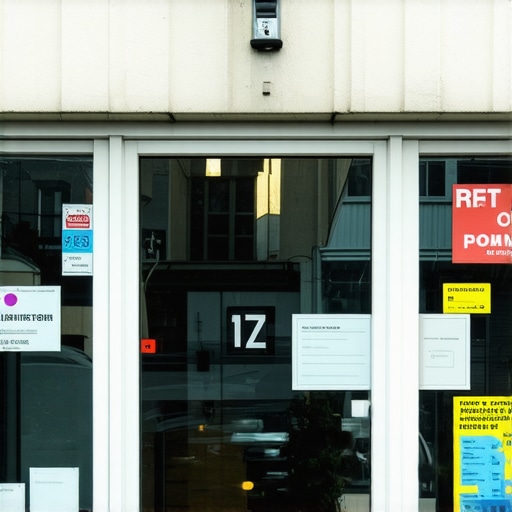
Use local landmarks to anchor your new pin
When I moved my own studio, I didn’t just take a photo of the front door. I recorded a video that started at the street corner, showing the street sign, then panned to my building, and finally showed me unlocking the door. This ‘geo-spatial proof’ is one of the most effective ways to prove to Google you are actually in the city center. It removes any doubt that you are a ‘ghost’ or a service-area business pretending to have an office. Map discovery depends on trust, and nothing builds trust faster than showing the algorithm exactly where you sit in relation to the rest of the neighborhood. If you have any local signs or neighboring businesses that are already well-established on the map, make sure they appear in your background. You are essentially ‘borrowing’ their established trust to verify your own. Remember, the goal of maps visibility isn’t just to have a pin; it’s to have a pin that Google feels safe recommending to users. Dealing with the local citation myth—that more is always better—is a waste of time during a move; what matters now is the accuracy of the few high-quality ones you have left.In my decade of helping businesses navigate these waters, I’ve found that many ‘experts’ still cling to the idea that more is always better. They chase hundreds of low-quality citations thinking it builds a wall of authority. I call this the local citation myth. In reality, Google’s algorithm has become far more interested in the velocity and relevance of your data rather than the sheer volume. If you have 500 mentions but none of them are from local sources with actual traffic, you aren’t building authority; you’re just creating digital noise.
The volume of reviews isn’t the shield you think it is
Everyone tells you to ‘get more reviews.’ But here’s the contrarian truth: a profile with 500 reviews can easily lose to one with 50 if those 50 are contextually rich and recent. Google’s 2024 updates have leaned heavily into ‘Sentiment and Entity Recognition.’ This means the words in your review responses matter more than the star count. If your customers just say ‘Great job!’ it’s a wasted opportunity. You need them to mention the specific service and neighborhood. This is where real-world SEO insights prove that a smaller, hyper-local footprint often outranks the giants.
Why did my rank plummet after I optimized the website?
This is the most common ‘oops’ factor I see with advanced users. You spend weeks perfecting your on-page SEO, only to watch your map pin vanish. It happens because of a phenomenon I call ‘Over-Optimization Shock.’ According to a study by Whitespark, the relationship between your organic website signals and your map rank is tight, but if you change your site’s structure too fast without updating your profile landing page, the algorithm loses its ‘anchor.’ It sees a sudden shift in keywords and assumes your business has pivoted or changed owners. Why your map ranking dropped often comes down to this disconnect between the site’s new metadata and the profile’s established history. 
Stop trying to trick the proximity sensor
One of the biggest mistakes is trying to ‘force’ visibility in a city you aren’t actually in. People try to use virtual offices or P.O. boxes, but Google’s AI is now incredibly good at identifying ‘non-traditional’ business locations. If you’re caught, it’s not just a suspension; it’s a permanent shadowban of your domain. To truly master map discovery, you have to work with the proximity factor, not against it. Instead of trying to rank everywhere, focus on the tactics that actually move your pin in the neighborhoods that matter most. Have you ever fallen into this trap of trying to expand too fast and losing your home-base ranking? Let me know in the comments.The real danger isn’t the physical move itself; it is the six months that follow when the initial adrenaline fades and you get complacent. I have seen countless businesses hit the top of the local pack, only to slowly slide down into obscurity because they thought the optimization work was a one-time project. To truly improve map views over the long haul, you need a maintenance stack that doesn’t rely on the vague metrics found in the standard dashboard. I personally do not trust basic reach numbers because they don’t show the geographic reality of your footprint.
How do I maintain my map ranking over time?
Consistency is the only thing the local algorithm rewards without fail. I use a tool called LocalFalcon for one specific reason: it shows me a precise grid of where my pin ranks block-by-block. If you only check your rank while sitting at your office desk, you are seeing a distorted reality. You might be number one in your own lobby but completely invisible two streets over. This is exactly why the reality of map rank tracking tools is so complicated for the average user. Once a week, I run a fresh scan, and if I see a ‘red spot’ appearing in a specific neighborhood where I used to be green, I focus my next update or customer interaction on that specific area to reclaim the territory. 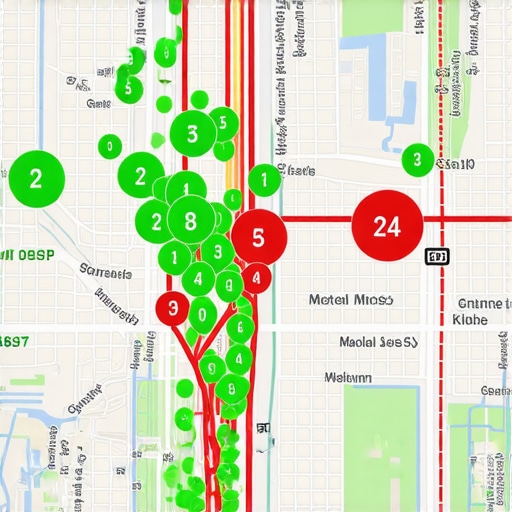 I also swear by a manual ‘NAP’ health check. While many people use automated services, I prefer a simple spreadsheet to manually verify my five highest-traffic local directories. Automated tools often miss the 7 tiny details that keep your business off the local 3-pack, such as a weirdly formatted phone extension or a suite number that Google’s AI interprets as a duplicate listing.
The future of map discovery is conversational
Looking toward the next few years, the trend is moving aggressively away from simple keywords and toward ‘Natural Language Intent.’ Google’s Search Generative Experience is already starting to pull answers directly from your profile’s Q&A section and your specific review replies. According to research from the experts at Sterling Sky, even the ‘Open Now’ filter is becoming a massive ranking weight in mobile search. This means your maps visibility will soon depend on how well you answer specific, long-form questions before a user even clicks through to your website. To keep your map discovery numbers high, you should start using the Questions and Answers feature yourself; post the top five questions your front desk gets every day and answer them officially. This creates a rich data layer that AI crawlers love. To keep the momentum, ensure you are doing the one profile update you should do every single week—it takes five minutes but signals to the algorithm that you are still the most relevant choice in the area.
The equipment I use for geo-proof
You do not need a professional camera crew to maintain your rank. I use a standard smartphone with a cheap external microphone to record 30-second ‘behind the scenes’ clips. I do this because video updates improve map search visibility by increasing the ‘dwell time’ on your profile. When a user stops to watch a video, Google logs that as a successful engagement event. I challenge you to do this today: find one unanswered question on your profile and reply to it using a neighborhood name and a specific service you performed there. It is the fastest way to signal relevance. You will be surprised how quickly you can boost your map views effectively by just being the most helpful and active presence on the map.
What the Experts Usually Skip When Talking About Map Moves
Reflecting on my decade in the trenches of maps seo, I have realized that the hardest part isn’t the technical data entry; it’s the psychological gap between being a ‘new’ business and an ‘established’ one in Google’s eyes. I’ve seen many owners panic because their traffic doesn’t rebound in 48 hours. One lightbulb moment for me was realizing that why most small businesses fail at google maps often comes down to abandoning their strategy mid-move. Remember, visibility improvement is a marathon, not a sprint. Another hard-earned lesson: never trust your own search results while logged into your business email. Always use a clean browser to see the real map discovery situation your customers face. Finally, your improve map views strategy must include your physical staff; if they aren’t mentioning the new neighborhood in their interactions, the digital signals will always feel slightly hollow.
The Sites and Tools That Keep My Business On Top
I don’t believe in chasing every new shiny object, but there are a few resources that are non-negotiable for my daily workflow. First, I always point people toward the ultimate blueprint to improve map visibility and rankings because it provides a foundational structure that survives algorithm updates. For technical deep dives, I regularly check the case studies at Whitespark and Sterling Sky. When I need to spark a quick recovery after a relocation, I focus on the move that puts your pin in the center of the action. These are the tools that help you transition from guessing to knowing exactly where your maps visibility stands compared to the local competition.
Go From Invisible to Indispensable in Your New Area
Moving your office shouldn’t feel like a death sentence for your leads; it should be a fresh start to dominate a new territory. By providing the algorithm with consistent, high-quality proof of your new location, you are effectively building a digital fortress around your brand. Your maps visibility is the lifeblood of your local growth, and protecting it is the best investment you can make this year. Don’t be afraid of the verification process—embrace it as a way to prove you are the most legitimate player in the neighborhood. Have you ever felt like your business was being ‘ghosted’ by the local pack after a minor update? Let me know your experience in the comments below!