
I’ll never forget the Tuesday morning I woke up, poured a coffee, and checked my Google listing only to find my shop was marked as ‘Permanently Closed.’ My heart hit the floor. I was standing in my own lobby, yet according to the internet, I didn’t exist anymore. It wasn’t a glitch. It was a calculated move by a rival who decided my success was their problem. Dealing with why your competitors map pin is always above yours is one thing, but having them rewrite your business history is a whole different level of dirty play. I spent the next three hours frantically trying to prove I was still alive. Today, I’m going to show you how to build a digital fortress around your information so you never have to feel that panic. We’re going to talk about real-time alerts, verification tricks, and the mindset shift you need to protect your hard-earned maps visibility and rankings.
Get Your Hands Off My Business Profile
When I first started out, I made a massive rookie mistake: I trusted the system. I assumed Google would verify every ‘suggested edit’ with me before making it live. I was wrong. Google loves ‘community’ data, and sometimes that community is out to get you. It’s a bitter pill to swallow. If you don’t take active control, you’re basically leaving your front door unlocked in a bad neighborhood. You have to learn how to claim your territory on the map when your competitors are aggressive or you’ll constantly be playing catch-up. A study by the experts at Search Engine Land confirms that local listing spam and malicious ‘suggested edits’ are a primary concern for local businesses because the algorithm prioritizes user-submitted data. It’s not just your imagination; it’s a tactic.
Can You Actually Stop Google From Listening to Strangers?
The short answer is no, you can’t technically ‘turn off’ the suggest an edit button, but you can make it irrelevant. It’s about speed and authority. If you’re not monitoring your profile like a hawk, you’re vulnerable. Have you ever noticed a random change to your hours or website URL that you didn’t authorize? Drop a comment below if you have caught a competitor red-handed—I’d love to hear how you handled the situation. Let’s get into the nitty-gritty of how we stop the bleeding and ensure your profile visibility stays fixed for good.
Set a Digital Tripwire for Saboteurs
To protect your business, you have to stop thinking like a passive owner and start thinking like a digital sentry. The first thing you need to do—and I mean right now—is download the Google Maps app and sign in with your primary business account. Most people manage their profile from a desktop once a month, but that is a recipe for disaster. You need to enable push notifications for every single ‘suggested edit.’ Think of this as your early warning system. When someone tries to change your phone number or mark you as closed, Google will send a notification directly to your pocket. If you don’t reject those malicious edits within a few hours, the algorithm often assumes they are correct and makes them live. This simple habit is the foundation of unlocking the secrets to maps visibility because it ensures your data stays accurate and trustworthy. 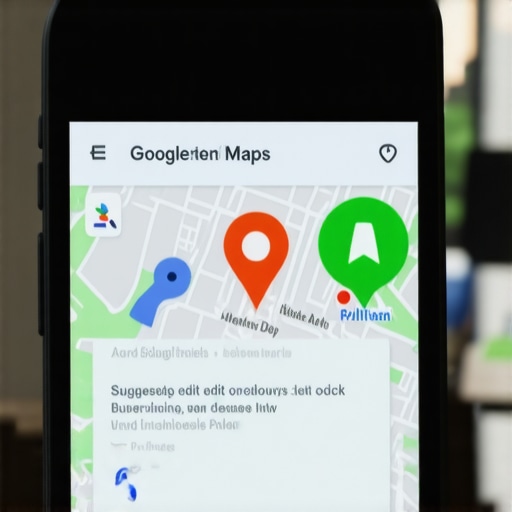
Your Phone is the Ultimate Defense Weapon
I learned this lesson the hard way. About a year ago, a competitor across town tried to hijack my leads by suggesting an edit to my phone number, replacing it with a Google Voice line they controlled. Because I had my notifications turned on, my phone buzzed while I was eating lunch. I saw the ‘Suggested Edit’ alert and was able to hit ‘Reject’ before any damage was done. If I hadn’t been babysitting my profile, I would have spent weeks wondering why my phone stopped ringing while some stranger was answering my potential clients. This is why you need to master the 3 tactics that actually move your pin to the top spot, one of which is maintaining a perfect record of data integrity.
Feed the Beast with Constant Life Signals
Google’s local algorithm is obsessed with ‘freshness.’ If your profile sits stagnant for three months, you look like a business that might be going under, which makes you a prime target for ‘Permanently Closed’ suggestions. You need to provide a digital pulse. This means uploading at least three new photos a week and posting a weekly update. These aren’t just for show; they act as a signal to the algorithm that the lights are on and someone is home. When you consistently update your profile, you are engaging in visibility improvement that builds an ‘authority shield’ around your listing.
Force Google to Trust You More Than Strangers
The final piece of the fortress is what I call the ‘Data Echo.’ Google doesn’t just look at your profile; it scans the entire web to see if your information matches. If your website, Facebook page, and local chamber of commerce listing all have the exact same address and phone number, Google is far more likely to ignore a random ‘suggested edit’ from a stranger. It sees the consistency as a sign of truth. This is often the boring profile detail that actually influences the local algorithm more than fancy keywords ever will. If you find yourself constantly battling fake edits, you need to learn how to spot a fake competitor profile and get it removed to even the playing field. By combining real-time monitoring with a high-frequency posting schedule, you make your profile too ‘heavy’ for a competitor to easily move.Let’s get real for a second because most advice you find online is just a recycled version of what worked in 2015. The biggest expert lie is that more is always better—more keywords, more citations, and more generic data points. In reality, the local citation myth is a massive resource sink. Google’s algorithm has evolved to spot unnatural growth patterns. If you suddenly get fifty citations from low-quality directories, you aren’t building authority; you’re triggering a spam filter. According to the 2023 Local Search Ranking Factors study by Whitespark, proximity and relevance have significantly outpaced raw prominence in terms of importance. This means that trying to brute-force your way into a city center when you’re ten miles away is often a losing battle. Have you ever fallen into this trap? Let me know in the comments because I see it happen every single week.
Your Website Might Be Killing Your Map Rank
It sounds counterintuitive, right? You spend thousands on a new site only to see your pin vanish. This oops factor usually stems from technical disconnects. I’ve helped dozens of clients figure out why your map ranking dropped after you optimized your website, and it almost always comes down to the schema data or a mismatch in the NAP details. If your website tells Google one thing and your map profile tells it another, the algorithm gets confused and lowers your visibility to protect its own reputation. You need to focus on a strategic seo guide that prioritizes technical synchronization over just stuffing keywords into your footer. 
Why Do My Rankings Look Great on My Screen but Terrible on Yours?
This is the nuance that drives business owners crazy. You check your phone while sitting at your desk and you’re in the top spot. You ask a friend three miles away to check, and you’re nowhere to be found. This is why the reality of map rank tracking tools is so complicated—they often provide a sanitized view that doesn’t account for the hyper-local nature of mobile search. Google knows exactly where the searcher is standing. If you want to expand that circle of influence, you have to stop obsessing over the geo-tagging lie. Many people think adding GPS coordinates to their images will trick Google into thinking they are everywhere at once. It doesn’t work. Google ignores that metadata because it’s too easy to fake. Instead, focus on building map discovery through genuine local interactions and neighborhood-specific content.
The Proximity Trap You Didn’t See Coming
One of the most common mistakes I see is businesses choosing the broadest possible category, thinking it will help them show up for more searches. It’s actually the opposite. When you’re too broad, you’re competing with everyone and winning at nothing. By narrowing your focus, you can often transform your map visibility by dominating a specific niche. This is the difference between being a Contractor and a Kitchen Remodeler. The more specific you are, the more weight Google gives your profile for those high-intent searches. If you’re struggling to understand navigating map discovery, start by auditing your primary category and ensuring it matches what your customers are actually typing into the search bar, not just what you want to call yourself.Maintaining a top-three spot isn’t a one-time trophy you put on a shelf; it’s a living, breathing asset that requires a specific kind of upkeep. I’ve seen too many business owners do the heavy lifting to transform your map visibility only to watch their traffic evaporate because they stopped feeding the machine. The reality of the local algorithm is that it has a very short memory. If you aren’t providing fresh signals, Google will eventually default to a competitor who is. I personally treat my map profile like a high-maintenance garden—if I’m not weeding out bad data and planting new photos, the ‘weeds’ of irrelevant competitors start to take over.
Stop Obsessing and Start Automating Your Success
To keep things running smoothly, I rely on a few ‘non-negotiable’ tools that move the needle. While I’m generally skeptical of most ‘all-in-one’ SEO platforms, I swear by Local Falcon for its hyper-local grid tracking. It doesn’t just tell you that you’re ‘Number 1’; it shows you exactly which street corner you start to drop off on. This is essential for navigating map discovery because it helps you identify specific neighborhoods where you’re losing ground. According to the 2024 BrightLocal Research on local search, businesses that monitor their rankings at a zip-code level see a 40% faster response time to algorithmic shifts than those using generic trackers. This level of granularity is what allows you to boost your map views effectively without wasting time on areas where you already dominate.
How do I keep this momentum going without it becoming a full-time job?
The secret is batching your efforts. I spend exactly thirty minutes every Sunday night scheduling my updates for the week. I use the fast way to add your services to your Google profile to ensure every single niche task we perform is documented. If we did a specific type of repair or consultation that week, it goes into the ‘Services’ section immediately. This keeps our profile relevant for ‘long-tail’ searches that your competitors are likely ignoring. If you want to master map discovery, you have to realize that Google is moving toward a ‘Search Generative Experience’ (SGE) where it answers questions directly. By having a robust ‘Services’ list and an active ‘Q&A’ section, you’re feeding the AI the exact data it needs to recommend you. 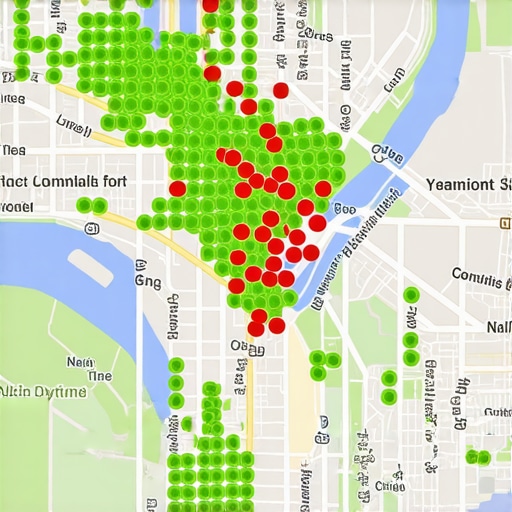
The AI Shift: Where Map Discovery is Heading in 2026
Looking ahead, I predict that ‘live’ data will become the primary ranking factor. We’re already seeing it with the ‘Open Now’ filters, but soon, Google will likely use AI to analyze your photos to see if you actually have the inventory or equipment you claim to have. This is why you need to improve map seo and increase local engagement now—you’re building a historical record of trust that an AI can’t easily fake. If you haven’t yet, you need to unlock the secrets to maps visibility by embracing video updates. A ten-second clip of your team working is worth more to the future algorithm than a thousand-word blog post. It’s about proving your ‘real-world’ presence in real-time. I strongly recommend you go into your profile right now and audit your ‘Attributes’ section. Most people leave these blank, but checking boxes like ‘Identifies as veteran-owned’ or ‘Wheelchair accessible’ can transform your map visibility by appearing in highly specific, filtered searches. It takes five minutes, but it builds a layer of your digital fortress that most competitors are too lazy to touch. If you’re feeling overwhelmed, start with the simple change that fixed our profile visibility in 24 hours and build your habit from there.
The Hardest Truths I Learned While Fighting for the Top Spot
After years in the trenches, I realized that consistency always beats intensity. Many owners go on a ‘Google Maps spree’ for a week and then disappear, which is exactly why most small businesses fail at google maps within the first six months. The algorithm doesn’t want a burst of activity; it wants a steady heartbeat of data. Another ‘lightbulb moment’ for me was discovering that it is not about being the best; it is about being the most verified. Google is terrified of recommending a closed or fake business to its users. If you provide more proof of life than your competitor, you win, even if they have more reviews. Finally, I learned to stop panicking over daily shifts. If you focus on real-world seo insights, the long-term trend will always be upward, regardless of minor weekly wobbles.
The Local Arsenal I Use to Stay Ahead
I do not believe in using twenty different tools, but these three are my non-negotiables for maintaining visibility improvement. First, Local Falcon is my go-to for seeing the truth about rankings across different neighborhoods; it stops the guessing game. Second, I constantly monitor BrightLocal research because they see the macro shifts in the algorithm before anyone else. Third, I rely on the Google Business Profile app notifications as my primary defensive shield. It is the only way to catch malicious edits before they go live. #IMAGE_PLACEHOLDER_E# If you are not seeing the results you want, check these 7 tiny details that keep your business off the local 3-pack to see which tool or tactic you might be missing.
Take Back Your Local Territory Today
Your business deserves to be found by the people standing right outside your door. Building a digital fortress is not just about ‘gaming the system’; it is about making sure the truth of your hard work is reflected accurately online. When you take these steps to improve map views, you are not just chasing a ranking—you are building a sustainable asset that feeds your business for years to come. Do not let a single seasonal dip discourage you; even the profile tweak that stopped our map clicks from dropping in the summer proves that there is always a solution if you stay proactive. Go out there and claim the spot you have earned.
Have you ever noticed a sudden drop in your views right after a successful month? Let me know in the comments below!